After over a decade of making music, Slater has seen trends come and go, taken time away, and found himself somewhere a little lighter than before. From his roots in Southern California to a new chapter shaped by experimentation, reflection, and learning to let go, Nick is figuring out what it means to keep making music on his own terms.
We caught up with Slater about growing up in the scene, finding his way back, and what comes next.
When you look back at your younger self in Orange County, what would he think of where you are today?
I mean, I would probably hope I was bigger than what I am today, to be honest. But I would say I’m proud of myself for doing it for this long, for pushing through for this long. It’s been a really long, slow journey, a lot of ups and downs. But I would probably be impressed with myself that I’m still out here, you know, doing my thing.
What do you remember most about growing up with Wyatt and Fletcher and playing bass for Enjoy?
I would say probably just the early days. We met when we were like 12 or 13.
We met through a mutual friend, and we jammed one day. Then we started playing in a band together in middle school and also in high school. We’ve been making music alongside each other for the past—what is that?—18 years now? Since 2008, 2007? Almost 19 years!
Enjoy started around 2011, I believe. It wasn’t until around 2013, when Enjoy started playing shows, that he was like—we’d already been playing music together for years—”You want to just play bass, like lead bass?” And I was like, “Yeah, sure.” That was fun. Fletcher was in there on drums. Some of my first touring experience ever was with Enjoy in 2013, and we did a South by Southwest run.
That’s when The Garden had been around maybe a year or two. Enjoy had been around pretty much just as long as The Garden. We were really young, like 17 or 18. We were babies, you know?
What has been the hardest part of building your own identity as Slater?
I would say it’s just having the will and determination to keep pushing through and persevering. Because, like I said, you have these times where you feel like you’re on top of the world, and then the next month you feel like you’re flopping. Or you have a release that you feel does well and resonates, and then you have a release that doesn’t.
I would say it’s being able to be mentally tough. At the end of the day, you want to be happy with what you’re putting out, right? Because if you’re not, you’re just going to hate it eventually. You’re not going to want to do it anymore. So it’s about being true to yourself, knowing when to take a step back and when to push hard, and knowing who to surround yourself with to push you forward.
A lot of artists feel burnout because they go really hard for a short amount of time, maybe get a lot of hype, and then either they don’t like it anymore, something happens, or the hype dies and they fade into obscurity. I think the truest and best artists can take a decade to blow up. And if you really tap in with some of the artists who have blown up, you know they’ve been around forever.
Who is Nick when he is not Slater?
I would say, to an extent, Slater is Nick. They’re one and the same. I would just say Slater is more of a fantasy character, a hyper-exaggerated version of Nick.
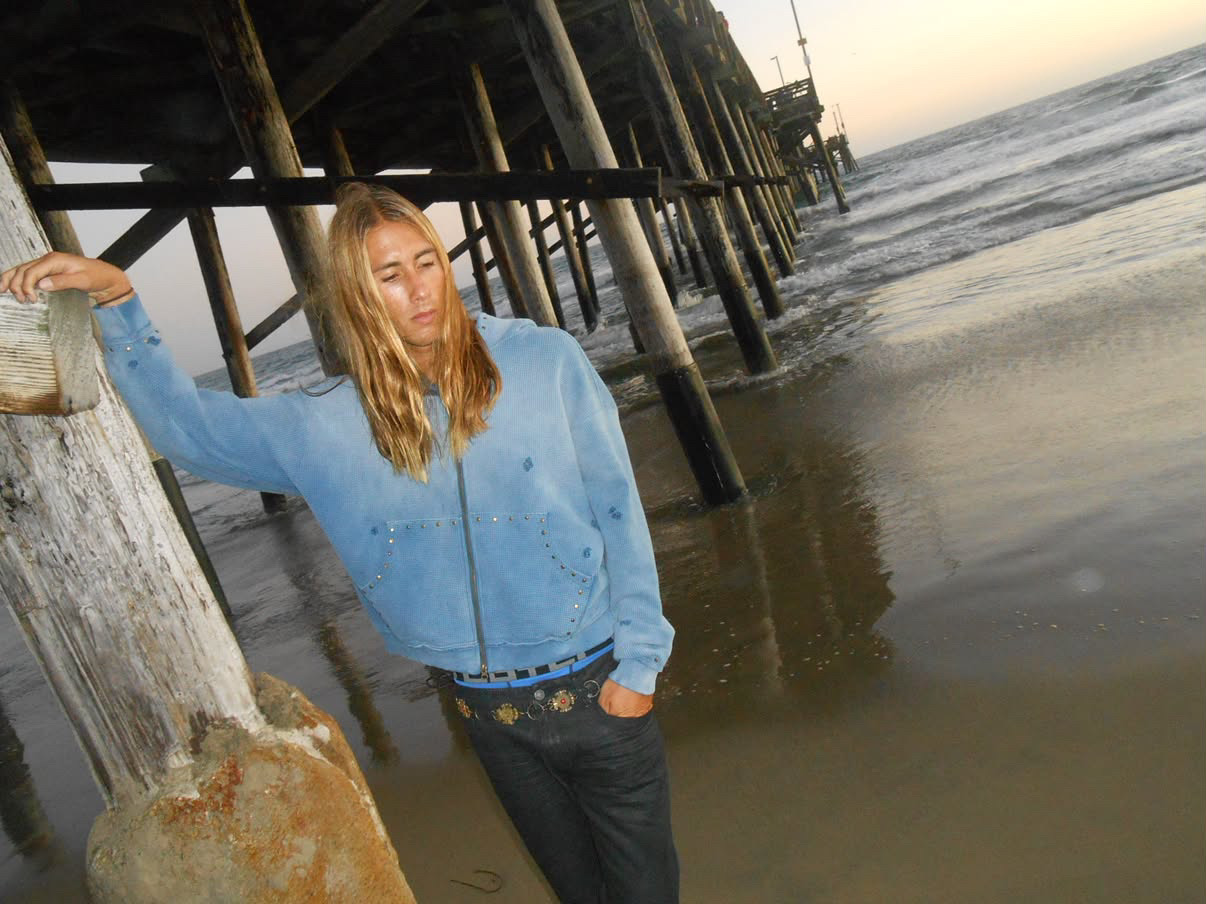
But in my own time outside of my music, I’m just a dude who’s hanging around the beach literally every day. I’m a surfer. I like to eat and try different foods, and I have a lot of friends around here. That’s really who I am outside of this. I’m a family guy. I love my family, my friends, and I love being connected to the water any way I can.
Even if it’s a day that I can’t surf because the waves suck, I’m probably still going to go by the beach at some point and just walk in the sand. It’s right in my backyard, so I would be a fool if I didn’t take that opportunity, I feel.
How has your approach to making music changed, and what do people misunderstand about you?
I used to—and I still struggle with it—overthink everything about the music: the visuals, how it sounds, the mix, what exactly I want to put out in front of people.
With this album, I’m really trying to force myself not to care as much what other people think, not to let other people’s perceptions alter my judgment too much, and to make sure I’m not overthinking things. So I’m just kind of going with the flow. I’ll be like, “Oh, this looks cool, sounds cool,” or whatever. I’m not going to overthink it.
This is what I’m putting out. I don’t care, really. As long as it makes me happy and I think it’s good, then I’m happy.
I feel like people think that I’m not super serious. I have a light persona and give out positive energy, which is a good thing, but I also have a very serious, introspective side that they might not always see. I slip that into the lyrics sometimes.
People see me online being a little more funny and ironic, but I also have a darker side that I try to put into the sounds of the instrumentals. A lot of my instrumentals have a melancholic feel to them. They’re upbeat, but the chords are very sad chords. I feel like that highlights how I’m really feeling. The undertones of me are in those minor-seven, more somber chords.
What do FM Thoughts and Eastside 2 represent to you personally?
FM Thoughts was a time when I was delving back into more of the rock-oriented music that I grew up with, and trying to find a way to fuse that with the electronic stuff I’d already put out, and some of the rap stuff. It definitely leaned more toward alternative rock, but it was about trying to be experimental.
At the same time, my aunt passed away unexpectedly, and she was a big part of my life. A lot of the album was dedicated to her. It was about how fragile things are and how quickly things can change: everything’s chill one moment, and then you get a phone call and your whole world changes. That was what was going on in my head during that album.
For Eastside 2, I feel like I was in a more angry point in my life. I had a lot of anger and a lot of things I needed to get off my chest: things in my personal life and things in the music world that frustrated me. I purposely manifested that energy into more of a gangster persona with the album.
But I also wanted to shine a light on some of the Latino culture around where I live, because I grew up in SoCal and I’m Hispanic as well. I was trying to put some of that flavor and representation into it: bring in some street, Chicano rap and mesh it with weirder, alternative and dark stuff. Just trying to make something fun.
What inspired Eastside, and how is Eastside 2 different?
So Eastside 1, I wrote that during COVID. I put out a bunch of music during COVID, and then I started working on these demos. I was listening to a lot of Jim Jones and a lot of early-to-mid-2000s rap, and feeling really nostalgic. I was like, “Damn, this is really nostalgic.” It was the music I grew up listening to with my cousins who lived in Santa Ana, coincidentally enough.
Eastside was the name of a kid who lived on my cousin’s block and would hang out with us. He was this little Mexican kid who was a ripping skater—well, I shouldn’t say little, because he’s older than me. Little Eastside. He ripped at skating. He was just a cool-ass dude. He kind of embodied SoCal at that time to me, what it means to live in SoCal and be Hispanic and be influenced by all this stuff.
I was like, “I’m going to use his name, but respell it in my own way,” because that’s where my inspiration was coming from, weirdly enough. I was, and still am to this day, very influenced by rap and hip-hop. I was asking myself, “How can I mesh this with the more interesting alternative stuff that’s going on at the time that’s also influencing me?”
At the time, Drain Gang was having their peak, or starting to blow up and get more recognition. I’d say 100 gecs had just popped off. All these artists were coming through with this hyperpop stuff, all this stuff I also liked, but it was a totally different world. I’m influenced by both of these. How can I make my own spin on it, keep it true to me and have it feel representative of SoCal and where I’m from? So that’s where it came from.
In contrast, Eastside 2 is also very rap-focused, but it was more influenced by anger and feeling like I’m owed something. I’d been around for over ten years at that point, and I was like, “Damn, I’m going to speak what’s on my mind in this album and just let it go. I’m going to be abrasive.” I might say things or come off aggressive or mean, but that’s just how I was feeling, so I let it out. I’m glad I did, because now I’m at a point where I don’t feel that anger as much. I don’t really feel like I’m owed anything. I’m content with where I’m at.
Obviously, I want to grow as an artist, but after Eastside 2, I took a step back for the past year, reevaluated, slowly started writing again and stepped back from shows for a while.
New-era Slater. I feel a little bit happier and lighter.
What is the story behind “Frozen in the Past”?
I would say probably this last track that I released today, “Frozen in the Past.” If you listen to the lyrics, it’s about trying to relive old things I’ve done in my career that I felt got me to the next level, but then realizing that you can never replicate something again. It won’t be the same.
It’s about trying to come to terms with that and being okay with accepting that the past is the past, whether it’s good or bad stuff, and then moving on and persevering. That’s why the song is called “Frozen in the Past.” For such a long time, I would look back at old things I did and be like, “Damn, if I could have that again,” or “If I could do this again.” Then I’d be like, “You know what? It doesn’t matter, because that was right for the moment, but it’s not right now.”
I have to keep continuing on and doing new things.
What has changed in your music, and what will always stay the same?
I guess I’ll start with what won’t change. I feel like it’s always in me to experiment with sounds and fuse thing together. Sometimes I’ll feel like, “Oh, this song sounds very basic, generic and poppy,” and I’ll play it for my peers. And then they’ll be like, “No, this is weird.” And I’m like, “What? Really?” Like “I Tried to Make You Fly,” the single I released last month: to me, it sounded like the most pop, polished song ever. But your average listener who doesn’t delve into experimental music that often is going to listen to it and be like, “Whoa, this is kind of weird. Is this a girl singing? What’s going on?” My voice is very falsetto in that song.
I don’t think the experimental nature of Slater will ever change, because it’s just part of me.
Sometimes I don’t even realize it comes off as experimental and a little weird. To me, it just sounds so obvious. But outside listeners might be like, “Whoa, what is this? I don’t even know what to categorize this.” I’ve had that issue in the music world in the past. People don’t always know where to put me, and I don’t always know where to put myself.
But something that’s changed, I would say, is maybe the lyrics. This next album is a lot more personal. It’s fun, catchy and upbeat, but if you listen to the lyrics, it’s personal. It paints a picture of where I’m at in my life.
How would you describe the sound of your new era?
The sound I’m moving toward is more of a lighter, slightly poppier sound. Eastside 2 was more heavy-hitting, with a lot of anger behind the album, and I feel like that album allowed me to get that off my chest. I don’t feel that weight as much anymore. Now I want to make music that’s still fun and upbeat but talks about real things, real-life situations.
A lot of it is that I used to be—and still am to this day—a huge fan of Imogen Heap and Frou Frou. I don’t know if you’re familiar with them. Imogen Heap had that big song “Hide and Seek,” where it’s like, “What you say…” It was on a couple of TV shows. She and Frou Frou came out when I was really young. I heard them when I was really young, and it was weird and interesting to hear something almost at a pop level with such experimentation. The music was so pretty sonically, and the way they looked and everything—I was like, “Wow, this is really cool.”
Lately, she’s been a huge influence on the music now. I’m trying to make really pretty experimental music. Making prettier sounds feels more natural to me than making scary, dark sounds. That’s never really been my thing. If you listen to Slater, my music isn’t really scary, dark or horror-themed. It’s more light, angelic, ethereal. I feel like that’s the direction I’m going in naturally.
What new production techniques are you exploring on the album?
A lot more vocal sampling. On the song released today, a lot of the background ad-libs you hear are just my vocals reversed and chopped around, trying to make them into an instrument. There’s also more experimentation with analog synths, trying to make our own sounds, and finding cool, random, weird samples and trying to make them work. A lot more electronic experimentation.
How do you stay creatively independent when musical trends come and go?
Well, as we all know, artists come and go. Fads and trends in music come and go. Some come and go faste than others. It’s very tempting to be influenced by a new sound that’s starting to take off in the underground. It’s easy to jump into that and think, “Oh, I’m going to get a quick buzz from this because this is what’s popping now.”
Nu-gaze, shoegaze, indie sleaze—they’ve been around for years, but the subgenres that have branched off them are still very prevalent underground right now. I think a lot of them are cool, too, and some have influenced and inspired me.
But being around for over a decade has given me a perspective that I’m thankful for. I’ve seen trends come and go, and some artists stick around longer than others. At the end of the day, I’m Slater. I have to do what’s right
for Slater. I want to stay true to myself. That doesn’t mean I can’t be inspired by what’s going on now. I always am. I think it’s important to stay relevant, know what’s good and stay tapped in. But trends are going to come and go. I want to make sure my music is still Slater and doesn’t sound like I’m trying to be someone else.

Does this new chapter feel like a comeback or a continuation?
Honestly, to me it intuitively feels like a comeback. I took this past year off. I didn’t release music for over a year, and I haven’t played a show for over a year. I played a couple of local DJ sets to support people, but I haven’t done any proper Slater shows in over a year.
This last year I was really just recharging and thinking to myself, “What do I want to do? Do I want to keep touring and killing myself on the road? How often do I want to release music? Do I want to grind myself down, or do I want to do it when I feel like doing it, when it feels right, and sustainably?”
It made me realize that I want to do it sustainably and on my own terms. To me, it feels like a new, fresh comeback era, letting people know: “Hey, all your favorite artists now were inspired by artists that came around my time—and maybe by me, too, I don’t know.” I’m just trying to stick my sword in the sand and say, “Hey, I’ve been here, too.” I’m staking my claim.
Are you planning to tour again, and what feels different about returning?
I mean, I took time off from touring for a long time, and I was unsure if I wanted to keep touring. I’m at a point now where I’m still unsure how much I want to tour, but I do want to play shows and tour. I just want to protect my energy and make sure I’m doing it in a way that’s fair to me and fair to the people.
I think I’m just clearer on the pace and what I want to put out. I feel like I’m not second-guessing myself as much. I have kind of a new team behind me—in the background, you know, Sean—and that gives me another layer of confidence. I’m now a free agent for booking and stuff like that, so it’s opened the floodgates, in a sense, to new opportunities.
Taking that year off really puts things into perspective. I want to do this, and there are a lot of things that I know didn’t work for me. I know to avoid those things, and I’m able to fine-tune it a little bit.
That kind of knowledge only comes with being around for a long time. When you’re a new artist, you make a lot of mistakes because you just don’t know. When you start a new job, you make mistakes because you’re still training and learning. I feel like I’ve had a decade of training and learning. I’m still learning every day, but it’s helping clear my vision of what I want and don’t want.
What are you most excited to accomplish with this new album?
Just new opportunities. I hope it gives me new opportunities to play shows with artists I admire and haven’t played with yet, to tour with them, and to collaborate with new artists. I hope the people who’ve been supporting me keep supporting me, and I hope the album catches the attention of new ears, too.
Every artist, whether they admit it or not, wants to grow to a certain extent. I just want to share my music with more people.
What can fans expect from the upcoming release and possible shows?
There’s going to be a lot coming, a lot of things I don’t even know what they are yet. But I have high hopes. It’s going to be fun.
I just want to continue doing my thing and have fun with it, because if you don’t have fun with it, what’s the point?
What do you want your fans to know as you enter this new era?
I want them to know that I’m always going to be Slater. I’m always going to have fun with my art. I always love the fans, the supporters, the people who show up to shows and interact with me in a positive way. I’m always going to appreciate that. That’s a lot of what keeps me going, too. It’s like a life force for an artist, especially me.
I want them to get from this record that there’s more to experimental music. I feel like this album is going to be another subgenre of its own within underground experimental electronic music. I just want people to know, “Oh, Slater’s with that shit. He’s tapped in, man.”