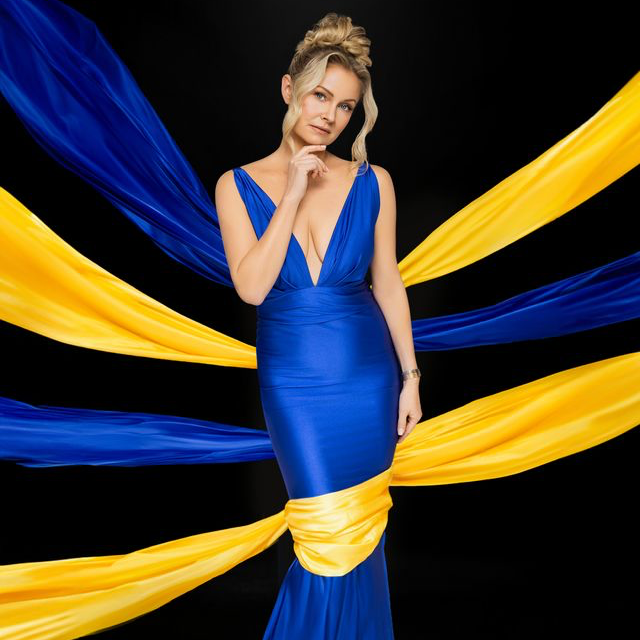
There is a rare, magnetic elegance that takes over the room the moment Åsa Orbison begins to sing. Her latest single, a reimagining of the iconic “Lullaby of Birdland,” functions as the perfect introduction to her flagship project, Swedish Jazz Standards. It is a release that feels candle-lit. Gentle, groovy, romantic, all carried by a quiet authority that honours tradition while shifting the axis of how we experience the jazz canon.
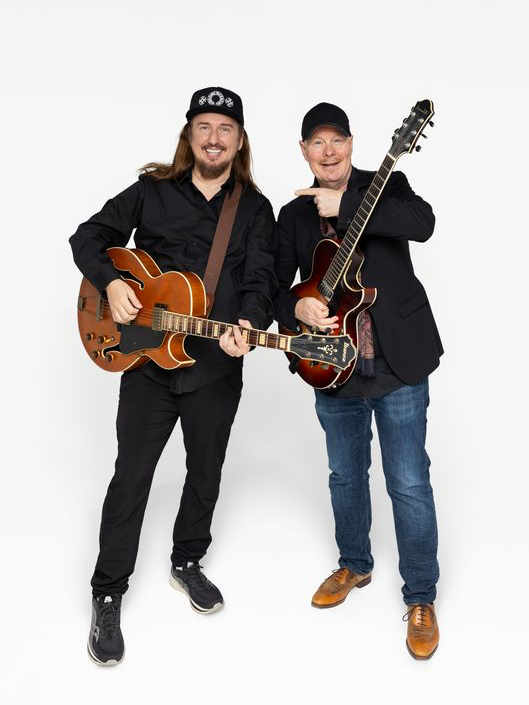
Produced by her husband and close collaborator, Roy Orbison Jr., and featuring the unmistakable touch of internationally acclaimed guitarist Ulf Wakenius (famed for his years alongside jazz legend Oscar Peterson), the track is a masterclass in transatlantic musical dialogue.
Letting Jazz Speak Swedish
Rooted in the timeless Great American Songbook, Swedish Jazz Standards uncovers a hidden chapter of musical history. In 1960s Sweden, American jazz standards were embraced and completely reimagined through entirely new Swedish lyrics, performed by pioneering female artists alongside icons like Duke Ellington and Bill Evans. These were not direct, literal translations, but poetic reinterpretations that gave the melodies entirely new emotional layers shaped by Scandinavian culture and sensibility.
With “Lullaby of Birdland,” Åsa Orbison approaches this history with a rare clarity of vision. By returning these songs to the Swedish language, she reveals nuances that feel both deeply personal and historically grounded. There is something quietly radical in the way she navigates language and identity; this is not a simple tribute album, but a reclamation.
“I grew up with these melodies in Swedish, came to America, where I came to know them all over again through their English versions,” Åsa explains. “These true jazz standards transcend language, culture, and generation. Now, I get to share Swedish interpretations with my American audiences. Collaborating on the new arrangements with Roy and Ulf makes this journey especially meaningful. To me, it’s about honouring the universality of these songs while also telling my own story through them–and letting jazz speak Swedish.”
The track balances immense restraint with absolute intention. It’s a deep respect for the material and the confidence to let it unfold in its own time. Wakenius’s masterful guitar lines exist in a flawless, fluid dialogue with Orbison’s vocal phrasing, creating a rich atmosphere where the music can simply breathe.
Producer Roy Orbison Jr. notes the historic and musical weight anchoring the production:
“As a producer, I see Swedish Jazz Standards as a uniquely well-grounded project, both historically and musically. Åsa Orbison has a clear artistic direction and an ability to interpret the material with authenticity, while also bringing her own distinct voice to it. I have followed Ulf Wakenius’s work for a long time, and his musicality, precision, and international experience add a level of depth that is essential to the whole. Together, we are creating a production that serves as a natural link between the Swedish jazz tradition and the American standard repertoire.”
Beyond her studio work, Åsa’s multi-faceted career bridges global audiences. From performing on major stages–including opening for soul legend Macy Gray–and contributing platinum-status vocals to the Royal Philharmonic Orchestra, to her recurring appearances on the global hit television series Below Deck Mediterranean, she has continually shared her personal story and artistry on a massive scale.
Yet, with “Lullaby of Birdland,” the focus is purely on the liberating nature of the music itself. By stepping away from the familiar English phrasing, she invites listeners into an entirely different kind of immersion.
“My hope with this project is simply to invite listeners to hear these songs in a new way,” says Åsa. “When the words aren’t immediately understood, something else begins to shine–the melody, the phrasing, the feeling behind each note. It becomes a different kind of listening, where the music can speak on its own terms and perhaps in a way, sets the music free.”With Swedish Jazz Standards, Åsa Orbison proves to be far more than a vocalist; she is a brilliant curator of cultural dialogue. These are songs we thought we knew until Åsa translates them into Swedish, breathing entirely new life and narrative depth into familiar classics