I first came across Love Spells in 2024 through Pigeons & Planes’ See You Next Year compilation. Ironically, I wasn’t looking for a spell that would make Noel Gallagher ask for my number that day–just new music. Shining among a lineup of emerging artists was “Dope Sick,” his collaboration with Deb Never. It only took one listen before I was searching for everything else he’d made. There was something hypnotic about his voice–fragile yet magnetic–that pulled me under the spell of his music long before I knew the person behind it.
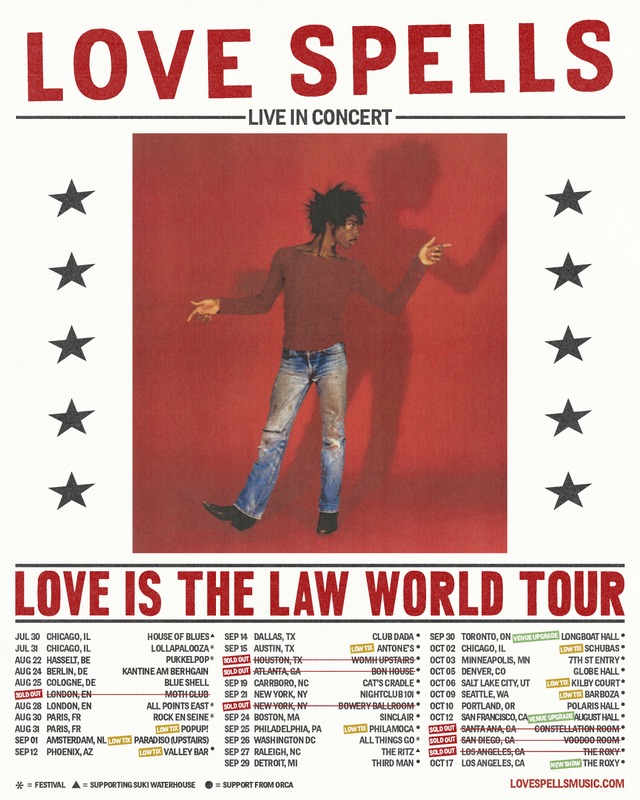
Fast forward two years, and that same artist has arrived with his debut album, LOVE IS THE LAW, released on July 24.
Behind Love Spells is 21-year-old Sir Taegen Harris, whose journey over the past few years has unfolded at remarkable speed. What began as quiet experiments recording music in his bedroom soon led to his first professional studio session for See You Next Year—an experience he still describes as surreal.
At just 18, Harris suddenly found himself surrounded by acclaimed producers, artists, and an industry he’d only watched from afar. “I felt so large but so small at the same time,” he recalls. “It felt very special.” The project not only marked his introduction to the wider music world but also connected him with a creative community he remains close to today.
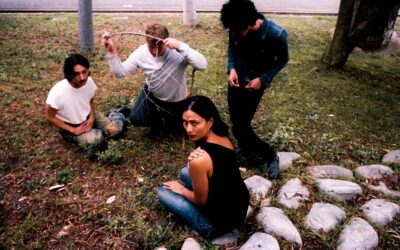
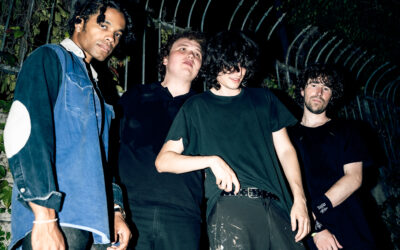
That momentum carried him to another defining chapter in joining Kevin Abstract’s BLUSH sessions. Living and creating alongside Abstract, Ameer Vann, Dominic Fike and the rest of the collective for nearly a year became far more than another credit—it became the foundation of his artistic outlook. Between late-night recording sessions and everyday conversations, Harris absorbed a lesson that continues to guide him today: trust the work.
“The proof is in the pudding,” he tells me. “If you’re good, people will see you’re good. If you’re making good music, it’ll speak for itself.”
It’s a philosophy reflected in the way his career has unfolded. Without chasing trends or relying on relentless self-promotion, Love Spells has grown almost entirely through word of mouth, allowing the music to find its audience organically. That quiet confidence now reaches its fullest expression on LOVE IS THE LAW–an album shaped by those formative experiences, but grounded in an artist who has learned that authenticity speaks louder than algorithms ever could.
By the time you’re reading this, LOVE IS THE LAW has been out in the world for a little while. But when we sat down together, release day was still a month away. Naturally, our conversation began with the excitement of finally letting go of a debut album.
Alana (CULT MACHINE): Your album’s coming out in a month. How are you feeling? How are you preparing?
Love Spells: Honestly, I’m already prepared. I’m more so just ready for it to be out so I can do other stuff.
A: Just one more month! And you’re also going on tour soon, that’s exciting. Do you have any pre-show rituals?
LS: I don’t have any pre-show rituals. Usually, it’s just a bunch of fooling around until I have to be on stage, honestly.
But I guess now for this tour, I’ll definitely be warming up my vocals. I guess it’s getting more serious. This is my first album. This is my first time touring. It’s just like I feel like I need to take it more seriously and do it with more care.
A: At the same time, it’s like just do what you’ve always been doing if it’s worked for you. Just feel yourself. Have fun. Let the moment carry you.
Music is constantly playing in Harris’ life, but perhaps surprisingly, he’s careful about what he allows himself to absorb. While most artists eagerly consume new releases, his playlist leans comfortably toward familiar records–Bruce Springsteen, David Bowie, The Stone Roses, George Michael, Catherine Wheel, Ella Langley, and a steady rotation of ’80s and ’90s classics.
It’s not for a lack of curiosity. Rather, it’s a conscious effort to protect his own artistic voice. Whenever listeners compare Love Spells to another artist, Harris instinctively creates distance. Lately, that has meant deliberately avoiding Prince–even as fans continue drawing parallels between the two.
“I don’t want to be subconsciously influenced,” he explains. “I want to be in my own head.”
It’s a philosophy he’s practiced before. Early comparisons to Cigarettes After Sex prompted him to avoid their music almost entirely, choosing instead to discover their work only years later. For Harris, originality is something he actively preserves.
That same sentiment surfaced in an unexpectedly charming detour when our conversation shifted from music to the instruments musicians inevitably become attached to. After I admitted I’d named my bass Lyla Rose Gallagher—a nod to my love of Britpop and Oasis—Harris laughed before confessing he’d never felt the urge to name any of his guitars.
His car, however, is another story.
When he bought it, it already came with the name “Big Baby,” and he couldn’t bring himself to change it. He spoke with the same affection about older cars as he does vintage records, explaining how winding down a manual window or hearing strangers reminisce about owning the very same model makes everyday moments feel cinematic. Nostalgia, he says, has a way of connecting people.
Perhaps that’s why so much of the music Harris returns to comes from decades past. While much of today’s music chases revivalist trends, he’s less interested in recreating an era than in finding something genuine within it. “I probably just look for meaning too much,” he admits with a laugh–a quiet confession that says as much about Love Spells as any playlist ever could.
A: I feel like your sound has definitely changed a lot compared to your first singles when you first started releasing music under Love Spells. From your first EP Eyeliner. Talk me through how you finally discovered your current voice, your current sound.
LS: I more so… didn’t discover it. I kind of just evolved in that way, if that makes sense. As anyone making music, I feel like your music should change with you. I’m 21. I was growing up. I’m changing. I’m becoming older. I’m becoming a different person, coming into my own more. My music is changing, reflecting that.
I get interested in different things, listening to different people. I feel like I’ve always been open in that way to things. I’ve never been closed off to music, listening to whatever I wanted to. I even made emo rap when I was younger. I’ve never been closed off to trying whatever I wanted to do. That’s what I’ve been living by. That’s why I’ve come to where I am now. I’ve tried almost everything. Now I’ve become comfortable being here.
Even with the way I sing higher now, me trying to emulate a woman’s voice, trying to find that delicate tone, things like that, after listening to Fake It Flowers. That was one of my favorite albums.
That’s how I got to where I am now. Being free of myself. Doing whatever I want. Letting things grow with me. If I feel different, showing that in my music, reflecting that in my music, being different in that way.
Otherwise, you’re stuck in the past. Why would you go on tour with music that feels like the past you?
A: That doesn’t resonate with you anymore.
LS: Exactly.
A: Do you feel like you finally arrived at the final version of yourself?
LS: No. I’ll never feel like that. Ever in my life.
As long as I’m a healthy, functioning human being, I’ll never feel like that. If I feel like… if I’m 60 and I’m like, “I still feel like this,” then that’s a problem.
You’re always changing. Changing in some way, or feeling, maturing in different ways. Life is ever-changing. People are ever-changing.
A: Do you ever listen back to your first ever releases?
LS: All the time.
A: How do you feel whenever you listen to your past version of yourself?
LS: I’m more indifferent to it. I believe that everything happened for a reason. I just made what I wanted to make. I never have any regrets about it. I never have any reservations. And it’s still up because I don’t really care.
You can see my entire musical journey. It’s honestly really interesting to look at. The first song ever is 2021. It’s an experimental trap song. Ambient experimental trap. Going from that to where I am now, not even that long after… there’s a whole EP of pop music. I don’t even think it’s good, but I appreciate that it happened.
A: You’re in LA now, but you’re originally from Texas. When you think of home, what’s the first image that comes to your mind?.
LS: My friends and my family. I love Texas so much because of all the people that are there. And if those people weren’t there, then I would love wherever they’re at, you know?
But I also love Southern nights, Southern mornings. I love Texas skies. I love the countryside. I love a whole team of people just riding horses through the city. And like… I miss wearing my boots in the dirt.
A: What’s something Texas does that LA can’t get right?
LS: Dude… Barbecue.
I’ve never, to this day, had a brisket or any good barbecue here. This is gonna be controversial. I went to Texas and went to this random spot downtown and..
A: Beats everything that you’ve tasted in LA?
LS: Everything.
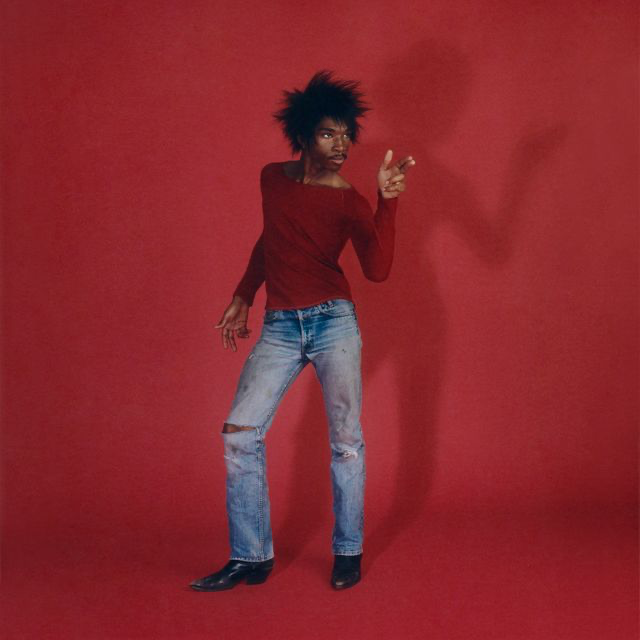
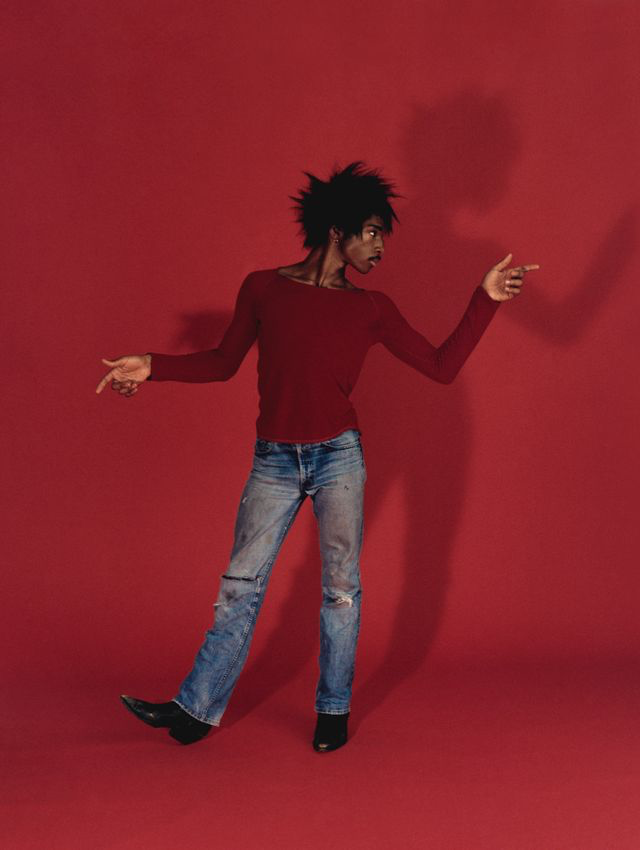
A: Tying your album to your home, Texas… From the visuals to like some of the sonic details on songs… songs like “Crutch,” “Keep It to Yourself.” I feel like there’s an influence running through this era. With your visuals, with the red backgrounds, the denim jeans.
Would you say Texas was a big emotional or creative presence while making the album?
LS: Absolutely. I’m always homesick. A lot of the things that I wrote about happened in Texas. I wanted everything to match my mind and where my head is, you know? Even sonically.
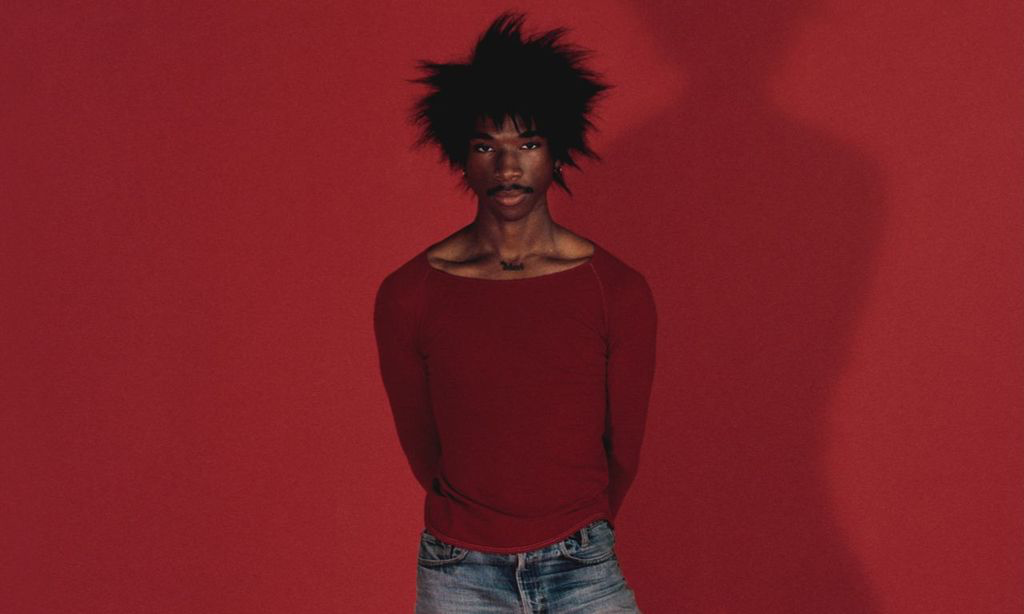
Love Spells wasn’t a name Harris chose alone–it was one his friends gave him. Fittingly, love has always seemed to orbit his life, long before it became the thread tying together his music.
“I still remember my first girlfriend,” he recalls. “Her name was Viviana in kindergarten. I’d sing to her at recess, and I’d have my friends dance with me.”
That early earnestness never really disappeared and simply matured into a philosophy. When I ask whether being “under a love spell” is something we choose or something that simply happens to us, Harris pauses before landing somewhere in between.
“I think it’s both,” he says. “You can be in love with somebody, but loving them is a whole different thing.” For him, love is less a feeling than a practice. Infatuation arrives on its own, but love is measured in consistency–in the quiet decision to keep showing up. “Your actions should be proof of that.”
It’s an idea that naturally leads to another question: does love reveal who we already are, or does it transform us into someone new?
Again, Harris refuses to choose between the two. As children, he explains, we absorb pieces of the people we love–their habits, values, and ways of seeing the world. Those fragments slowly reveal something about ourselves. Growing older, however, is deciding what to do with everything we’ve collected.
“You transform, you take everything you’ve learned and you go fly… or you build up a house right where you’re at.”
Perhaps that’s why LOVE IS THE LAW doesn’t treat love as a fleeting emotion or a romantic ideal. In Harris’ world, love is an active force–one that first holds up a mirror, then quietly asks what kind of person you’re willing to become once you’ve looked into it.
A: A lot of the relationships on the songs… they’re not really about a perfect love. They’re messy, flawed, but they still have a tenderness to them.
What’s harder to write about? Falling in love, staying in love, or falling out of love?
LS: Staying in love, actually. It’s hard. It’s really hard to write like… “Everything is great!”
But I also feel like it’s hard for me because I’ve never felt that before.
A: Do you think the greatest love songs are those perfect love songs? Or do they have hints of heartbreak to them?
LS: I think a lot of the ones that I like personally have some heartbreak to them. Like “I’m On Fire” is kind of a love song to me.
A: Do you have any personal favorite tracks from the album?
LS: Probably “Heart for Eyes,” I love the melody so much. And it’s like so cautionary.
It’s like: “Be careful who you’re gonna bring home, or else you’re gonna end up all alone. Be careful who you’re giving all your time. Don’t fall for it because you got a heart for eyes.”
I’ve been trying to make more simple songs in that way. And like more worldly instead of so… instead of trying people have to decode what I’m saying.
A: What was the entire writing process for the album like?
You’ve talked about moving away from writing songs as just songs, and instead you tried writing poetry first and then turning those ideas into lyrics. Do you still approach writing like that?
LS: Actually, for me now, it’s more so like things that come into my head. I’m always thinking about melodies now.
I’m just thinking about it and I’ll like grab my phone or–I have a voice recorder now! So I’ll put it in my voice recorder, notes…
A: You get a lot of those midnight, 3 a.m. ideas and then you wake up and write the idea down in your notes app or the voice recorder?
LS: Yeah, all the time! It’s like all day for me, honestly.
The world of LOVE IS THE LAW extends far beyond the music. Across “Crutch” and “Keep It to Yourself,” Harris leans into cinematic storytelling, drawing inspiration from an era when music videos felt theatrical rather than disposable.
“I miss the theatre of it all,” he tells me. “The story… even just me dancing.”
That movement has quietly become a signature of Love Spells. One fan joked that “it’s not a Love Spells music video without you dancing,” while another compared his movements to “a male bird in love.” It’s an unexpectedly fitting description. Rather than treating dance as choreography alone, Harris uses movement as another form of storytelling–a way of expressing the intimacy and emotion that sit at the heart of his debut record.
A: Are you going to bring choreography into the tour?
LS: I’m more somebody who just… if I feel compelled to do it, I’ll dance. If I feel compelled to do the splits, I’ll do the splits. A lot of the videos weren’t really choreographed. I was just doing random stuff.
Dancing itself is just second nature to me.
A: You just feel the groove. The spirit takes over.
You made a beautiful point about how being dramatic on stage makes the audience feel safe enough to be honest about themselves. How do you mentally prepare yourself to step on stage and be that vulnerable, knowing hundreds of cameras are capturing you in such a raw state?
LS: To be honest, I don’t even want to think about it. I don’t really get stage fright anymore. When I get on stage, I’m just having fun. I don’t take it that seriously.
Especially during festivals and live shows where I have the space, people are just going to see me doing random stuff. There are probably going to be so many videos of me doing random cartwheels, backflips, hitting the splits a million times… whatever.
I don’t really carry any pressure with me because people usually react well to it. If they’re into it, I’m like, “Okay, you’re doing something right.” So I just keep being myself.
A: You should do a freestyle dance battle during your tour.
LS: (Laughs) Maybe when I’m bigger down the line. Like at a festival or something, I could bring people on stage.
I’ve never really seen anyone do that. I guess it could be unsafe. Well.. Is it really, though? I’d assume people would know the program. I’d probably just tell them, “Bro, if you get on stage and start some bullshit…”
A: Let security freestyle too.
LS: It’d be really fun though. That’s what concerts are for—performing music live, connecting through music, making connections.
A: Exactly. Mosh pits, though… they can be brutal.
LS: Dude, I couldn’t imagine moshing all day.
A: And everyone’s wearing heavy boots too. Honestly, salute to them—they have the energy. But guys, cool off. Come to a Love Spells show and just groove. Pull out your best freestyle moves.
Harris approaches songwriting with one goal in mind: to capture a feeling that belongs to both the present and the future.
“Timely and timeless,” he says simply. “It’s a sign of the times, but it can also outlive them.”
That relationship between memory and permanence naturally led our conversation elsewhere. When I asked what single memory he’d preserve forever if he could, his answer came without much hesitation: being back home—or any moment with his godfather.
Perhaps that’s why Harris admits he intentionally romanticizes his own life.
“I purposely live like I’m in a movie.”
Whether it’s wandering through New York after seeing The Lovers on the Bridge at Metrograph, getting lost after his phone dies, or walking the city at night with nothing but a harmonica in hand, Harris seeks out the kind of moments that feel cinematic. For him, life is worth slowing down for–not because it’s extraordinary, but because ordinary moments become unforgettable when you choose to notice them.
A: With this new era, what are you most excited about?
LS: Probably everything this is going to bring.
It’s more of me expanding and opening myself up, expanding my horizons. Even now, people know I can dance. I’m making more upbeat music now–borderline pop music.
This is random, but I hate how everything has to be classified. There are so many niches. People say indie pop, bedroom pop… okay, but what even is bedroom pop? First of all, I’m not making music in my bedroom anymore, so it’s not bedroom pop. And it’s not indie pop because I’m with a major label now.
A: No.. I get you. Even I get confused. I’m like, “What the fuck do I even call this music?” I’ve genuinely given up on naming genres.
LS: It’s so confusing.
A: There are genres, then subgenres, then subgenres inside those subgenres. It never ends.
LS: It’s a headache.
But yeah, I’m excited for everything it’ll bring. It’s another opportunity for me to expand my horizons. I’ve always told people I don’t want to be put in a box, and this is just another step toward not putting myself in one.
I’m excited to do more of what I want to do and connect with people on different levels every time. Even with this album, more people are coming along through each phase. People who’ve been following me are growing with me, and new people keep finding the music.
I’m excited for that.
A: Does that mean you don’t like putting your music under one label or genre?
LS: Not necessarily. If what I’m making fits a genre, then it fits. I don’t really care about that stuff. I only care when it starts feeling unnecessary.
If someone says it’s pop, alright. If it fits, it fits. If someone says it’s rock music, alright. If someone called “Lovers Only” an indie rock song, okay.
A: What about when people start stacking genres together? Like giving it five different labels?
LS: At that point… bro… People get lost in the sauce.
A: Too deep in the flow state trying to describe it.
LS: Exactly. I always think about IGOR. People call it R&B, alt R&B, alt pop… I mean, yeah, it’s alternative. But I don’t know. There are just so many umbrellas and so many labels.
A: Labels really make you spiral.
LS: They do. I genuinely can’t tell you what half of that stuff even means.
A: Okay, one last question. If Love Is the Law was the soundtrack to a film, what would the final scene be?
LS: It’d be like Footloose. Or Dirty Dancing, where everybody just loses their mind.
A: That could honestly be a music video idea. You in the center, then the camera zooms out…
(Harris chuckles, scratching the back of his head as if trying not to give anything away)
A: Wait… (laughs) am I predicting a future music video?
Perhaps that’s what makes Love Spells so compelling. Whether he’s singing in that delicate, almost fragile register, dancing as another form of storytelling, or chasing a feeling that’s both timely and timeless, every creative choice feels intentional. LOVE IS THE LAW brings those ideas together into a record that feels deeply personal while inviting listeners into Harris’ world–one shaped by love, nostalgia, cinema, and the Texas he still calls home.
LOVE IS THE LAW is out now on all streaming platforms. Love Spells kicks off his tour on July 30, so if you find yourself in the crowd, don’t be surprised if you’re swept into one of his impromptu dance moments–or, if our conversation ever manifests itself, a freestyle dance battle.