For touring artists, merchandise isn’t just another revenue stream–it’s often what keeps a tour afloat. Yet behind every T-shirt sold at the merch table is an industry riddled with high costs, missed deadlines, and systems that rarely put artists first.
That’s exactly what inspired youvmerch. Founded by hometown friends Christian Cicilia, Mat Marrone, and William Mullin, the artist-led company was built from firsthand experience on both sides of the industry. Drawing from touring, streetwear, software, and artist management, the trio set out to create a merch company that understood what artists actually needed—not just as clients, but as fellow creatives. The result is a company determined to challenge the traditional merch model by making touring and selling merchandise simpler, fairer, and more profitable for the artists it serves.
After developing a merch system that worked incredibly well for his own band poptropicaslutz!, Christian began getting requests from fellow artists asking if he could do the same for them. What started as a few favors quickly spread by word of mouth, with more and more musicians reaching out despite there being little to no marketing behind it.
“We almost felt guilty not sharing it,” Christian says. “If this was working so well for us, why wouldn’t we extend it to other people?”
“It was kind of like the myth of the five-dollar T-shirt,” he adds. “Everybody wanted that.”
That growing demand was the moment Christian, Matt, and Will realized they weren’t just helping friends anymore–they’d uncovered a genuine need within the music industry.
Alana (CULT MACHINE): Before this existed, what was the biggest thing that frustrated you about how merchandise was handled in the industry?
Christian: That it’s almost always wrong or messed up in some way.
There are so many moving parts. First, just getting the shirt you actually wanted–the right placement, sizing, blank, and color. There were times when I received an entirely different color than what we ordered.
Pricing-wise, companies were charging an arm and a leg when they didn’t need to. I’ve seen invoices where they’re charging more than double what we’re charging for a standard Gildan T-shirt. Tour merch has a very tight deadline. Sometimes it’s supposed to arrive the day before you leave.
If it doesn’t show up, now you don’t have merch for the tour. Suddenly you’re out thousands of dollars because you have nothing to sell to cover your expenses.
There are so many moving parts that all have to come together for a successful tour. Merch is what keeps your head above water as an artist because, 99% of the time, the money from the shows isn’t enough to cover your costs. It’s the merch sales that push you into the green.
A: Was there a specific moment–a tour story or horror story–that made you think, “Okay, we seriously need to fix this”? Especially since you’re a touring artist yourself, you had a front-row seat to everything that was broken about the traditional merch process.
C: For me, it was when we ordered merch for our 2024 tour and received something completely different from what we ordered. I can’t remember whether it was the design or the color, but we opened the box and immediately thought, “Is this really what we ordered?” We checked everything, and it wasn’t.
To me, that’s an inexcusable mistake. UPS delays and other shipping issues can happen and are sometimes outside a company’s control, but sending the customer something entirely different from what they ordered isn’t one of those things.
That was the moment I thought, “Okay, if everything can be done better another way, I’d be stupid not to try.”
The strength of youvmerch lies in the fact that no two founders arrived from the same direction. Christian knows the touring circuit as an artist with poptropicaslutz!, Mat understands apparel from years of building his streetwear brand uvsailles, and Will bridges both the creative and technical worlds through his music project Aurorum, artist management, and software development. Individually, each had built their own expertise and together they created a company that draws from all three.
A: Each of you brings something completely different to the table. You’re all creating in your own ways. How naturally did those roles fall into place?
C: Honestly, it felt effortless. I think the best companies start that way. You’re not sitting there asking, “How can I get rich?” You’re discussing a real problem, and out of necessity, a solution is born.
Mat already had the infrastructure that made all of this possible. Without that, none of this exists. I’d probably still just be a frustrated artist losing money and searching for a solution.
Will came in and was really the reason this became a full-fledged business. He focused on optimization, backend systems, and turning what started as ideas in a shared Word document into real operational systems. Otherwise, we could have just been messaging artists on Instagram saying, “Hey, want merch?” That’s where mistakes happen.
Will brought the organizational side that helped us avoid making the same mistakes we’d experienced ourselves.
Will: Yeah. At first you’re just doing what you need to do. It’s very bare-bones.
Then you upgrade to Google Sheets. Then you upgrade to Notion. Eventually I realized neither of those were good enough for what we needed, so I built our own software. Since then we’ve just kept improving it because our goal is to never mess up. Things can slip through the cracks if your systems aren’t refined.
A: Mat, you came from building a streetwear brand before youvmerch. How has that background changed the way you think about artist merchandise compared to how the industry traditionally approaches it?
Mat: Coming from a streetwear background gave us an understanding of how important placement, color, and overall presentation are. It’s not just about printing something on a T-shirt and calling it a promotional product.
We understand how much the creative side matters to artists. Taking that mindset and applying the software Will built means everything–from the artist’s initial request to the finished product–is streamlined.
That eliminates deadline issues, color mistakes, and just about every other common problem.
A: Do you think being artists yourselves gives you an advantage when working with merchandise? Or does it sometimes make decisions harder because you understand both sides personally?
W: Personally, I think having an artist’s mindset means you’re naturally thinking outside the box more, and I think that’s the healthiest way to approach anything.
C: Yeah, I think that’s one of our biggest advantages over other companies. It’s kind of an intangible advantage because we have taste.
A lot of other companies aren’t even thinking about whether something is actually good. Our clients appreciate that we’re able to make suggestions that align with what the artist would actually want.
We’re not completely out of touch like some of the older companies that won’t offer design feedback or help rework something.
M: Another thing is that artists often come to us looking for a very specific T-shirt fit. We go to the expos. We know the cuts of every T-shirt we use.
So if someone says, “We’re looking for a streetwear fit with a cropped bottom and drop shoulders,” we can immediately give them three different options based on their budget.
That’s really important–not just helping with the design itself, but helping artists find the exact fit they’re looking for.
A: Has working on youvmerch changed the way each of you approaches your own creative projects?
C: I don’t know if it’s been a very conscious change, but it’s given me a new perspective on navigating a career as an artist. Knowing how to operate your business is probably the most important thing if you want to make a living from art.
Working on youvmerch has made me much more aware of the merchandising side of things. I’ve always cared about business and profit margins, especially for an artist, but I didn’t realize back then how much things like ten-color prints, front-and-back prints, or different production choices affected pricing.
Now I understand how to maximize profits while still making great products. Every day we’re talking to artists about how they can improve their profit margins, so it makes me think, I need to practice what I preach.
When I go on tour or play a show, I want to choose the smartest products. I want to make something that looks great, but I also want it to make money. People sometimes act like artists aren’t supposed to care about making money, but the reality is simple–you either make money, or you end up sleeping on the streets. It’s that important.
A: You describe yourselves as an artist-first company rather than simply a merch company. What does “artist-first” actually mean to you beyond it just being a tagline?
W: I’d say it comes down to why we started.
We created this purely to benefit other artists. We make music ourselves, and we wanted to help the people we’re friends with and the people in our scene–not just build a business.
I almost think of it as creating something that helps make the industry more collaborative and accessible.
M: The merch industry basically gave artists two options.
One was to go to a local print shop, where you’d usually pay a really high price and they’d have limited operational capacity. They’d tell you, “You’ll get your merch in three weeks—come pick it up.”
The other option was signing a deal with a merch company. Those companies would typically take around 40% of your merch business while also making you pay for the products themselves. Even then, they often didn’t have the operational capacity to help with touring or e-commerce.
So we thought, “Why don’t we combine the operational capabilities of a merch company with the flexibility of a small print shop?”
That’s where the artist-first philosophy comes from. We’re not taking ownership away from artists or taking a percentage of their business. Instead, we operate like a smaller company while still having the infrastructure to support touring artists. If someone has a deadline in Chicago two days from now, as long as it’s physically possible to get the shipment there, we’ll make sure it happens.
That’s something smaller print shops simply aren’t equipped to do.
W: When we first started researching the industry, we discovered that a lot of merch companies required artists to sign exclusive agreements that included revenue-sharing or profit splits.
We thought that was incredibly predatory, and it’s something we’ll never do.
A: Is there a merch design or collection that you’re especially proud of? Maybe one of your favorite projects you’ve worked on?
Mat: I’d probably say the poptropicaslutz! Market Hotel merch. That was a recent project that came out really well and sold incredibly well at the show.
C: Yeah, that one was awesome.
A lot of my favorite projects actually aren’t things we designed ourselves–they’re projects that simply turned out exactly how the artist envisioned them.
One example is the merch we did for Millionaires. It was one of the company’s earlier projects, and it was incredibly specific. That’s something we really pride ourselves on: taking an artist’s very detailed vision and making it happen.
They wanted a huge range of colors and massive jumbo prints. Most merch companies have limits on how large they can print on a shirt. They loved it, and they’re probably a lifelong client now because they knew how much it mattered to us to get every detail exactly right.
W: I’d also say First Day Back, who Mat worked with. We made custom fingerboards for them, and honestly it was just fun seeing those come to life. We even played around with the sample before fulfilling the order.
C: After that, so many people reached out asking specifically about the fingerboards.
I’ll get on a call expecting someone to ask about T-shirts or blanks, and they’ll say, “Actually, we saw the fingerboards on your website.”
They’re like, “We just want fingerboards with our band’s name on them.” I think that project really inspired a lot of people in the rock scene.
A: Has there ever been a moment where an artist’s reaction reminded you why you started doing this in the first place?
C: Honestly, all the time.
We know why we started the company, but like anything else, you eventually get caught up in the day-to-day routine. You forget why you’re doing it because you’re just doing it every single day.
Then an artist sends me a long email saying, “Oh my God, the merch came out so well. We’re so happy. We sold out in one day. We’re already ordering more.”
Artists are artists–they get excited in a very particular way. Sometimes they get excited about things I wouldn’t normally think twice about, but seeing their excitement rubs off on you.
It reminds you that we created this, like “Yo, we did this!” They had a vision, we brought it to life, and now they’re genuinely thrilled because merch is such an important part of expressing themselves as artists.
Knowing that we’re the people who got to deliver that feeling is incredibly rewarding.
W: Sometimes you’re mostly dealing with a manager, and to them it’s just another job.
But when you’re talking directly with the band they’re genuinely amazed by what we’re able to do. Whether it’s turning around an order on an incredibly tight deadline, producing jumbo prints that most printers can’t make, embroidery, fulfillment–we’re really a one-stop shop for merch.
It’s always nice seeing people genuinely excited about what we’ve delivered.
A: What does a typical day look like for you? You mentioned earlier that art has no office hours.
C: I don’t know if you’ve seen the SpongeBob episode where they go inside SpongeBob’s brain, and there are thousands of tiny SpongeBobs running around an office while everything is on fire. A busy day at youvmerch honestly feels like that sometimes.
When I say art has no office hours, I mean we’re constantly communicating with artists. Sometimes it’s 2:00 a.m., and we’re still messaging back and forth because we have to get something finalized.
You can’t just clock out at 5:00 p.m. and pick things up the next morning because by then the production window might already be gone.
The biggest part of our job is simply talking to artists all the time and making sure we get everything right. Lots of phone calls. Lots of emails. Lots of text messages.
W: Yeah, I’d also say I spend a lot of my day coding. Beyond that, we’re always thinking about what fun or interesting things we can build.
You asked earlier how youvmerch has influenced our other creative projects. I co-manage poptropicaslutz!, and working on youvmerch inspired me to completely redesign their website.
Now it has a blog where fans can upload clips from shows. Those clips play on a little TV section of the site, and there’s also a message board where fans can talk to each other. Building that inspired me again when thinking about youvmerch. It made me realize that if we can build whatever we want to build, we should remember the fun of it all.
We’ve been talking about creating a youvmerch blog and finding other ways we can benefit the scene, interact with our friends, and foster a stronger sense of community.
Despite being split between New York and Los Angeles, distance has never been much of a barrier for the three founders. Whenever they’re in the same city, meetings happen side by side–whether it’s in the office Christian and Mat share in L.A. or at Ground Central Café in New York, where the idea for youvmerch first took shape. When they’re apart, a group FaceTime keeps everything moving.
Rather than seeing the two cities as a logistical challenge, they view it as an advantage. With Christian and Mat based in Los Angeles and Will in New York, the team has built a presence on both coasts, allowing them to grow their network, support artists, and spread the word about youvmerch from opposite ends of the country. As Will says, the goal is to “conquer New York, conquer L.A., and then everything in between” a fitting mindset for a company that’s been built on collaboration, no matter the distance.
A: Building a company with friends is obviously a lot of fun, but you all have your own creative perspectives. How do you navigate creative differences?
C: Funny enough, most of the creative differences within the company actually come from situations where our ideas differ from the artist’s expectations rather than from disagreements between us.
Sometimes an artist has a vision that’s simply impossible within the timeframe they’re working with. A lot of people come to youvmerch because we’ve built a reputation for making the impossible possible, so they bring us these really ambitious ideas.
Our whole philosophy is being artist-first and artist-friendly. We want to make artists’ ideas happen, but we also have to communicate honestly about what’s physically possible. So the biggest balancing act is staying true to that artist-first mindset without setting unrealistic expectations or disappointing people.
Most of the time we’re not creating the vision ourselves–we’re bringing someone else’s vision to life. Occasionally, that vision simply isn’t possible within the circumstances, and that’s nobody’s fault.
A: Sometimes it just can’t happen, and that’s totally understandable.
If there were a group of creative high school friends who wanted to build something together, what advice would you give them?
W: Personally, I don’t think you can force a group to happen. I think everyone needs to go out and build something on their own first.
If I had only wanted to work with poptropicaslutz! or build Youvmerch without first doing my own thing, I don’t think any of this would’ve happened.
The same goes for Christian and Mat. It wouldn’t have happened if Christian wasn’t making music with Poptropicaslutz! and Mat wasn’t building his own brand.
My advice is: if you want to create something, start by doing it yourself. When you’re genuinely good at your own craft, you’ll naturally meet other people who are great at different things but share your mindset. Eventually you’ll end up working together on something amazing.
A: So it’s really about finding your own creative outlet first.
W: Exactly. If I didn’t genuinely love music and everything about it, I wouldn’t be here today.
C: A lot of people would probably tell you to “find your group,” work together every day, and rely on the power of friendship. But I think the reason this company actually works is because every one of us brings something unique.
Each of us has an obvious role and a distinct contribution. Otherwise, we’d just be another artist merch company. The whole point is that we bring a new perspective, and that only exists because we all developed our own perspectives independently.
I’m an artist. Will is basically a computer genius. Mat is a brand owner. Those individual experiences came together to create something with a real purpose.
A great company is one where everyone contributes something different, and all of those strengths come together to make something better than any one person could build alone.
A: That’s one of the biggest things that stands out about you guys–you each bring something unique.
Has there been an artist, album, song, or even something outside of music that’s been inspiring you lately?
C: Honestly, my own song, “superbad” has been a huge inspiration.
My music and youvmerch have kind of been growing together at the same time. That song is really energetic and exciting, and we got to play it live for the first time about a week or two ago at our New York show. It was really cool designing the merch, getting everything produced through youvmerch, shipping it to New York, opening the boxes, holding the finished products, and then playing the show.
Experiencing the merch side and the music side together was really special. It only feels right that my own music inspires Youvmerch while Youvmerch inspires my music.
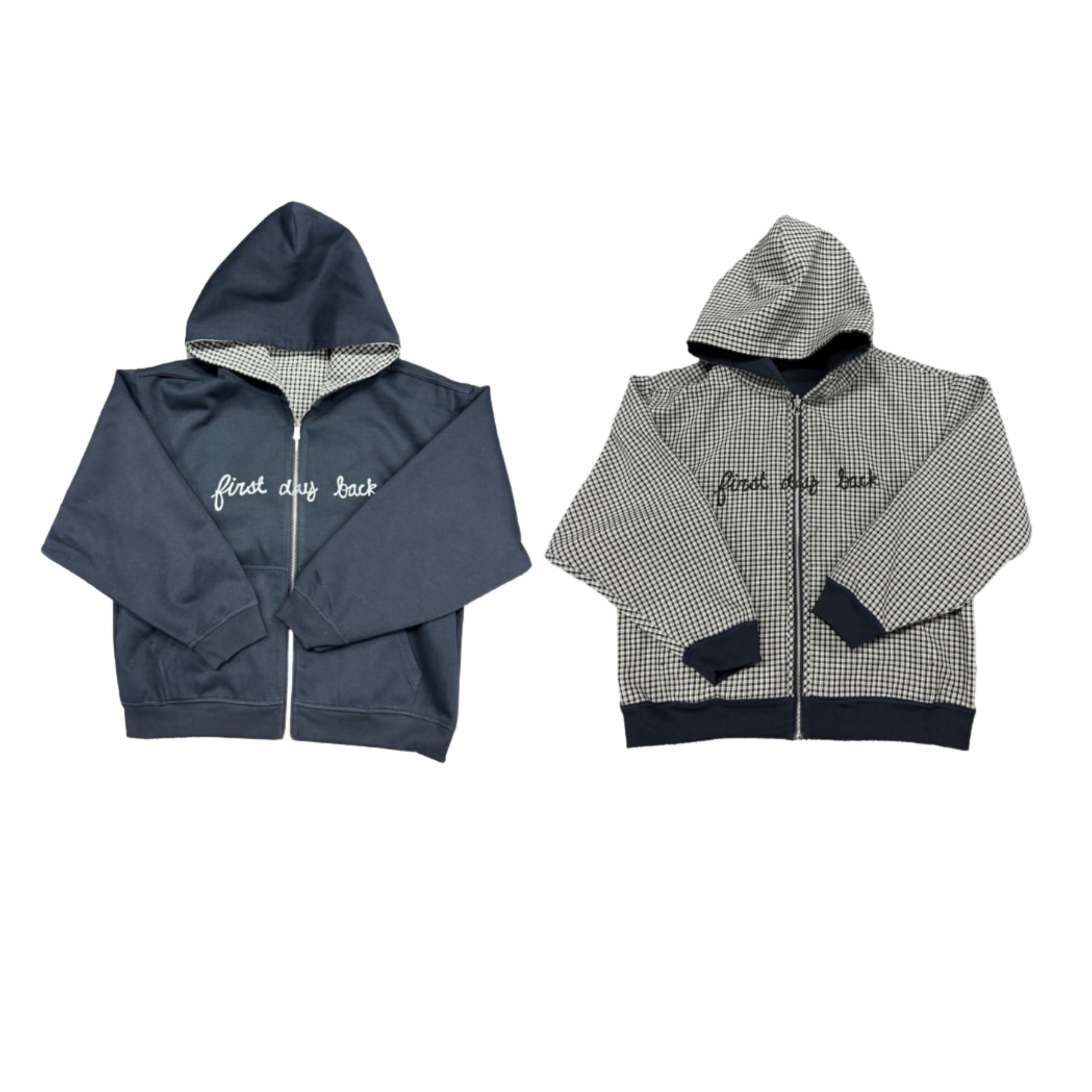
Beyond that, I love listening to First Day Back, since they’re one of our favorite clients. Whenever I discover a band we work with and really enjoy their music, it’s a cool feeling to think, “We made their merch.” Sometimes someone mentions a band to me and I get to say, “Yeah, we make their merch.” That’s really inspiring.
A:
That’s honestly a cooler answer than saying, “Oh yeah, I went to their concert.”
C: It really is. And a lot of artists give us free tickets whenever they come through our city, which is another really nice perk.
W: I’ve been listening to Making a Scene by The Title. It’s this older neon pop-punk album that I randomly discovered recently.
And honestly, the Minecraft soundtrack is always in rotation too.
M: I’d probably say First Day Back, just because they became one of our earliest clients. We’ve kind of grown alongside them.
W: It’s been really cool watching their trajectory. About nine months ago they were ordering maybe thirty T-shirts and now they’re ordering thousands for their tours.
A: Looking ahead, what’s the bigger vision for youvmerch? When people think about artist merchandis a year or five years from now, what do you hope youvmerch has changed?
C: This is a pretty ambitious goal, but I hope we completely turn the merch industry upside down. I want other companies to feel pressured because we’re choosing to be honest.
We want to come in and say: “Here’s an honest price for your merch. We’re not taking a percentage of your revenue.” Hopefully that pushes the rest of the industry to become more transparent.
Even if every merch company matched our pricing tomorrow, I still don’t think anyone could match the level of communication we have with artists or our willingness to make their ideas happen. In five years, I’d love for youvmerch to be the obvious choice for artists.
Beyond merch, we’d also love to expand into other areas–putting on shows and finding even more ways to support artists.
W: I want us to always feel super independent.
I’d love to expand that idea even further. Whether that’s independent ticketing for poptropicaslutz! so we don’t have to rely on someone else, booking shows through youvmerch, or building an ecosystem where we don’t have to deal with Ticketmaster or other big companies.
For me, it’s about creating our own universe. I don’t like the idea of giving someone a huge portion of your business just for them to do a mediocre job.
For Christian, Mat, and Will, youvmerch has always been bigger than printing T-shirts. It’s about creating a system that artists can actually trust–one built by people who understand the realities of touring because they’re living them too.
“We’re doing things differently,” Will says. “Compared to anyone else you could get your merch from, it’s honestly night and day.”
Whether they’re redesigning the merch experience or simply making sure an artist doesn’t lose money on tour, their mission remains the same: build a company that puts artists first.
If that’s the future of artist merchandise, it’s one many musicians will likely welcome.