Photo by Brendon Burton
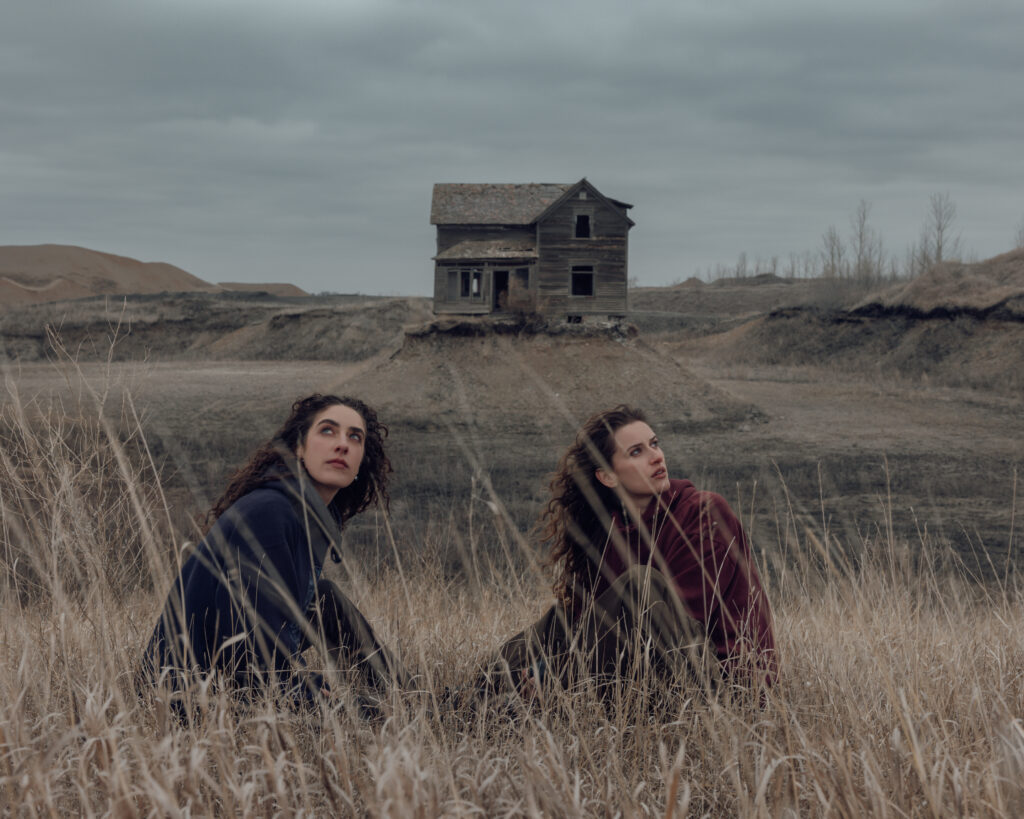
There is something hauntingly familiar about the landscapes of Tommy Lefroy’s The Precariat. Abandoned houses, decaying structures and forgotten corners of the American Plains form the visual world of the duo’s debut album, photographed by Brendon Burton. There is a sense of something left behind, of places and people caught between what once was and what might come next. It feels fitting for a record preoccupied with uncertainty.
Made up of Canadian singer Tessa Mouzourakis and American singer Wynter Bethel, Tommy Lefroy have spent much of their time together in motion. The pair first met in Nashville in 2017, while trying to establish themselves as professional songwriters, and began working together the following year after Bethel discovered Mouzourakis’ cover of boygenius’ ‘Ketchum, ID’ online. Since then, they have built a world of their own, earning a Juno Award nomination for Breakthrough Group of the Year in 2023 and finding a wider audience through their 2021 single ‘The Cause’.
Released on 23 October, The Precariat gathers six years of writing into a portrait of a world that rarely seems to stand still. Moving between love, grief, humour and existential dread, the record takes its name from the precariat: a term that resonated with the duo’s shared feeling of living without a clear sense of what comes next. Yet, for all its anxieties, the album isn’t interested in offering easy answers. Instead, it finds something quietly reassuring in the act of asking questions together.
When we speak, Tommy Lefroy reflect on the instability that has shaped their lives and music, the forgotten American landscapes that informed the album’s visual identity, and the possibility that uncertainty might be easier to bear when it is shared.
Your debut album, The Precariat, was written over six years, across periods of transit, crisis, love and grief. Looking back, what do you feel you were documenting and do you think the album became a portrait of the wider world you were living in?
Wynter: Definitely. I think we were primarily documenting transience. We were in motion a lot. The period covered the time when we started the band, and things were pretty non-stop in the early days. The world around us was also changing really rapidly, and we’re now in the midst of another revolutionary time. The album reflects that wider context and how it shaped our own experiences. I think it made us feel even more unsteady, given everything that was happening.
The title The Precariat suggests a state of economic and emotional instability, particularly for a generation navigating an uncertain future. How did you arrive at the title and what does precarity mean to you both personally and creatively?
Tessa: The title initially came to me during a conversation with a friend about feeling precarious and futureless, because we’re all experiencing similar existential dread and anxiety. He said in passing, “Well, yes, you know, it’s natural – we’re part of the precariat.” I’d never heard the term before, but I immediately had an emotional reaction to it. I didn’t formally know the definition, but I knew what it meant to me. I went home and researched it further, then went to see Wynter at rehearsal the next day. I knew it was what we should call the next record. She agreed, and we both had a visceral reaction to it. I feel like precarity is one of the most consistent feelings we’ve experienced.
Did you already have all of the songs written when you came up with the album’s title?
Wynter: We had some. We knew we wanted to make a record and had been wanting to do so for a long time. We definitely had songs we were saving for it, but I think coming across the title gave us a lot of direction for writing the rest. We always wanted the songs to be in conversation with each other and for the album to feel like a concept record. We wanted everything to have a throughline, with the songs feeling connected. Having the title gave us a lot of direction.
You’ve described the album as observing a world in crisis, yet retaining ‘still a little bit of hope.’ How did your approach to songwriting change as the world around you did?
Wynter: I feel like our approach is always evolving, but the best you can hope for with a body of work is to capture a moment as you see it. We read a book called One Day, Everyone Will Be Against This by Omar El Akkad, in which he talks about documenting history as it happens and keeping a record as an act of resistance, rather than tuning out. I think that was something we also sought to do: to be present.
It’s very easy to disengage, and we’re almost conditioned to do that. We compartmentalise and use music for escapism, which feels even more prevalent these days than before. The album asks people to be present, even when it’s difficult, and reminds them that they’re not alone. The communal experience of precarity needs to be recognised because there’s unity in it.
American culture is so individualised, and there’s a lot of shame around not being self-sufficient or being able to take care of yourself. Other cultures place more emphasis on community. Hypercapitalism has also influenced a lot of the songs on the record. For example, ‘Slush Puppy’ comments on that and on hyperconsumerism. There’s a lot of ground covered.
Tessa: We were talking a lot about precarity, existentialism and feeling futureless, which can be incredibly alienating. Our hope in writing about these experiences is to make them feel more universal through the act of sharing. When you feel alienated and don’t talk about it, you perpetuate the problem. We need to support each other by talking about our experiences and building community.
There’s a lot of shame around feeling precarious or uncertain in society. What was important to us was that the record didn’t sound like we were preaching, claiming to have all the answers or standing on a soapbox telling people what to think. We’re going through the process of asking these questions alongside the listener. We’re also unsure and uncertain, doing research, re-educating ourselves and asking questions. We’re not pretending to know anything. If anything, it’s like telling your friend about a cool book you’ve read that you want to talk about with them later.
The album artwork, photographed by Brendon Burton, has a haunting, distinctly American quality. Did you have a particular landscape or feeling in mind when developing its visual identity?
Tessa: We were looking for a gothic, decaying, post-capitalist, post-apocalyptic backdrop, with earthy tones. We had a very distinct vision and came across Brendon’s work online quite organically. His personal work as an artist was exactly how we’d imagined the visuals surrounding the record. He was the perfect collaborator because we didn’t need to ask him to do anything differently; his work already aligned with our vision. It’s in conversation with the underbelly and forgotten places, and that thread runs throughout everything he does.
We essentially just asked him to put us in his landscapes. We didn’t want him to change anything, just put us there. It was perfect, and such a cool experience. We went on a week-long road trip across the North American Plains, visiting so many abandoned houses and nuclear missile complexes.
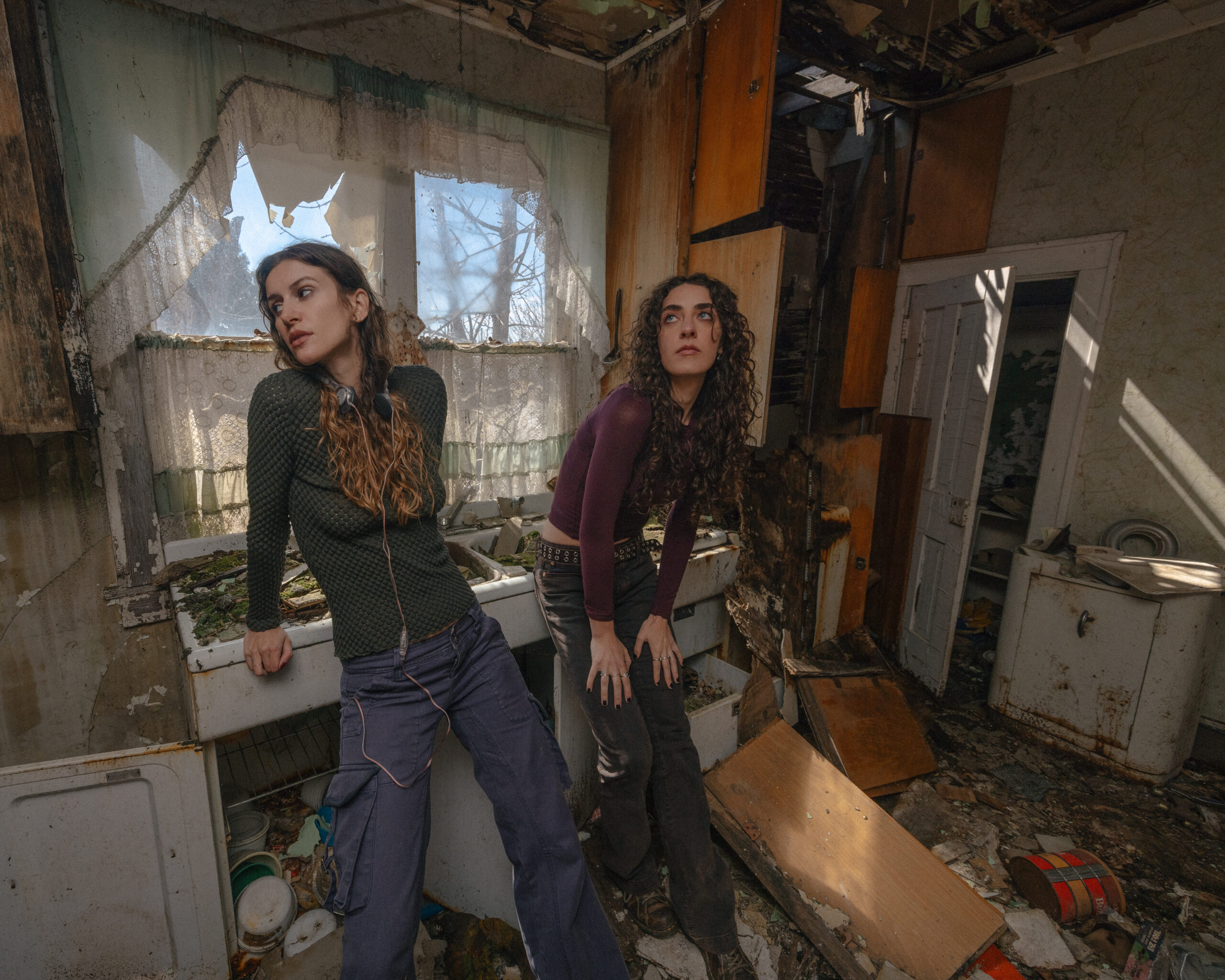
Wynter: The masks we wore were functional because the house was infested with black mould. We were shooting in there for 45 minutes, and it was crazy. It’s one of the strangest things I’ve ever done. There were so many places rich with symbolism. For the “Angel in the House” music video, we shot at a farmhouse that had been abandoned for close to 100 years. It was just a beautiful, derelict stone structure.
For some of the ‘Slush Puppy’ visuals, we shot at an abandoned nuclear missile complex built in the 1970s during the Cold War. It was a huge investment in a facility that barely opened before being shut down. That colossal waste of investment is now being repurposed as a data centre. The cycle repeats.
Tessa: We think the mould was caused by a well nearby that had burst. The house was covered in mould and moss. It felt like a portal because the ceiling had these crazy mould formations that made it look as though it was about to cave in. Many of the houses had been abandoned in the early 2000s because the towns were built around industries that eventually left. We felt that was emblematic of what we were exploring on the record: the boom and bust of an industry. Oil was a major industry there, and, funnily enough, it’s brought people back to the area now.
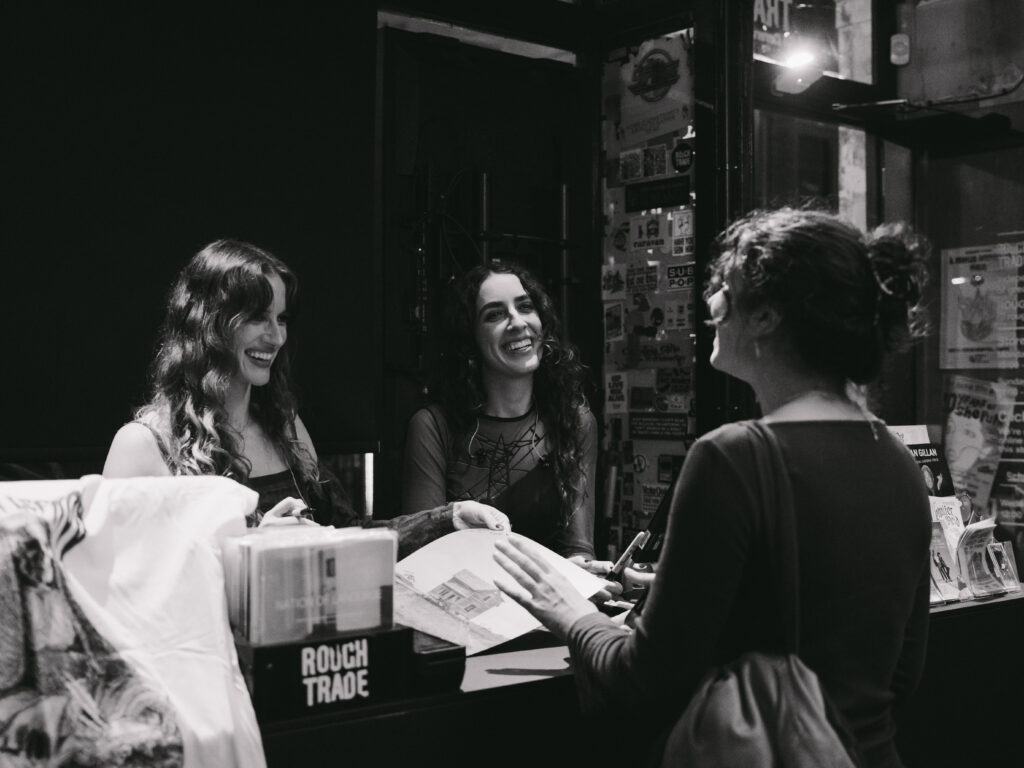
You first met in Nashville while trying to establish yourselves as professional songwriters and now you’re releasing your debut album together. How has your relationship to each other as creative partners evolved since 2017? What can you do now that you couldn’t have when you first met?
Tessa: When we first met, we approached the project in much the same way as we approached songwriting. We were songwriters first, and at the time, we felt we needed to hire a producer and make a record with someone else. In the early days, we were looking for a lot of permission. Various factors, including COVID and being apart, also shaped how we began making music.
I think learning to do things ourselves and trusting that we could figure them out led us to start producing our own work. We co-produced this record with Stephen Sesso and Mike Crossey in LA, but everything else up to that point had been self-sufficient.
Wynter: Every season of this project has felt like an impossibility. We’ve done so many things that seemed impossible until they happened, and that has expanded us enormously. We’ve learned a lot along the way.
Initially, our collaboration was very confessional. We saw ourselves in each other and found a space where we could share things in ways we hadn’t been able to in other creative collaborations, especially in Nashville, where songwriting can be very methodical. It’s a structured, specific world, and we never really felt like we fitted into it. Instead, we were able to build a world of our own.
There’s a lot of trust between us. We’re fixtures in each other’s lives, and we’ve been through a lot together. It’s been an expansive and exhausting experience.
Do you feel like LA is more suited to this time in your lives?
Wynter: I think we miss London. LA has been an interesting chapter. I’d lived there briefly before, and then we both lived in London for five years before returning to LA at the end of 2024. We were both there together throughout 2025, which was when we spent time making the record. We still spend time in both places, but we’ve been based in LA.
Even when we were in London, life felt transient. We were going back and forth and living out of two suitcases. All the planetary insecurity we’ve experienced has felt heightened by our own personal transience.
Tessa: Being in LA served the purpose of the record. The studio we had access to and the space itself were so unique to LA, and we were really grateful for that opportunity.
Do you see yourselves ever settling down in one place, or do you enjoy the feeling and experience of transience?
Tessa: I love travelling and exploring, but I also miss being able to leave all my stuff somewhere and know it’s safe and sound. There’s always a question mark when you’re subletting. My favourite part of touring is being in a new place, but towards the end of the year, I always get homesick because I’m tired. I’m from Canada, so I love trees and just being able to breathe. By the end of the year, I’m usually desperate to get out of the city.
Wynter: I feel like I always have one foot in two cities. When I lived in LA, I was always in Nashville, and when I was in London, I was also in LA. I don’t know if it’s a curse or what exactly, but I think I’ll always be a little transient. It would be nice to be able to leave your stuff somewhere without having to sublet and pack everything up each time.