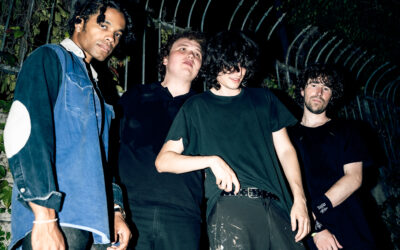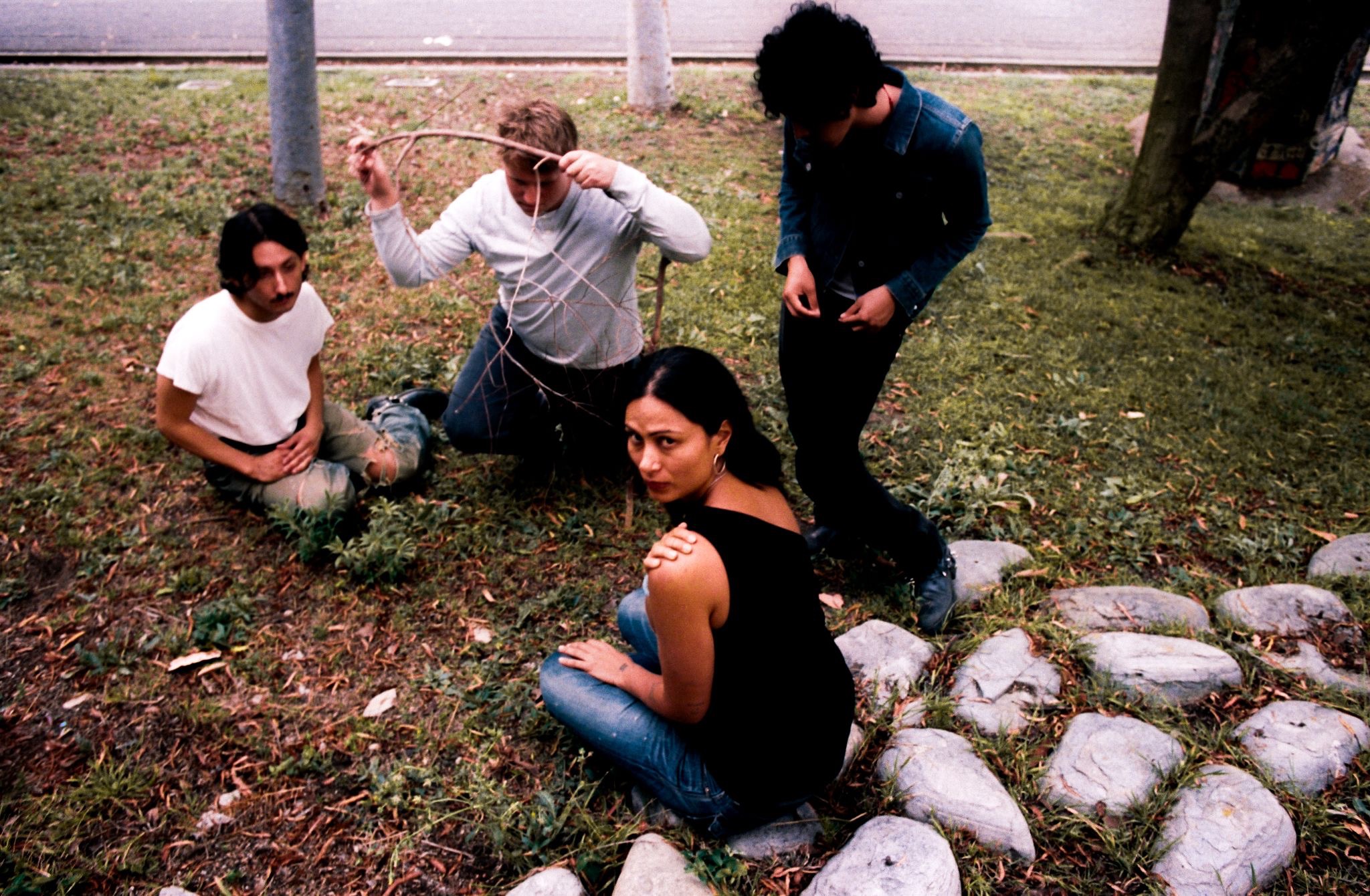
Ahead of their long-awaited and self-titled debut album Untitled (Halo), LA DIYers Untitled (Halo) sat down with Cult Machine between two sold-out shows at London’s Windmill Brixton. Built around spiralling synths, melodic lyrics and punchy trap beats, the band blend melancholic rock with a distinctly Californian sense of isolation, while pulling visual art, film and community into the project around their music.
Having grown up going to DIY shows across LA, Untitled (Halo) are both products of the scene that shaped them and active contributors to its next chapter. After forming during COVID, the band began building something of their own, bringing friends, artists and musicians together around a project that refuses to separate music from the wider creative world around it.
Before their second Brixton show, we spoke to Ariana and Jay about Zillennials, the value of actually putting the work in, heartbreak, building a DIY community and the strange, isolating beauty of the California sun.
How was your first show at the Windmill in Brixton last night?
Ariana: Really good, the crowd was so cool. We had people come from places like Glasgow and Copenhagen.
Jay: We all had ideas of what last night was going to be, and for me, it was way better than what I expected. We walked into the venue and loved the vibe.
It’s always nice to see those people on the ground because online, you don’t know what anyone looks like.
Ariana: Yeah, it’s really validating. Not that you need validation, but it is like, “Whoa, how exciting.” It was a really fun night.
Amazing. I firstly wanted to ask about the single off the new album, Aimee Lou Wood Freestyle. I’m interested in the name.
Jay: Yeah. I love her. I was just watching a lot of White Lotus, and this was on the eve of fucking… SNL was making fun of her, and it was just on my mind. And you know when you save files and the naming is subconscious? It was just…Aimee Lou Wood Freestyle.
She reached out and asked us, “Why is this named after me?”
We were just like, “We love you.” She posted and it was cute.
The reason I asked that is because when I look across the song titles, for example, Finding God in the Cut, there’s a sort of Gen Z irreverence to how you name the songs. Do you think that’s somewhat part of your identity?
Jay: Yeah. It’s definitely a part of our vernacular, our dialect. It’s very Gen Z. And sometimes that comes out, even just the way we talk to each other
Ariana: I think we exist at the cusp, we’re considered Zillennials, but no one says that word. With the titling of songs, we’re very intentional with everything in the band, but sometimes when it comes to songwriting, it’s just the first thing that we think of.
It’s interesting how that is where an element of humour comes through for you as a band.
Ariana: Oh I feel like some of our songs are humorous! or the lyrics, at least.
Jay: Skill issue is a funny one. We were soundchecking in Oslo and said, “Which song should we do?” And the sound guy was already freaking out because he couldn’t get the sound right. And I said, “Should we play Skill issue?” But he only heard “skill issue”, and then the sound guy was like, “Oh, you don’t gotta be mean.”
Ariana: We’re a funny band. The music seems super serious and emotional but there’s humour in everything we do.
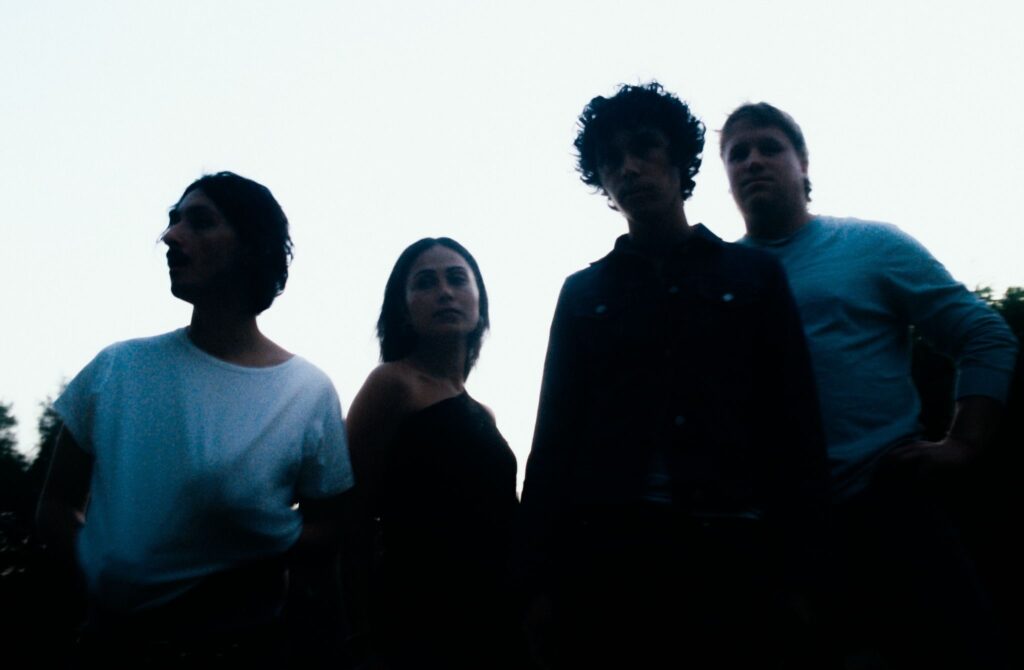
I read that you formed a bit of a community around your music in LA. Is that correct?
Jay: Definitely. Me and Ari met up during COVID. Coffee shop, masks on, and we were just talking about our interests and it snowballed from there.
Ariana: We all grew up going to shows at The Smell or The Observatory. And then when we were young people in LA, and we were really inspired by other things going on in the world, and we just felt like we needed to start something for the sake of doing it for ourselves.
Jay: Growing up in LA, like me going to DIY shows, you’ve had experiences just seeing the online community translated, like, IRL. And like, mid-2010s, it was like, yeah.
Post-COVID, everything was starting up again, like all the warehouse raves in the underground scene. What was missing we felt was just like…rock shows.
Ariana: I feel like we want to combine everything, like art, film, music in a project. I mean, there’s so many great bands in LA. We just wanted to start something that felt more like us. And a by-product of that is other people wanted to be a part of it, which is really cool. It’s been growing naturally.
Jay: Yeah, it’s cool to hit people up and be like, “Can you help us with this?” And it’s like, it’s during a night somewhere. Someone makes the flyers, someone helps bring the gear.
That’s a real DIY community. If you could give advice to someone who wants to start something, be creative where they live, but there isn’t much there. What would you advise?
Ariana: We tell kids this all the time. Just put it out. Put it on SoundCloud. Make something with your friends. No one is really gonna help you until you help yourself. If you believe in it, someone else will believe in it.
Like, we just did it. Our microphone from Amazon and using Ableton, just put stuff out for fun on DistroKid and you just try hard. No one wants to try anymore, right?
I don’t think they want to try…
Ariana: But honestly, it is true. People just want instant now, they don’t want to actually do the back work of being in a band, and maybe that’s what we felt. We were like, “We want to be in a band.”
That’s really interesting. There is a lot of instant gratification now.
Ariana: I feel like with Halo, like, we sure want instant gratification, everyone wants that, but the goal of Halo was to be this thing that at the end of whatever it is, is going to feel really good.
Ariana: We just want to be a community where people can feel welcomed and just be there for music, and that’s it, and art, and just connecting in that way.
Jay: Yeah just be bashfully honest about your interests!
Your sound is described as “California melancholia”. What does that mean to you?
Jay: I think my main concept when it comes to that is like isolation and stillness, and then also having this time to put in the effort and create something for yourself amongst the strife and creating your own meaning.
Is that something that feels California-specific, do you think?
Jay: I feel like everyone thinks California’s all sunshine, but then, like, what happens when that sun itself is like bleaching you dry?
Ariana: If you hear one of our songs, a lot of people will say it’s like, yeah, like indie rock, but it’s also shoegaze and sad. And I think California specifically has that all in it, as a state.
California is this beautiful place, but it’s also sad in many ways. There’s this isolation with how you can’t just take the train and see people. You have to sit in your car and you have to make plans with people to hang out. It’s not spontaneous.
But we’re proud to be from LA, and we want the band to exist as a product of where we’re from and not – we had to move somewhere to make music.
It’s like when you’re given an essay and a prompt. LA was our prompt. We had to decode it and make something of it.
I read that there were personal heartbreaks poured into the writing of the album. Do you feel like you experienced that “sonic catharsis” you were seeking from the process?
Ariana: Yeah. I think that was mainly me…
Jay: I think it was a collective feeling. It feels good again to just get things out. Like, get things out of you and like, even going back to like looking back at a point in time where I was when I wrote the songs. And even now when I listen to it, it’s completely different meaning attached to the words that I wrote.
Ariana: A lot of what I have on the record is about a specific breakup, but it’s so cool. You joined a band and you’re like, so many cool songs that you listen to now, you realise wow, heartbreak is one of the most special things to write about because it’s so pure.
We have a song, How to Make Your Love (Stay). We were meant to have a session and I couldn’t go because it was the first time I had seen my ex and I was like, I was not a person. I had to just go cry alone with my best friend.
And I came in the next day and poured everything into the song, and I don’t think any of the songs would be as they are if we don’t go through what we go through. And we’re really good people at being emotional, vulnerable, and not shying away from that.
And it helped me a lot. If we didn’t have this record, I feel like I’d still be grappling with that.
Are you good at being vulnerable together?
Ariana: Yeah, definitely. We all see lyrics in front of each other. We write in front of each other.
Jay: It’s like, after a person lays something down after not hearing what they’re about to say, it’s just like, “Are you okay?”
Ariana: I’m so, like, grateful that we decided to write this record when we did.
And we had someone last night who told me, “Oh my God, your music got me through one of my worst breakups.” And that’s where we’re trying to write from, a place where other people can listen and relate to.
Okay finally, since we’re in London, I would like you to pick three UK-based festival headliners for “Halo Fest”.
Ariana: Oasis. Slowdive.
So you’ve already picked two. That was quick.
Jay: I love UK music. Literally all of Sarah Records. That literally would be my dream. Like, I just love Sarah.
Ariana: UK has the best music. Hood!
Jay: Hood, yeah.
Okay there we go. Oasis. Slowdive, Hood. That’s Halo Fest.