Photo by Sophie Hurr
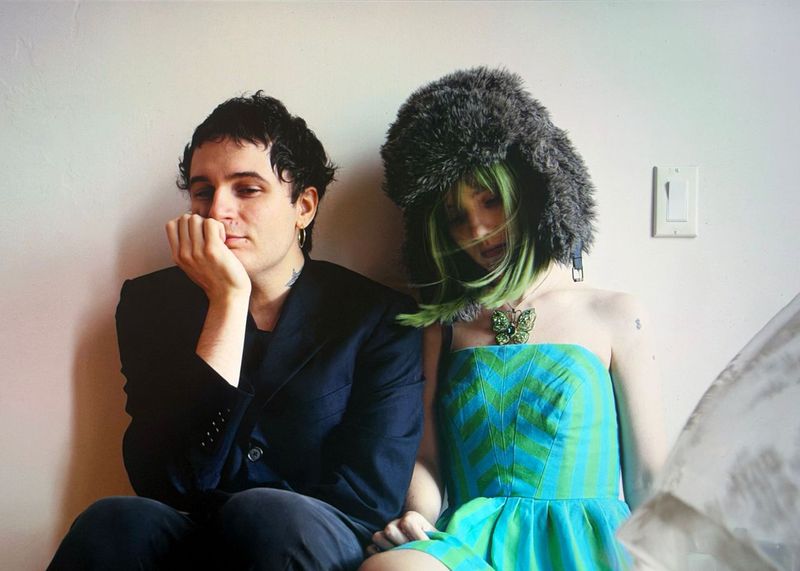
For New York duo Sex Week, connection is as much about listening as it is about being heard. Comprised of Richard Orofino and Pearl Amanda Dickson, the pair first found each other through a mutual fascination with music and, somewhat unexpectedly, a mixtape featuring Finnish goth-rockers HIM. What began as a musical curiosity soon developed into a creative partnership built on experimentation, instinct and a willingness to abandon convention.
Their debut album, Ears as an Organ of Touch, out 12 February via Grand Jury, explores the strange intimacy of sound, communication and cohabitation. Written and recorded during their first year living together in Brooklyn, the record moves between moments of complete connection and total collapse, drawing on everything from pop and folk to club music and cinematic nostalgia. It’s an appropriately chaotic portrait of two people learning to make music, and a life, together.
Having shared stages with Mitski, Fcukers and Cardinals, and recently released their second EP, ‘Upper Mezzanine’, Sex Week are entering a new chapter. We caught up with Richard and Pearl to discuss the unlikely origins of their partnership, the domestic chaos behind their debut album, and why the ear might just be the ultimate portal.
You first connected through a mixtape before properly meeting. Looking back, what was it about each other’s musical sensibilities that made you realise there was something worth exploring together?
Richard: A lot of the music on the playlist was stuff I’d never heard before. I thought I knew a lot about music, but there was still so much to discover. The first HIM song I ever heard was on that playlist, and it’s the best song ever. In terms of working together, I came from a pretty traditional songwriting background, whereas Pearl had a completely different approach.
Pearl: I loved that Richard wanted to expand on the playlist and talk about music. It got us discussing music more generally, and he introduced me to things I hadn’t heard before. Richard was always making music, so we started experimenting together.
Pearl, you came into the project without previous music-making experience, while Richard had been releasing music for years. How did you find your footing as a duo, and what do you think each of you has brought out in the other’s creative process?
Pearl: I think I broke Richard out of his routine a little in terms of how he approached making music. I’ve always been a huge fan of music and understood how it made me feel, but I didn’t know much about the technical side of it.
Richard: Making music through pure feeling, rather than thinking about how you should or shouldn’t do things, was something I started exploring with Pearl. We realised we could do anything. I’d studied music theory and electronic music in high school, and even spent a semester at a music conservatory before leaving because it wasn’t for me. Working with Pearl helped me move away from some of that more structured approach.
Your influences range from Beyoncé to the Grease soundtrack. How do such different reference points find their way into your music?
Pearl: I listen to so many different types of music that it naturally finds its way in. I’m not particularly attached to making one specific type of music. I think one thing that makes us recognisable is how many of our songs are duets, with us singing back and forth and talking to each other.
Richard: We love movies, and Grease was really formative for both of us. We grew up with different things that we now get to talk about together, even High School Musical, which has some great duets. With some of the newer songs, we really wanted to capture that High School Musical feeling in the lyrics and the way we sing together.
Your debut album, Ears as an Organ of Touch, was written and recorded during your first year living together in Brooklyn. How did sharing a living space shape the record, and did you find that your domestic life inevitably became part of its sound?
Pearl: Absolutely. You don’t really know where the music stops and starts when you’re living together. We have a railroad apartment with no doors, just three rooms connected by a really long hallway. I think some of the angst came from the frustration of literally not being able to close a door. There’s also something quite homely about the recordings because we weren’t in a padded-out studio.
Richard: We have a few curtains that act as doors, which are good for changing the energy of a room. You can isolate a space or open everything up. Our individual lives gradually became one, which could get a little confusing, especially while making the record. The studio and our beds were all in the same apartment.
The room was completely untreated, so we leaned into that. We recorded things pretty improperly because we didn’t really know how to mic anything. A lot of the vocals were quite far from the microphone, which meant you could hear the room, along with things like chairs and plates. We even used the dishes we were washing in some of the songs. We had lots of pans around.
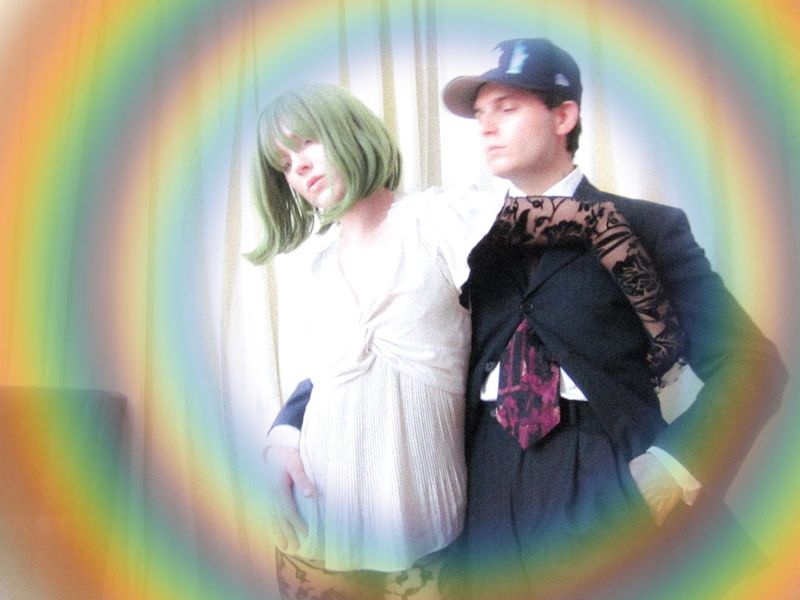
The album title suggests listening as something physical rather than simply auditory. What drew you to this idea of sound as a form of touch, and how did it become the conceptual thread running through the record?
Pearl: I was inspired by a video about how films use your eyes as an organ of touch. It was a quote from a book about film, and I thought it was such a beautiful way of describing touch. I wanted to extend that idea to listening: when you listen to someone and make them feel heard, there’s a sense of being touched. It also connected to our duet style, where we’re constantly listening and responding to each other. We were originally working on a song called ‘Ears as an Organ of Touch’, but it didn’t quite have what we wanted, so we felt it worked better as the album title. It seemed to encapsulate the whole record.
You’ve described the record as moving between total collapse and total connection. What were you hoping to capture emotionally and sonically?
Pearl: A lot of it comes from our inner worlds, our interpersonal dynamics and how we both see the outside world. There’s so much that’s frightening about things like surveillance. The idea of total collapse speaks to the systems around us and how we navigate them, but it can also be something as ordinary as fighting with your partner. It’s that constant back and forth and chaos.
Richard: I love the idea of an Orwellian Big Brother surveillance state existing alongside the feeling of having a crush.
You directed the video for the title track yourselves, even using an inner-ear camera. Where did that idea come from, and how important is the visual side of Sex Week?
Pearl: The visual aspect is really important to us. We’ve directed almost all of our music videos ourselves, so it felt natural to do this one in-house. The ear camera was my idea. I thought it was such a funny, grotesque object and wanted to film it going in and out of people’s ears. For some reason, they’re only around $4,000, which isn’t that expensive! I tried it in my own ear twice but didn’t like it, so Richard ended up doing it instead.
Richard: All the shots where the camera goes into someone’s ear and switches to the inner ear are actually filmed inside my ear. We’d just put it in and pull it out. I was into it because you could watch the footage as it went in.
I think you’ve missed your calling as an ENT.
Richard: I probably should’ve been some sort of ENT. It’s the next big thing! The ear is kind of a portal, too. Sound isn’t tangible, but it can become something physical through the way we experience it and respond to it. I love the idea of going into the ear.
Having already toured with Mitski, Fcukers and Cardinals, played festivals internationally and released two EPs, you’re now approaching your debut album with a growing audience behind you. Has your understanding of what Sex Week can be changed since those early days, and what do you hope this record opens up for the band?
Richard: We’ve always struggled to stick to one particular genre or sound. Before meeting Pearl, I felt like I could only really make one kind of music. Now, we can have a straight folk song sitting alongside something clubby, catchy and pop-driven. They can all exist on the same record because that’s what we like. What makes it Sex Week is our voices singing back and forth. The music can sound however it wants. We have so many unfinished songs and little ideas that I’m excited to revisit.
Pearl: I feel like I’ve found my sound with every song, only to find it again in something completely different. It’s not necessarily cohesive. Touring so much this year has also made us think about what works live, particularly how the set flows and what feels good to play. That’s going to inform the music we make next. We always had this fantasy of going to Alaska, where my dad grew up, but never made it happen. We’ve just been to Paris, though, so now I have Paris fantasies!
Richard: I loved going to the cafés that stayed open until two in the morning, having a cigarette and a coffee and watching the street. I wish we could live there for a while, although everything is so expensive. We’d love to record somewhere in a city or somewhere completely secluded in the countryside.