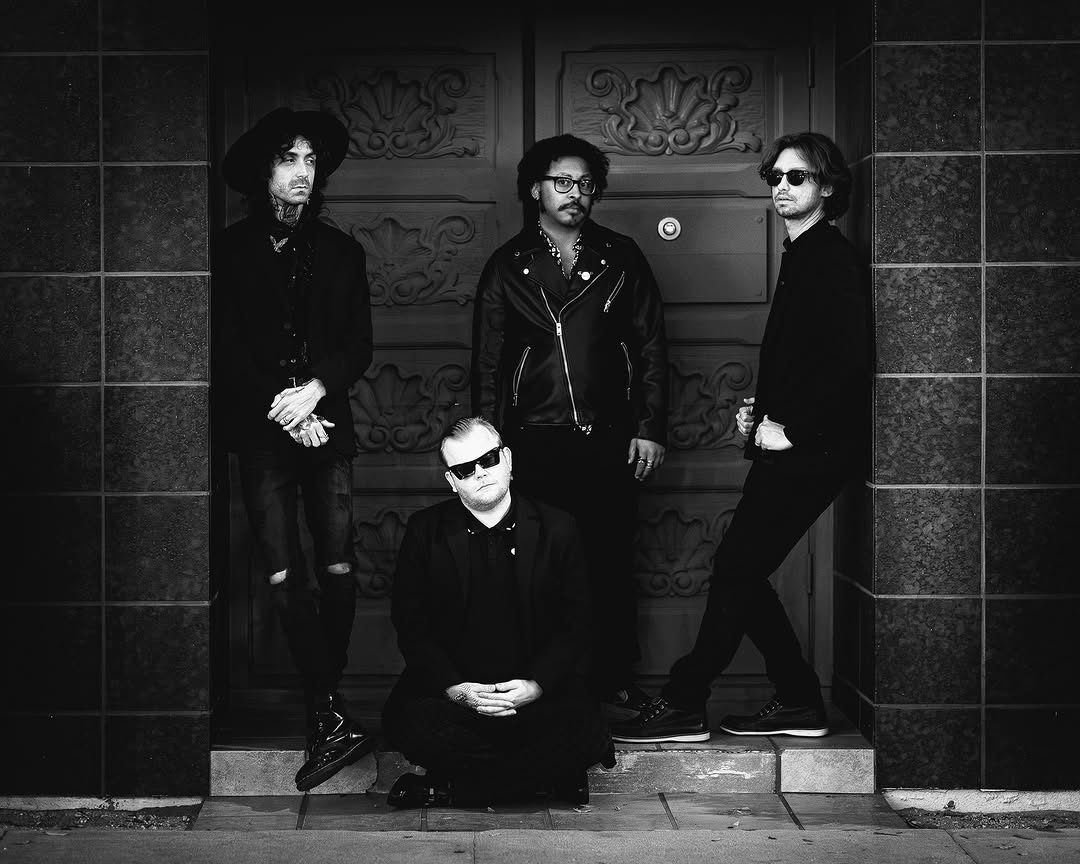
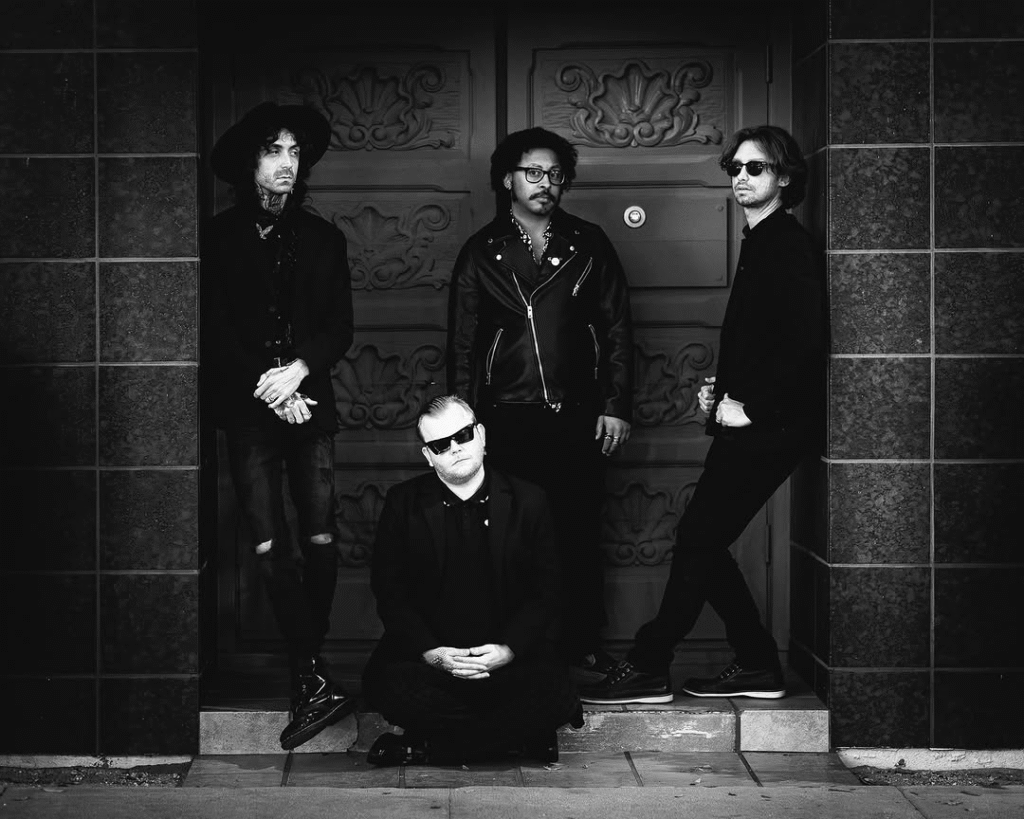
Phoenix-based darkwave outfit Paper Foxes are stepping into a new chapter with Rituals, their first full-length album on Cleopatra Records, arriving January 30, 2026. The record marks a clear expansion of the band’s nocturnal sound, leaning deeper into shadowy synths, pulsing basslines, and emotionally charged storytelling that nods to Depeche Mode, She Wants Revenge, and late-night drives with the windows down.
Rituals unfolds as a collection of cinematic, emotionally charged stories exploring obsession, transformation, and the fragile spaces between love, hunger, and identity. Pulsing basslines, atmospheric synths, and sharp hooks pull listeners deeper into a carefully constructed world that feels both intimate and dangerous.
Their goal with Rituals was to create a world you can get lost in, each song tapping into a different facet of obsession or transformation—moments when passion twists into something more intense, more dangerous, and ultimately more revealing.
To talk about the making of Rituals, we spoke to lead singer and songwriter CJ Jacobson about the slow-build process behind the album, evolving influences, and how obsession, desire, and transformation quietly threaded their way into the songs.
How did Rituals come together as a full-length album?
Unlike the immediacy of an EP, Rituals took shape gradually. The album was written over the course of about a year and a half, with songs emerging organically rather than being forced into a rigid concept early on. That slow pace allowed the record to reflect CJ’s changing inspirations and headspace as it developed.
Early in the process, newer darkwave acts like Twin Tribes and Urban Heat were heavy in rotation. As time went on, CJ found himself circling back to formative influences that had shaped his musical instincts long before Paper Foxes existed.
“We worked on it slowly, usually writing a new song every month or two,” he explains. “It was very much based on what was inspiring me at the time. Later, I went back to influences like She Wants Revenge and Nine Inch Nails, which have been huge influences throughout my life.”
Even though the album came together piece by piece, CJ says he always knew it was heading toward a full-length release. That intention shaped how the songs were written, with an eye toward cohesion rather than isolated singles.
When did the album start to feel like it had a clear identity?
For a long time, Rituals existed as a loose collection of songs. The turning point came with the release of the single “Ritual” last summer, which felt like a clear departure from the band’s earlier work. As well as resonating creatively, it also connected with a wider audience and drew in new listeners, signalling that Paper Foxes were onto something bigger than a stylistic experiment.
“When we released ‘Ritual,’ it felt like a step in a new direction,” CJ says. “We started reaching a new audience and getting really good feedback. That was the moment I knew we needed to fully commit to making an album.”
Why was “Blood Drug” chosen as the lead single?
The album’s lead single, “Blood Drug,” serves as an entry point into Rituals’ thematic undercurrent. Framed as a werewolf’s love confession, the track explores devotion warped by hunger, where affection and addiction become indistinguishable. It’s seductive, unsettling, and intentionally uncomfortably intimate.
“It honestly just felt right,” CJ explains. “It has an identity that introduces people to us as a band. Not all of our songs sound like that, but it makes sense as a first impression.”
As an opening statement, “Blood Drug” sets expectations for the emotional intensity and narrative darkness that runs throughout the album without giving everything away.
Do you have a personal favourite track on the album?
Ask any artist about their favourite track, and the answer often changes with time. For CJ, that’s very much the case with Rituals. While “Blood Drug” held that spot early on, another song gradually took its place.
“Numb,” which remains unreleased ahead of the album, wasn’t initially meant to stand out. It started life as what CJ assumed would be filler, a necessary piece to complete the album’s structure. That assumption didn’t survive the production process.
“Once it was fully produced, I realised how strong it was,” he says. “If I heard it as a listener and not as the songwriter, I’d definitely add it to my playlist.”
Moments like that speak to the value of letting songs evolve rather than over-controlling them from the start.
How did working on Rituals push you creatively compared to past releases?
Creatively, Rituals pushed Paper Foxes into unfamiliar territory. Much of the album was built digitally, with band members recording parts individually rather than tracking everything live in a studio. The shift allowed for more experimentation but also required a different kind of trust in the process.
“You don’t always know what the song will sound like until it’s finished,” CJ says. “That was very different from our earlier work.”
This approach leaned heavily into electronic production, reinforcing the album’s synthetic textures and cinematic pacing while still leaving room for organic moments to cut through.
How would you describe Paper Foxes’ sound to new listeners?
When asked how he frames Paper Foxes for new listeners, CJ reaches for imagery rather than taxonomy.
“I’d say it’s music for scary movies,” he says. “Maybe She Wants Revenge for vampires. It’s dark, moody, and atmospheric.”
Your music balances emotional depth with danceability. Is that intentional?
Across the band’s discography, introspective lyrics sit comfortably alongside pulsing rhythms and club-ready tempos. That balance isn’t accidental as CJ approaches songwriting with an awareness of how songs will live beyond headphones.
“Completely intentional lyrically and thematically, my music is very emotional and introspective, but I always want people to dance at our shows.”
For CJ, movement becomes another way of processing emotion. The darkness in the lyrics invites them to engage physically, letting the body carry some of the weight the words introduce.
What do you aim to create during live performances?
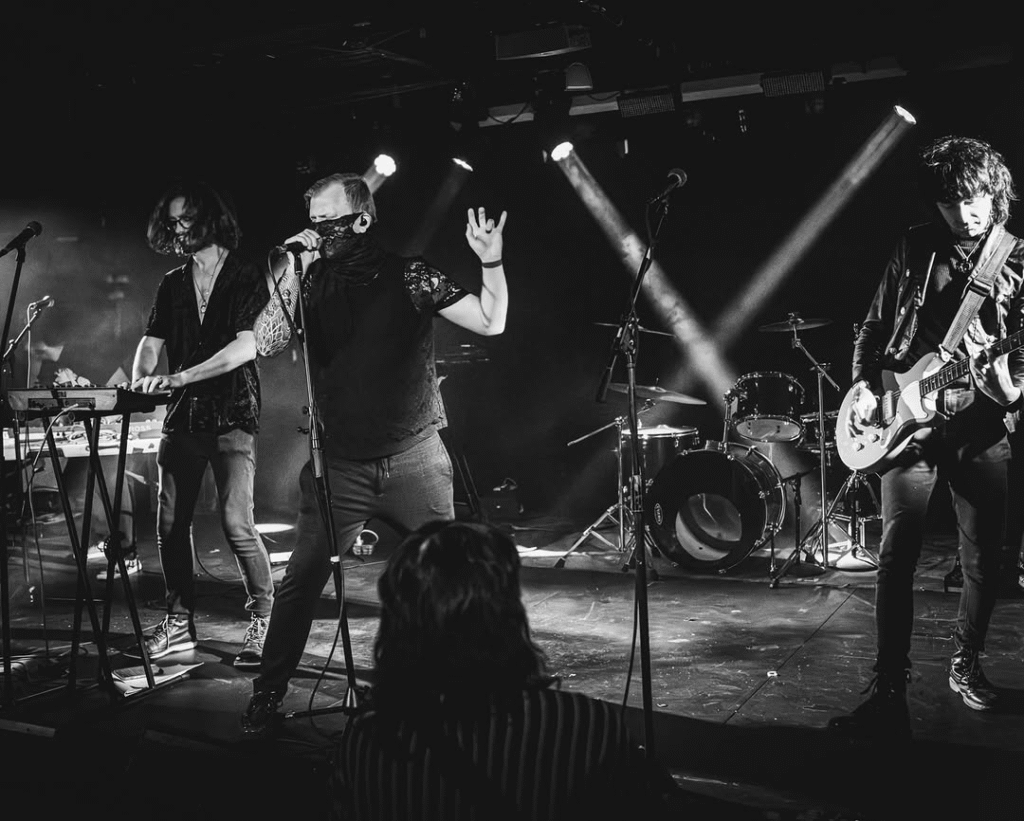
Paper Foxes’ reputation as a live band rests on consistency, energy, and variation. CJ thinks carefully about how a set unfolds over time, treating it as a living thing rather than a fixed script.
“Consistency and quality are important,” he says. “But I also like to keep things fresh. I never play the same set twice.”
Songs shift positions from night to night, allowing each show to develop its own arc. The aim is to give audiences something familiar while keeping the experience alive and responsive.
How has the Phoenix scene influenced Paper Foxes?
Paper Foxes’ growth has taken place alongside a broader expansion of Phoenix’s darkwave and goth community. Over the past few years, the scene has gained visibility, momentum, and larger audiences.
“Over the past two or three years, the darkwave and goth scene here has grown a lot,” CJ says. “Bands that used to play small venues are now selling out much larger ones.”
While Phoenix may still sit outside the usual cultural centres, the city’s scene has become a fertile space for experimentation and connection. That local support has helped bands like Paper Foxes develop confidence and ambition.
Was there a song that changed significantly from its original idea?
“Exodus” evolved more than expected. What began as a track leaning toward Depeche Mode territory grew heavier as the band developed it.
“Once we started working on it, it leaned more into a Nine Inch Nails direction,” CJ explains, especially after a heavy riff reshaped the song’s energy.
How important is visual imagery to Paper Foxes?
Visuals are central to the band’s identity. “In today’s world, people often see us before they hear us,” CJ says.
Inspired by horror films and themes of loss, their visual language focuses on mood rather than narrative. Music videos, artwork, and stage aesthetics aim to create a unified atmosphere that mirrors the emotional tone of the music. From colour schemes to horror-inspired imagery, everything is intentional.
“Our music videos don’t always tell a full story,” CJ explains, “but they always capture a mood.”
What goals do you have moving into the new year?
The year ahead is already in motion. One major goal, playing internationally, is becoming a reality, with shows scheduled in Belgium and Paris this February. Beyond that, CJ hopes for a longer tour, whether headlining or supporting a larger act.
What do you hope listeners feel when they hear Rituals for the first time?
Despite the album’s dark themes, CJ doesn’t want the takeaway to be sadness. “I don’t want people to feel sad,” he says. “I want the emotion to be felt, but in a way that’s inspiring.”
Whether that inspiration leads someone to dance, create, or even cry a little, that response matters. “In a good way,” CJ adds.With Rituals, Paper Foxes are opening the door to a carefully built world—one shaped by obsession, transformation, and the thrill of stepping into the dark and finding something human waiting there. It comes out on January 30, 2026, serving as Paper Foxes’ first full-length release.