
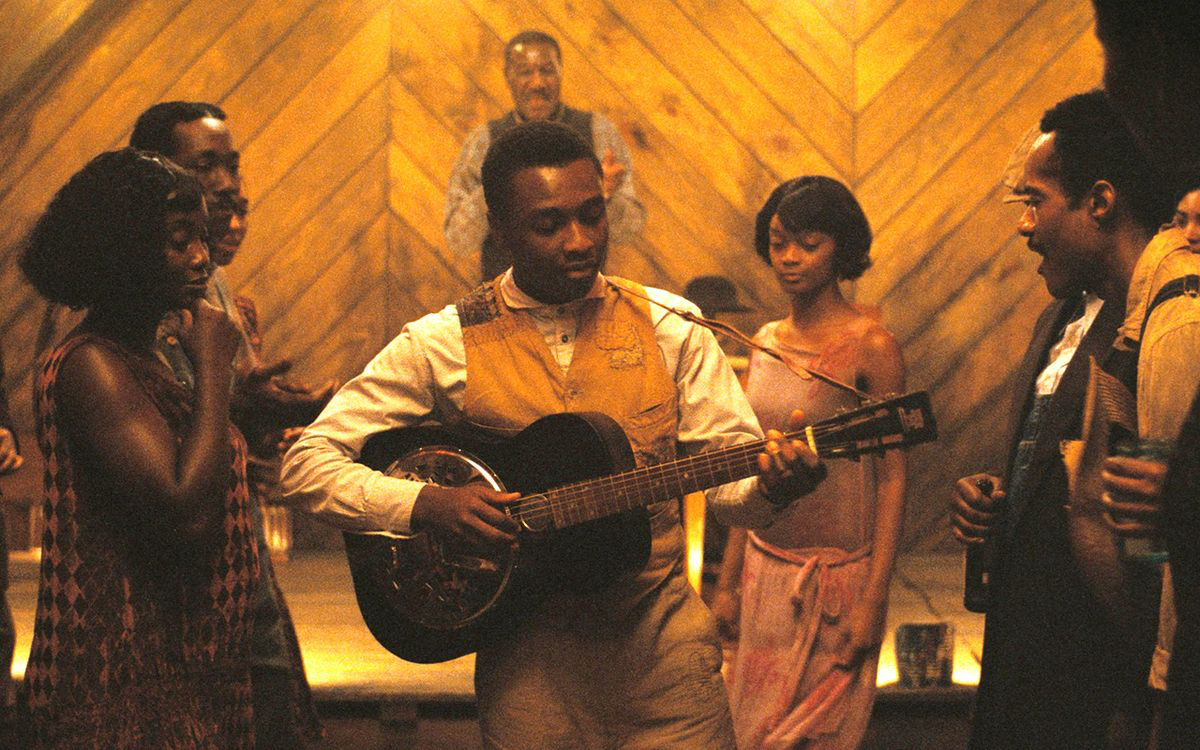
Throughout the Sinner’s (2025) spine-chilling score, ‘I Lied To You’ stood out the most. Preacher boy, or Sammie Moore (Miles Caton), a musically-gifted young boy, steps up on stage to perform ‘I Lied To You’ inside the juke joint run by his cousins Smoke and Stack (both played by Michael B. Jordan).
Set in 1932, the film explores themes of race, black spirituality and cultural identity, as well as the aspects and ties of blues music towards religious identity. The blues were considered a sin within Christianity at the time, earning the reputation of being ‘the devil’s music.’ This too was reflected in the film and his lyrics in ‘I Lied To You’, as Sammie was strictly forbidden from playing the blues by his local preacher father, Jedidiah. His lyrics resembled a choice between music, faith, and devotion; “You threw me a Bible on that Mississippi road/ See, I love ya, Papa, you did all you could do/ They say the truth hurts, so I lie to you/ Yes, I lied to you/ I got the blues.” Born from suffering and resilience, the blues was an expression from freed African Americans. The many advances of the blues were directly impacted by the Great Migration, speaking experiences of freed men and women, becoming its own language and evocation of emotion.
The film explores this tensioned duality – Christianity and hoodoo, piety and profanity– becoming both a prayer and provocation, with music at its centre.
The juke joint opened by Smoke and Stack functioned as a space for black people to enjoy music and find freedom from the oppression and threat of the Ku Klux Klan.
The scene of Sammie playing briefly pauses, cutting to where the character Delta Slim (Delroy Lindo), a legendary blues harmonica player, tells Sammie “Blues wasn’t forced on us like that religion. We brought this with us from home. It’s magic, what we do. It’s sacred, and big.”
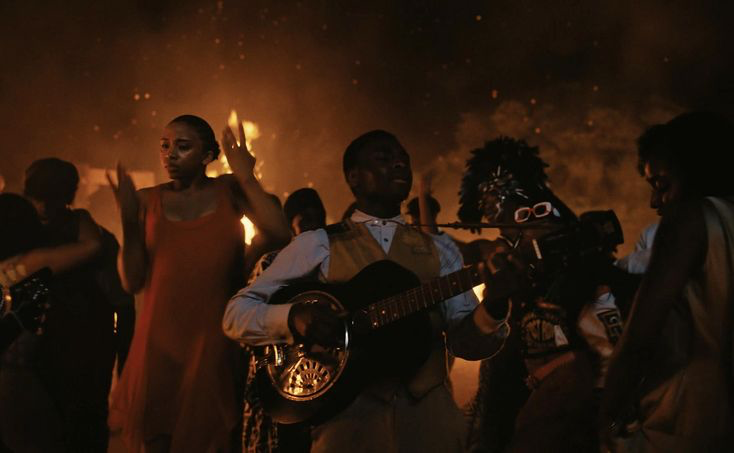
We watch as Sammie’s performance calls up the spirits of musicians and dancers from the past, present, and future. A voiceover of Annie (Wunmi Mosaku), a powerful Hoodoo practitioner and healer, says “There are legends of people born with the gift of making music so true it can pierce the veil between life and death conjuring spirits from the past and the future.” Right as she says ‘the future’ an electric guitarist appears on screen and the bass kicks in. African tribal drummers, a hip-hop DJ who is sampling Sammie’s music, rock guitarists– even dancers from tribal, twerking to ballet. The scene showed how music connects from the past to the future.
When I first watched the film, I took note of how the picture heavily took inspiration from the life of Robert Johnson and the myth of him selling his soul to the Devil at a crossroads in exchange for a musical gift. Sammie’s character was clearly inspired by the Crossroad Blues singer. Though Johnson’s career had lasted a mere seven months, the rumor of how he came to be a master of blues has achieved an immortal fame.
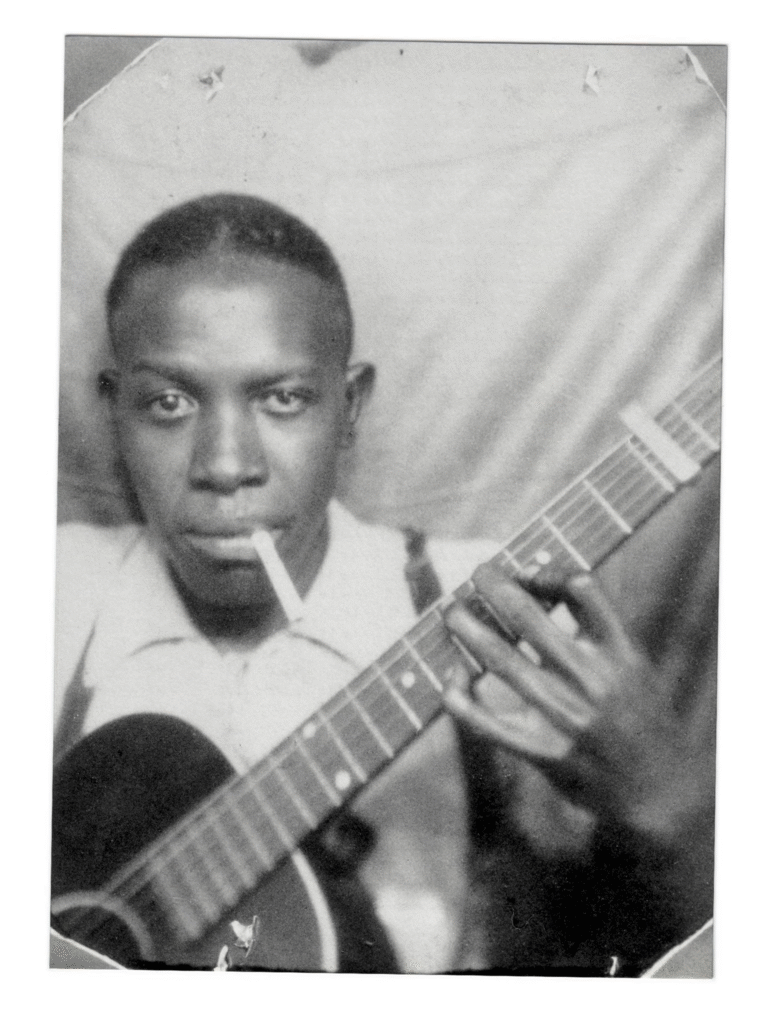
Like Johnson, Sammie is from the Mississippi Delta known as ‘the birthplace of the blues.’ Described as a skilled harmonica player yet a novice— even bad guitar player, Johnson traveled up and down the South, from the Mississippi Delta to Memphis, playing at juke joints. The aspiring blues player mysteriously vanished and returned after a year-long absence with unmatched guitar skills. The young man could suddenly play notes no one was familiar with at that time. This rapid transformation spread the supernatural tales, his songs on associated topics (‘Me and The Devil Blues,’ ‘Hell Hound On My Trail,’ ‘Cross Road Blues’) further fueled the buzz. The story goes that Robert Johnson faced the Devil at a crossroads, giving Johnson mastery over the instrument from playing a few chords on his guitar. Johnson exchanged his soul for talent that would stamp his name in blues history.
Music would not sound the way it does today without the blues, and to speak more broadly– without Black culture. The blues built the ground modern music stands on, from Rock ’n’ Roll to Hip-hop through Jazz, Soul, R&B, Funk, Pop, even electronic music all carry pieces of a tradition shaped by Black artists responding to cultural history and daily life, it remains the base of so much of society today. Yet, alongside this influence sits a long pattern of exploitation. Black musicians have repeatedly seen their sounds adopted, repackaged, and commercialized by industries that reward others more visibly and more generously. Their innovations fuel trends, shape charts, and define eras, while the originators are often sidelined, underpaid, or erased from the narrative altogether. We consume Black musical influence constantly, but too often fail to credit, protect, or uplift the people who created it.
The juke joint is a portrayal on how music is able to bring joy no matter the circumstances. The scene of Preacher Boy bringing the spirits of multi-generations under the juke joint’s building shows how it transcends time, space and generations. Black music carries forward and develops through time, forming one big connection.
There is so much more for me to say about this film’s score, beyond ‘I Lied To You.’ I haven’t even touched on the layers of Irish and Asian history involved. Honestly, I’ve touched on a lot here. Watching (and rewatching) the “I Lied To You” scene in cinemas has been one of the most powerful and genuinely pleasurable experiences I’ve ever had in a theatre. It’s those scenes where it makes you want to pick up a guitar or become a filmmaker – or both.
For me, Sinners deserves every bit of praise it’s getting, because it truly lives up to the hype.
