Photo by Kaitlyn Muro
“I’m not chasing commercial success, but I want it to resonate.”
I’ve been a casual Slayyyter fan since 2019, right around the time she released her self-titled EP. I have fabulous memories attached to those tracks, as around that time, my friends and I were discovering our sexualities and identities as queer people. Being able to scream comically vulgar songs freed an element in our suppressed selves. I vividly remember pirating her cover of Gimme More and showing it to all of my cross-country teammates, coining it as an anthem for the rest of that term, much to our coaches’ worry.
As Slayyyter is having her moment after the release of WORST GIRL IN AMERICA, I can’t help but feel an immense amount of nostalgia and some pride, knowing that I got to her before this era, similar to how I felt as Brat was launching Charli XCX into mega-pop stardom. I’m also pretty relieved to see that she made it out of the Y2K-drenched cesspool that was 2020, sonically speaking. Slayyyter’s initial aesthetic leaned heavily into that side, and for the time, it made perfect sense: pastels, shiny bling, and crude titles. The aesthetic worked for her, almost too well. However, seeing this transition, or rather transcendence into not only finding her own sound, but making it known, brought me a tremendous amount of joy.
Her week one Coachella set almost made me emotional, watching as the small stage she booked (and that was probably assigned to her a year before) got absolutely swarmed by feral fans due to her recent success. To me, it was reminiscent of Chappell Roan’s 2024 Lollapalooza set, the one that broke records and cemented her as a true pop icon of the moment. After the results of this Coachella run, I think Slayyyter might be on her way to just that.
Brat Summer and the “Nuanced Party Girl”
Rather than sounding like a last-attempted grasp at the coattails of indie sleaze, Slayyyter leans into something new, and it sounds phenomenal on her.
Worst Girl In America was conceived under a similar premise to Charli XCX’s magnum opus, Brat. Both artists spent nearly a decade being labeled as “rising stars,” constantly orbiting mainstream success without fully being allowed to claim it. Slayyyter and Charli were both highly respected in queer circles, but were never given the full “popstar treatment.” After years of remaining on the sidelines, writing and producing for major acts while cultivating a devoted cult following of her own, Charli finally experienced that kind of breakthrough moment. I don’t think I really need to talk about how big Brat became. But neither WGIA nor Brat could have existed without the pressure that came beforehand, or maybe the lack thereof.
Both artists decided the best option for themselves was to take their foot off the gas. Instead of chasing trends or trying to fit neatly into the expectations of pop music, they turned inward, creating projects that felt entirely authentic to their own interests and instincts. Slayyyter described her album as electro-punk, a dramatic shift from the glossy, pop-heavy sound of STARFUCKER. That dive into a harsher, more chaotic version of herself feels especially vital right now, at a moment where pop music is craving personality and risk again. Much like Brat, the album thrives because it refuses to smooth out its edge. Further emphasizing that being yourself, and doing what you love creatively will always be cool as hell.
In the wake of “Brat Summer” taking over the world in 2024, the idea of a feral summer album has felt strangely absent until now. With WGIA, Slayyyter revisits the party girl archetype with just as much nuance and emotional depth. While the album is packed with filthy beats, chaos, and lewd track titles, there is still a brutal pulse of vulnerability running through it.
In an interview with Euphoria Magazine, Slayyyter explained that many of the album’s themes revolve around her struggles with drugs, self-destruction, and the exhausting cycle of wanting to be better while sometimes giving up entirely. “A lot of the themes are about my struggles with drugs and wanting to be better, but sometimes throwing in the towel and saying, whatever,” she said. “It’s a sadder take than past party songs. It feels more honest about relapsing and self-destruction.”
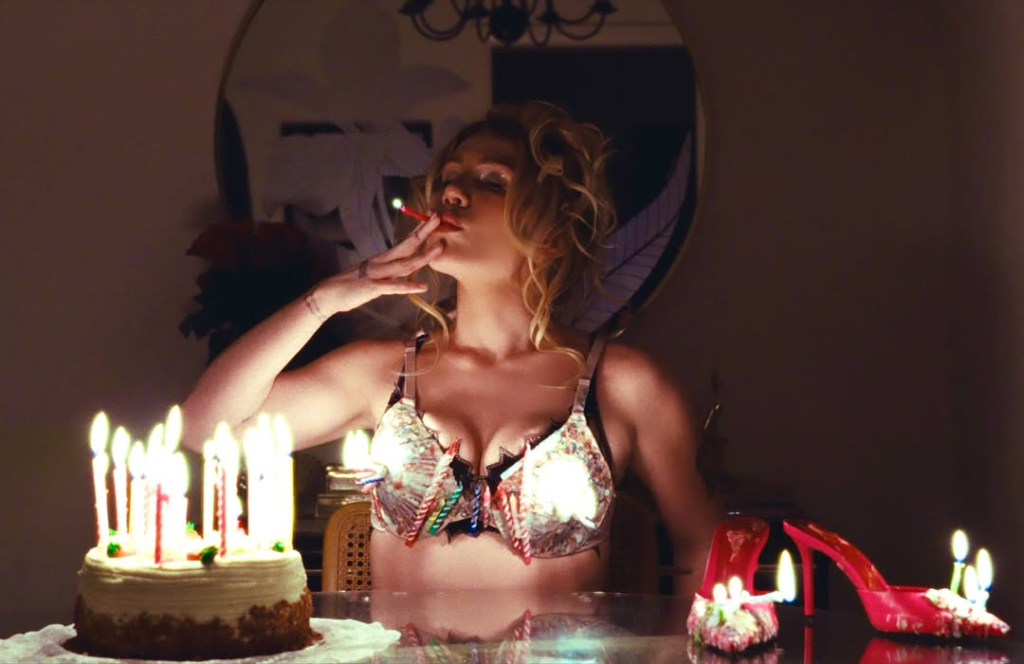
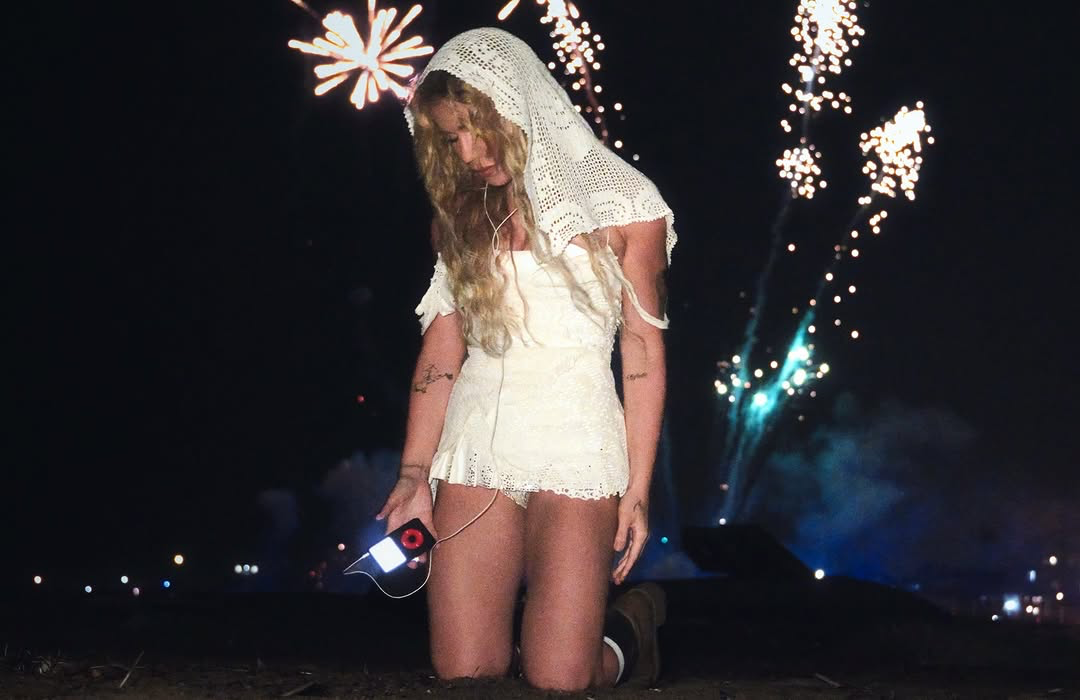
That emotional honesty is especially present on “OLD TECHNOLOGY,” a track that contains every ingredient of a euphoric club anthem while carrying something much heavier beneath the surface, bringing back the idea of the “nuanced party girl” – someone partying with a purpose.
The term “party girl” itself has a surprisingly layered history. While the modern “nuanced party girl” conversation gained traction after the 1995 film Party Girl starring Parker Posey, the phrase dates back to the 1920s, when it was often used dismissively toward flappers and women perceived as gold diggers. Over time, however, the archetype evolved into something more sympathetic and culturally fascinating, what The Wall Street Journal describes as a “resilient female lead who uses the social scene around her to escape personal anxieties.” Both WGIA and Brat are modernized versions of this and arrive at the same conclusion: nightlife is not just escapism, but also culture and community.
Brat Summer came to us in a time of need. The United States was facing one of the most challenging presidential elections yet, with the rights of millions on the line. The album, despite being created by a U.K. artist, resonated deeply with American youth and queer communities. Reflecting on the album, people have referred to it as a “last hurrah” before the outcomes of the November election. The universal meaning of the movement was to live authentically, embracing yourself for every fiber of your being, and occasionally throwing down on the dance floor: 365 Party Girl.
WGIA feels like the latest evolution of that figure: messy, self-aware, destructive at times, and most importantly, vulnerable.
In an era where artificial intelligence is becoming more and more accepted, WGIA, and Slayyyter specifically, feel like a rebellious endeavor, coming to us once again in a time of need. The upfront brutalness of the electro-punk style on this record is the kind of honesty the world craves right now, especially from a woman.