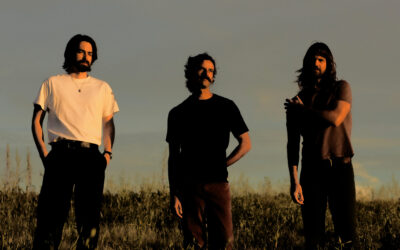
Photo by Isabella Vizetta
Music has always been a way of letting things out – a place to turn feelings that are difficult to explain into something other people can understand, even if they’ve never experienced them themselves. And while musicians have been hiding behind masks and anonymity for decades, Marino has made it part of his own language. Behind the paper-bag mask is an artist who writes openly about anxiety, growing pains, and the strange process of figuring yourself out, often disguising the weight of it all in songs that sound anything but heavy.
His latest single, “Rip Out Your Eyes,” is a perfect example. Born from the frustration of trying to explain anxiety to someone who simply doesn’t understand it, the song looks at that disconnect from both sides – recognising that Marino himself once struggled to understand what others were going through.
That honesty has found a remarkably large audience. Marino now boasts more than 2 million followers across social media and over 1 million YouTube subscribers, building a global community around his anonymous identity and deeply personal songwriting. With “Rip Out Your Eyes” adding another chapter to his ever-growing world, I caught up with the alt-pop phenomenon to talk about the mask, making music from real life, the beauty of imperfection, and what it means to let people make his songs their own.
Alana Ash (Cult Machine): Can I ask – can you actually see anything through that mask? I’ve seen you do livestreams, even playing Minecraft. How does that work?
Marino: Yeah! I can actually – but barely.
In person, if you’re doing it, it’s easier because you’re looking at broader, bigger things. Like it’s really easy to tell okay, this guy’s holding up five fingers or something like that. But when it’s Minecraft, there are super small things on your screen.
A: Yeah especially when you go into caves..
M: It’s super dark. You can’t see anything.
A: Crazy. Do you have multiple copies of the mask, or is it just one?
M: Yeah I have multiple.
A: The local grocery store is like “Who is hoarding all of our brown bags..”
The mask started as something protective, but now it’s arguably the biggest part of your image, your artist image. Do you think it’s still something you hide behind, or did that stop and start becoming part of the character you’re creating?
M: I think it’s still slightly something I hide behind, for sure.
It definitely is a character that I’ve built in this world. But I think the main thing for me is, I didn’t want to show my face when making music, and I didn’t want to make it have to show my face because I’m a bit introverted and I’m not really confident in how I look and stuff like that. So I think it’s still something that I hide behind.
I think recently I’ve been using the mask more, trying to create a character and everything like that, and more in videos. I’ve always had the mask, but even before that, I would just record guitar videos, and still to this day sometimes it doesn’t even show the mask or anything. It just shows my hands and the guitar and stuff. So I think it’s just any way possible that I can keep from showing my face, I’ll use that.
A: After spending an entire day as Marino, wearing the mask, making music.. as cheesy as this question is, what does it feel like when you finally take the mask off?
M: Honestly, it feels kind of the same.
I guess the weird thing about the mask is just having to put it on, and then it’s kind of annoying because you can’t see everything and stuff. But besides that, I think it’s like the closest thing to never really having to… I mean, it feels like you would be two separate identities, right? Where it’s like, oh, you’re playing a character, then you play yourself.
But my music is kind of made in a way that’s identical to what’s going on in my life and around me. So I guess it kind of just feels the same. Besides having something over my head, there really is no separation, in my opinion.
A: Do you think that anonymity has actually given you more freedom to be yourself?
M: Yeah, yeah, I think so, for sure.
I like it, and I think I would have a lot more pressure and a lot more thoughts going through my brain, like, what do people think of me? You know, and going outside, what if somebody sees me and I don’t look the best or something like that? So I think it’s a big relief, privacy-wise.
A: And you spent eight years making music before people really started paying attention. Do you think the you who finally broke through is different from the artist you were eight years ago, or are you still the same?
M: Very different. Eight years ago, I was making music in high school and it was a very different style of music and sound. I was trying to figure myself out. I’ve matured and grown a lot since then, and I think it’s definitely just completely different than it was before.
A: How’d you learn guitar? Because your guitar technique is really cool.
M: Thank you! I learned just by watching YouTube videos and tutorials. Then I had a guitar teacher, like an online guitar teacher, for maybe half a year. I did maybe two or three sessions per month or something like that, and I basically just asked them, “I want to write songs, so can you teach me chords so I can write songs?”
That’s all I care about. I don’t care about anything else, like learning classical songs or trying to do things, I guess, the proper way or whatever people would call it. So I asked him, you know, crash-course me on what I need to know to write songs.
A: So are you mostly self-taught then, just messing around until you finally found a style you liked?
M: Yeah, yeah. Everything that is kind of incorporated in my music is basically self-taught.
In a lot of my songs they have the same kind of… It’s like plucking, and then you hit the guitar for the snare or whatever. And I don’t even know where that came from because nobody ever taught me that, and it was never in a song that I had learned or anything. I just did it for I’m Doing Fine one day, and then people really liked it.
It’s easy for me to write songs that way for some reason. I just think of the best stuff when I’m doing that kind of style or whatever, it just feels like me.
A: How do you know when a song is finished and ready to leave your hands? Because I heard that I’m Doing Fine sat on your hard drive for a year before you finally released it, and something like Devil in the Skies came together pretty quickly.
M: For I’m Doing Fine, it was weird because it sat there for like 10 months, but I wrote the majority of the song in one day.
I feel like it really depends. If I can get a verse one, a verse two, and then have three choruses or something like that, and the song sounds like a story–well put together, like a full finalised story, then it feels complete to me.
A: Do you mostly write out the tune, the instruments first, or does the story come to you first?
M: It’s weird because I’ll just sit on my guitar and I’ll just start playing a chord pattern, and then the lyrics kind of come.
Even with I’m Doing Fine, I kind of had this basic idea in my head, and it’s weird because I’ve been listening to Noah Kahan, and I like how in his stories he just kind of says what was on his mind. It can be very straightforward. With Stick Season, for example. He definitely has a lot of wordplay and metaphors and stuff like that within his music, but that song to me just felt like he’s just naming a bunch of stuff that’s happening in his life, and then it all comes together in a hook.
So with I’m Doing Fine, for example, I kind of had this idea of just… I had a lot going on in my life and just basically naming off everything wrong that’s going on in my life and then kind of bringing it together in a chorus. So yeah, usually I’ll just sit down with an instrumental or chords in mind and maybe have some very brief idea of what I want to write a song about.
A: A lot of your music takes these really heavy feelings and turns them into songs that sound lighter. Do you think making something fun can sometimes communicate something difficult better than making it obviously serious? Or is that contrast something you deliberately look for when you’re writing?
M: Yeah, I think it is a common theme. My music is very upbeat and very happy-sounding a lot of times for the lyrical content.
I think it kind of puts it in a more light-hearted way… The lyrics are still deep or sad and stuff like that, but it puts it in a more listenable, in my opinion, kind of mood. It’s more like reflecting and knowing that you’re not alone, but having this upbeat tone.
Because I feel like with music in general, a lot of things, when they’re really sad, they just make you more sad, right? It’s just kind of funny because the lyrics (in my songs) are sad, but the beat is so happy. And in a way, I feel like it can kind of help people because it makes them know they’re not alone, but then they don’t have to listen to something super sad. And I think it’s really cool.
A: It also works on your next release, Rip Out Your Eyes. It comes from the frustration of trying to explain anxiety to someone who has it, who simply hasn’t experienced it, while also recognising that you once struggled to understand that feeling yourself. Was it important to you that this song didn’t just become, like a “you don’t understand me” narrative, but to acknowledge both sides?
M: Yeah, I think it’s very important, and I think I’ve definitely been in both shoes where I’ll, kind of be like, why does that person act the way they do, or why are they like this? And then I’ll look back on their situation and be like, I understand it now, you know?
I think for me, the song has just been recognising both sides and kind of realising that you just never know what somebody’s going through and stuff like that, so to not be so judgemental, and also to not be judged, you know, the opposite way around.
A: A lot of your audience, I feel like if you go through the comments, some of them might be a bit young. We all remember being 13 or 14 and feeling things incredibly intensely, but sometimes not having the words for them. It’s a weird age, you know, like growing up but not fully grown up yet.
Do you think about that when you’re making music, like the possibility of someone really young hearing one of your songs and thinking, “Oh, I’m not alone. It’s normal to feel like this”?
M: Yeah, 100%. I’ve kind of realised that I have a younger generation listening to my music.
So, for example, I’m Sorry Mom is not the current me speaking. It’s kind of how I felt when I was in high school, just trying to figure out life, and even a little bit before that. Because throughout life, I always wanted to do my own thing, be my own person, not have anybody tell me what I have to do with my life, while also trying to make my parents proud at the same time.
So I think in certain songs, I kind of take a step back and look at things that happened earlier to me in my life because I had this opportunity to speak to the younger generation and know that they’re listening to my music. So I think it’s important to kind of address things that might not be right now, but definitely shaped my life in a very impactful way.
A: I love how your music comes with all of these animations and this whole universe. I wanted to ask, do you create the animations yourself?
M: No. So I actually have an animator who doesn’t like their name being disclosed. But yeah, all my videos are animated by somebody else. I suck at drawing, so it definitely is not me. I take no credit.
A: How involved are you in deciding what those characters look like?
M: I would say it’s kind of 50/50, maybe sometimes even less me. I kind of just let them do what they want to do, and they’re just insane. They turn out so well.
When I try to get too involved in stuff, it doesn’t turn out as cool as when I just let them do what they want to do and how they want to incorporate it. And sometimes, when they’re animating it, they kind of draw their own ideas and their own thoughts of what the song means to them into the animations. And I’m like, wow, how’d you even think of that? That’s crazy. It’s even different from what I kind of felt like the song was about.
So I definitely just kind of let them do their own thing and kind of go at it. But we definitely ideate and talk about certain things and kind of decide on characters and stuff. But they’ve done an amazing job.
A: Especially animations and just human-made art in today’s world is so important. I heard that you were mistaken for an AI project by Spotify? It’s crazy how nowadays you have to prove that we’re human.
M: I know. It’s insane. And I think what made it a little bit harder is because I don’t show my face and stuff like that. So I think Spotify just sees my page and not looking at my TikTok or anything and, they thought, oh this is an AI artist.
A: Which is crazy because so much of your work is about very human emotions! At a time when technology can unfortunately imitate almost any sound, what do you think becomes more valuable about making something genuinely human?
M: I think imperfection is one of the things that people will grasp onto as AI art becomes more prominent.
From what I’ve listened to or from what I’ve heard of AI art, it’s very fine-tuned and very perfect. There aren’t many imperfections within it, and if there are imperfections, they sound very non-human.
I think imperfection is what really kind of makes us human. Something not being so perfect and not being completely cookie-cutter is what really makes a song, in my opinion. That’s why I try not to fret too much on every little thing in a song. Some people might call it laziness, that’s just my personality. That’s how I’ve always been, you know?
I think it’s really shown in my music. Not everything is perfect. It has certain sounds to it that you definitely would not be able to hear in AI music, for sure.
A: Going back to the whole universe that you’ve created, it’s so fun seeing so many people and fans join in on creating fan art, doing covers and stuff. What’s your favourite thing a fan has done with your music or universe that you never would have thought of yourself?
M: I had this one person, and they haven’t completely finished it yet, but they basically have done an animation of one of my songs, hideaway. They were showing me the progress of it and stuff, and it was really cool because it’s like so much effort to even start to make an animation.
Just to think that somebody would do that for a school project and use my song, it was a huge… it felt really cool.
A: Did you ever imagine your songs being used for people’s school projects and for people to make art of it?
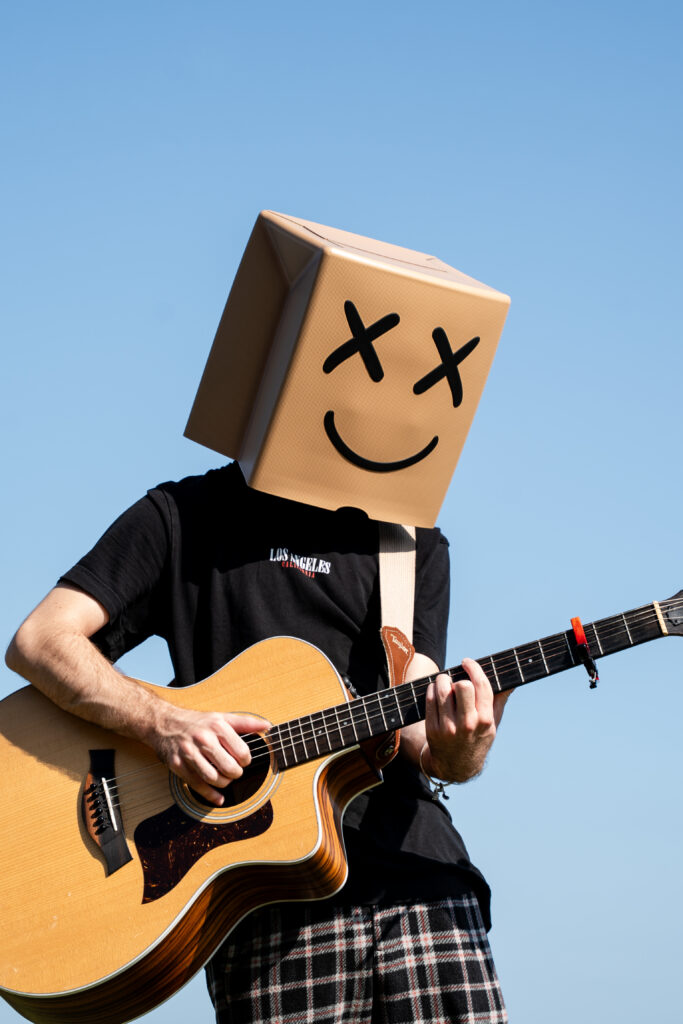
M: I think one of the most surreal things for me, and it might seem the most simple, is just people covering my songs.
I think it started kind of with Devil in Disguise, when I saw a lot of covers. And to see somebody pick up their guitar and learn my song and sing it, it’s just so cool because you hear the song in so many different voices, and you kind of forget what your original version sounds like if you just go on TikTok and listen to everybody else’s version.
It’s really cool to see them make it their own and kind of how it sounds. I don’t know, it’s insane. It’s such a surreal feeling to hear somebody sing a song you made.
A: This, as it grows bigger, I feel like you still retain this really homemade bedroom quality. It’s still all up to you. Is keeping that feeling important to you as this grows bigger?
M: Yeah, I think so. I think I’m always looking to improve my music and make it better, whether that means lyrically or sonically. But I think keeping that bedroom style is really important to me.
I’m experimenting and trying new things all the time. With, for example, Rip Out Your Eyes, it has more electric guitar, which I haven’t really experimented with that much yet. But keeping that kind of bedroom-style element, not making it feel too crisp and stuff like that, is really important to me because that’s just kind of how my sound is.
A: What’s been inspiring you lately, whether it’s music or films, media, anything?
M: I think it’s been music, just kind of this alt, alternative music style. I’ve been listening to a lot of this guy named overnight, s0rrow… Alex G obviously. Just a bunch of this stuff that I’ve never listened to before, and it was kind of unheard to me until I started liking it and stuff.
Because I feel like for me, there’s a lot of times–for example, when you were talking about eight years ago–my music sounds a lot different to what it sounds today, and a lot of that was just like when I was younger, all I liked listening to was rap and people like Juice WRLD and SoundCloud artists.
And then as I grew older, my musical taste grew larger, and I started listening to more pop artists and then folk artists and so on, and people who were using the guitar. And now I’ve kind of found this whole different world. It’s sort of emo in a way, almost in some senses, but it’s just so different from what I’ve ever listened to.
I feel like I’m trying to, in a way, incorporate it into my own music because it’s what I find fun right now and new. I think I sometimes get bored if I were to just do the same thing over and over again. So it’s really cool to try new things.
A: It’s good to have all of these different, I’d say, new genres to listen to and overall new material to work off of. Do you ever listen to your old stuff from high school?
M: Not really. I don’t really enjoy listening to it that much because it just feels kind of outdated. Honestly, it takes a lot to listen to. Obviously, alone I can listen to my music, but if I’m in the car and somebody plays any of my music, I’m just like “Turn it off. Please don’t play it!”
I don’t know what that is, but I’ve always had that. No matter what I do, if I’m making a video or anything, it’s just like I don’t want other people to react to it while I’m around.
A: Have you ever been in public and heard your music somewhere?
M: Maybe I just don’t go outside enough, but no. But I was on the phone with my girlfriend, and basically she heard one of my songs in the store.
I’ve had that happen so many times where somebody would send me Devil in Disguise being played in a store, but I never had it happen once.
A: They’re probably like, “these people around me don’t know I know the person who made this song..”
Would you ever perform live?
M: Yeah, I really want to. I’ve kind of been working my way up to it because when I’m Doing Fine came out and I restarted doing this project, I was basically almost confined to my house because I had such bad anxiety.
But now it’s gotten to a point where I’ve done a New York trip, I’ve gone to different places and met different people. And with Rip Out Your Eyes, I collaborated in person with a producer. We just did it all at my house and stuff like that.
So I’m definitely getting to a point where I can do more, and I feel like I would love to tour. I think it’d be such a cool feeling.
A: What would be the perfect first show for you?
M: I think the perfect first show would be something that feels relaxed. Just like a pop-up. Something where people just come, and it’s very relaxed, and it doesn’t feel like a band behind me, a million different lights going everywhere and stuff like that, without a lot of planning.
Just a small gathering of people that want to hear me play some songs.
A: Like an intimate show?
M: Yeah, exactly!
And I mean, I go live on TikTok a lot, and we’ll just play songs and stuff like that, and I think it’ll be cool if it just kind of felt like that, you know?
A: And finally, down to my last question. If someone discovers Marino five years from now and goes back through everything you’re making today, what do you hope they understand about you that they might not immediately see?
M: I hope they understand that what I’m talking about are real things that have happened and shown through my life, and that these are real-world experiences that I’ve been through and stuff like that. So it’s really personal to me.
For someone whose face remains hidden, Marino’s music leaves surprisingly little concealed. From anxiety and growing up to the pressure of figuring yourself out, his songs turn intensely personal experiences into something listeners can hold onto, often with a bright melody playing underneath.
That balance is perhaps what makes Marino’s world feel so distinctly his. He’s building something bigger while still holding onto the imperfect, homemade quality that shaped his sound in the first place. And as fans continue to cover his songs, create art around his universe, and find pieces of themselves in his lyrics, the project has become something beyond the person behind the mask.
Maybe that’s the point; you don’t necessarily need to see someone’s face to recognise yourself in what they make.