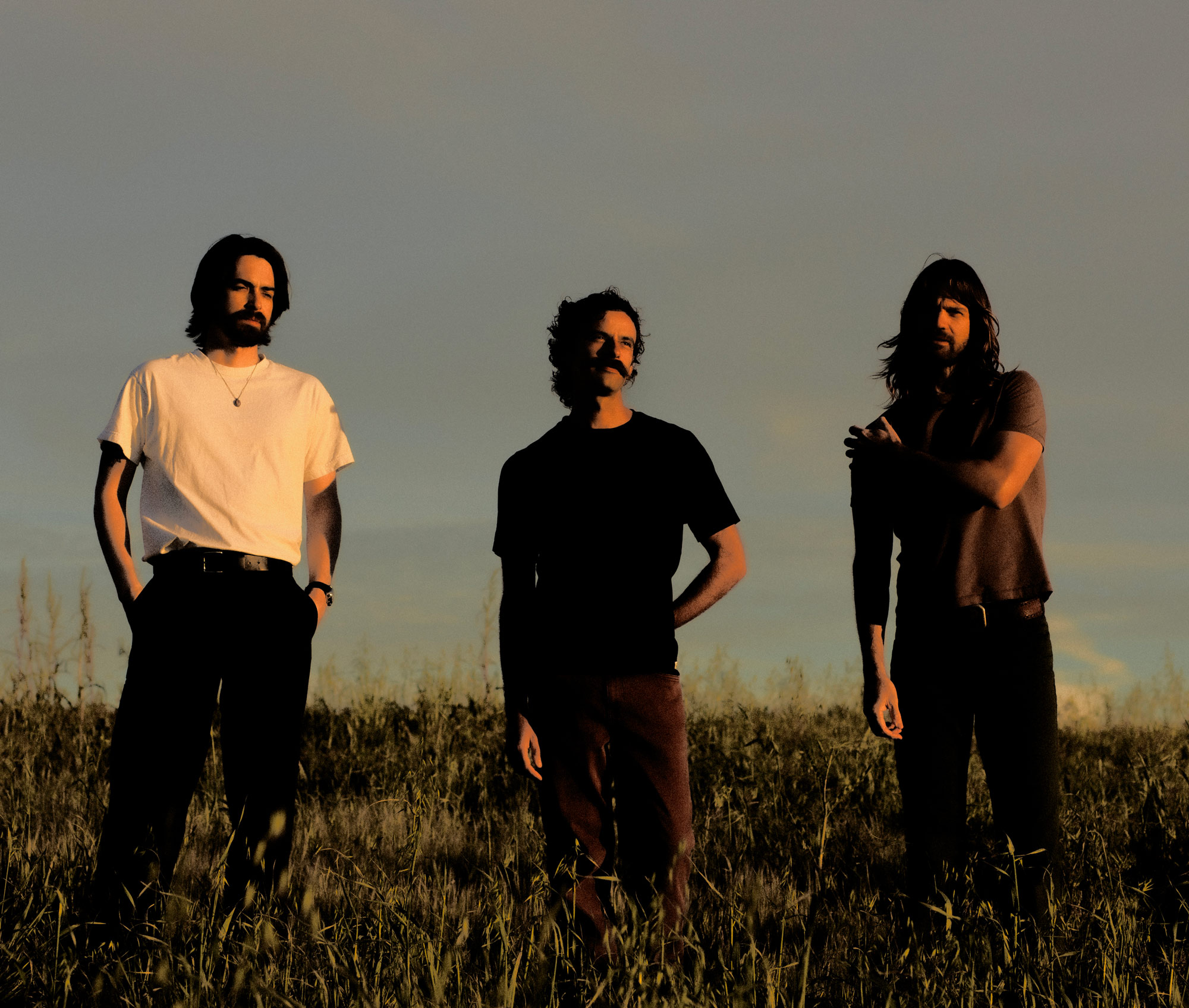
The San Diego based psychedelic band Monarch has returned with a new studio album, MA3, via PFR Records, marking a new era for the band both musically and artistically. Earlier this month, I was able to meet with Dominic Fanghella, Monarch’s guitarist and vocalist, on a Zoom call. Monarch’s artistry as a psychedelic band has set their identity within the genre, as their projects reflect the modern sound of psychedelic rock. Fanghella shared about the creative process of MA3’s album process, as the band took a new approach of self exploration in the recording and production of the record.
Fanghella described the self pedagogy journey with Pro Tools that he experienced as Monarch recorded the album on their own, challenging themselves in ways that they never have before.
Fanghella shared insight into Monarch’s roll out process for MA3 as well, as he detailed how each of the two singles from the album were chosen. The two singles, “Moving Through A Dream” and “Would Have Happened By Now,” were each unique to this album recording process, as they came with periods of trial and error, as the band figured out what was most fitting to the point that they were at during the time of this album production process.
Visually, Monarch took an artistic approach to making the album cover artwork for MA3. In partnering with the band’s friend and artist Dana Trippe, they were able to make a cover that drew the viewer in, and made them want to learn more. In taking an opposite approach from the standard photo of the band, but rather having a more intricate work of art to serve as the visual element of the album.
With MA3 being out for a month now, Monarch has some live shows ahead of them. Fanghella discussed how exciting the live element of shows are for the band, as it further demonstrates their artistry, as a psychedelic rock band.
Monarch’s MA3 is available to stream on all platforms now, via PFR Records. Check out the full interview transcript with Fanghella below.
C: I was wondering if we could just start with, you know, introducing the band a little bit, what you’ve been most excited about, about the new release, and just a little bit about yourself, too.
D: I’m Dominic Fanghella. I play guitar and sing in Monarch. We’re a four-piece based out of San Diego, and we just released our new record, MA3, which we’ve been working on for about four years, on and off. It was a long process, so finally getting it out feels pretty cathartic. We’re excited to get back out, play shows, and do more stuff. We’ve been kind of in hiding for a while.
C: That’s awesome. How does it feel to have it released into the world for everyone to hear, after you’ve been working on it for 4 years, you said?
D: It feels really good to finally let that weight go. It’s something you think about privately for so long, and then the moment it becomes accessible to everyone else, you somehow just let go of all of that. It’s like, okay, time to move on.
C: Yeah, that must be a really refreshing, you know, feeling posts release as well.
D: For sure.
C: I was looking into your influences with psychedelic rock, and I was wondering how you tapped into those influences when making the album, and what was it keeping you inspired throughout the process?
D: Our influences are pretty sporadic and eclectic. I’d say what kept me inspired was less about specific musical influences and more about the process of trying something new.
We actually started recording this album with a producer and engineer, but that ended up not working out. So I took the recordings we had, taught myself Pro Tools with the help of a few friends, and we started recording the rest ourselves. I think that became the driving force behind the record: the challenge of actually doing it ourselves.
C: Yeah. That’s really cool. What did the process look like for you guys besides, you know, teaching yourself Pro Tools? How did you find the recording process different from the other projects that you guys have done?
D: Since we were primarily driving the whole thing ourselves, we had to put ourselves in the headspace of being producers. When you have a creative goal, it can be pretty abstract, so a lot of the process is just figuring out how to refine it.
We’d get together in whatever ways we could. I’d spend time going through the songs, cleaning things up, organizing arrangements, and adding keyboards. Then Sonny Yates would come in and help me track vocals. We’d bounce ideas off each other and write parts that way.
A lot of it really came down to whatever we thought was fun, or even funny, to do. When you’re working on something for such a long time, listening to the same songs over and over, it can start to feel pretty miserable. So we really tried to keep things fun.
C: Yeah, and that’s the best experience, too, just having a good time with what you’re doing.
D: We actually had to rediscover that, because for a while it really wasn’t fun. Not because of the people involved, but because of the process itself.
I think when you start recording something, you’re really excited and convinced you’re going to finish it quickly. Then, when things don’t go according to plan, it starts to feel like the world’s falling apart.
We had to remind ourselves that none of that really matters. We just needed to make something cool that we actually liked.
C: Yeah, totally. That’s really cool. Did you have any, like, rituals or, like, must dos when making the music or was just, like, trial and error experimental this time around?
D: I think it was mostly trial and error. There were times when I’d sit down with the intention of recording a specific part, plug everything in, and it just wouldn’t happen.
At a certain point, there’s nothing you can really do. Rather than beating your head against the wall, you have to recognize when something isn’t working, put it down, and come back to it later.
So I guess the only consistent ritual was knowing when to stop.
C: Yeah, it’s really cool. I know you guys did some live shows on the way. What tracks are you most excited to perform live?
D: I really like playing “Moving Through a Dream.” That one’s always fun. We’re so used to playing these longer songs from our older records, and this one feels really compact by comparison. It’s just a fun song to play live.
C: That was a really cool one. I know, I was watching some of your reels on Instagram and I just, I love the equipment setup that you guys have too. I saw some really unique pieces in there, but what’s like, what’s your favorite piece that you have a part of your huge collection?
D: As far as guitars go, I have a rare Japanese Les Paul copy that’s probably my favorite guitar. I also have a few synths, but I don’t really use them onstage that much. So I’d definitely say the guitar.
C: Yeah, that’s really cool. I love seeing, like, those equipment breakdowns of artists, where it’s like. “they had this specific synth on stage,” and it’s, like, super interesting to see what people are bringing, leaving behind in the studio. So I’m always curious about that.
D: Totally. It’s fun to dork out on that stuff. I’m super nerdy when it comes to gear. I think a lot of this album was about exploring all those little things I’ve picked up along the way and finding ways to incorporate them into the record.
C: That’s awesome. So your two singles really set the tone of this new album era, and this new roll out. How did you decide that those tracks would be the leading ones for the album and what people would hear first?
D: We’d actually mixed “Moving Through a Dream” and another song off the record called “Hard to Know” about a year earlier. I think during that period of stagnation, we just thought, why not put them out and see what happens?
So we’d already released two songs that we considered singles, but they didn’t really go anywhere because we hadn’t promoted them. We just quietly put them out.
This time around, we wanted to approach things differently and avoid repeating ourselves by releasing the same songs in the same order.
“Would Have Happened By Now” felt like a more interesting way to introduce the record. It has a lot of the elements of what you might call our new sound, with all these different production ideas going on. It just felt like the right song to lead with.
C: Yeah, I mean, those are really cool ones, to put out first.
D: And then there’s “Moving Through a Dream.” There’s just something about that song that always feels right. So we figured, why not give it another shot?
C: Yeah, that’s super cool. And, like, from a visual element, how did you, like, match the new era to a more visual component? I know it’s a big thing about creative processes. I’m just wondering if you had any insight for that.
D: I think it was really about taking more chances visually. We’d never been particularly focused on that side of things before. We didn’t necessarily pursue visual opportunities or resources. If someone wanted to make a music video, we’d usually just let them do their thing without much input from us.
This time around, I wanted to be more involved in developing the visual identity.
For the record cover, I reached out to our friend Dana Trippe, who’s an incredible photographer with a pretty insane résumé. She was kind enough to help us bring the idea to life.
I had some general aesthetic ideas in mind, and I’d actually drawn up the concept for the cover myself. It was just something that came out of my head. I sent Dana a picture of the drawing, and she took that idea and really elevated it. The quality of the final image was so much better than anything I could have done on my own.
I’ve always liked the idea of album artwork being its own piece of art. Sometimes when bands just put a picture of themselves on the cover, it can start to feel more like a product than an artistic statement. I didn’t really want that. I wanted to make something that felt like art in its own right.
C: That’s awesome. I know, I feel the exact same way. What is just, like, you know, product versus, like, project, and what’s, you know, the band’s choices versus what’s, like, for the public. And I feel like the same way with, like, how the visuals line up, like you were saying with the images of the band and stuff.
D: Totally. I think that’s kind of a natural part of making records. There’s this tendency to put the band on the cover, almost like you’re showing people the product they’re buying.
I’ve always liked records where the artwork makes you curious. You pick something up, look at the cover, and there’s a little mystery to it.
We didn’t even put our name on the cover of this record. Maybe that’s a terrible idea, or maybe it’s cool. But I liked the thought that someone might see it and be drawn in without immediately knowing what it is.
There’s something interesting about not giving everything away right from the start. It makes you want to look a little closer.
Those are my favorite kinds of records.
C: Yeah, definitely me, too. I know that you guys are based in Southern California, but how do you see, like, the psychedelic scene being active there, if you do? And how does that your origin influence your artistry in any way?
D: San Diego has gone through a lot of ups and downs over the years. When we first started around 2013 or 2014, there seemed to be a real boom in psychedelic music.
We had bands like our good friends Earthless and Sacri Monti, along with so many other local groups. There was a really big pool of people to play with.
Now, ten-plus years later, that scene has definitely thinned out. But that’s just how music scenes work. Things change.
There’s still a community of people making that kind of music, and one thing I’ve always liked about San Diego is that every band seems to have its own unique interpretation of psychedelic rock. Everyone influences each other, but there’s also this desire not to repeat what someone else is doing. I think that’s a really healthy approach.
As far as our own influences go, though, everything is so global now. We’re probably just as influenced by international music and old records as we are by anything happening locally. It’s definitely not limited to San Diego.
C: Yeah, that’s true. Well, who are some of your favorite artists then? I see you have a Yes shirt on right now, but yeah.
D: I love Yes. I listen to a lot of music from the ’60s, ’70s, and ’80s. Bands like Yes and Yellow Magic Orchestra are definitely favorites.
I’m actually sitting here looking at a bunch of records trying to think of examples.
I also really like some lesser-known stuff, especially Italian progressive rock from the ‘70s. Bands like Le Orme and Sensations’ Fix are great examples. There’s a lot of really interesting, synth-heavy music from that period.
It’s funny because if you want to imagine what bands like Pond or Tame Impala might have sounded like in the ‘70s, a lot of that Italian stuff is pretty close. It’s all there.
C: That’s really cool. I was just wondering, one last thing that, you know, sum up the whole album, but what are you feeling about future things within this new era that you guys are doing? What are you most excited for, upcoming?
D: I really just want to play as much as possible. We’ve got new songs that I’ve been writing, and I love recording, so ideally I’d like to keep that cycle going: playing shows, writing music, and making records. That’s really what I want the future to look like.
C: All right, well, thank you so much. It was nice to meet you, and I’ll definitely be in touch soon, but thank you for your time today.
D: Hey, Catherine, thank you!