A collection of words, melodies and feelings, pieced together in a room somewhere, can eventually find its way into millions of lives. Songs are an extraordinary process.
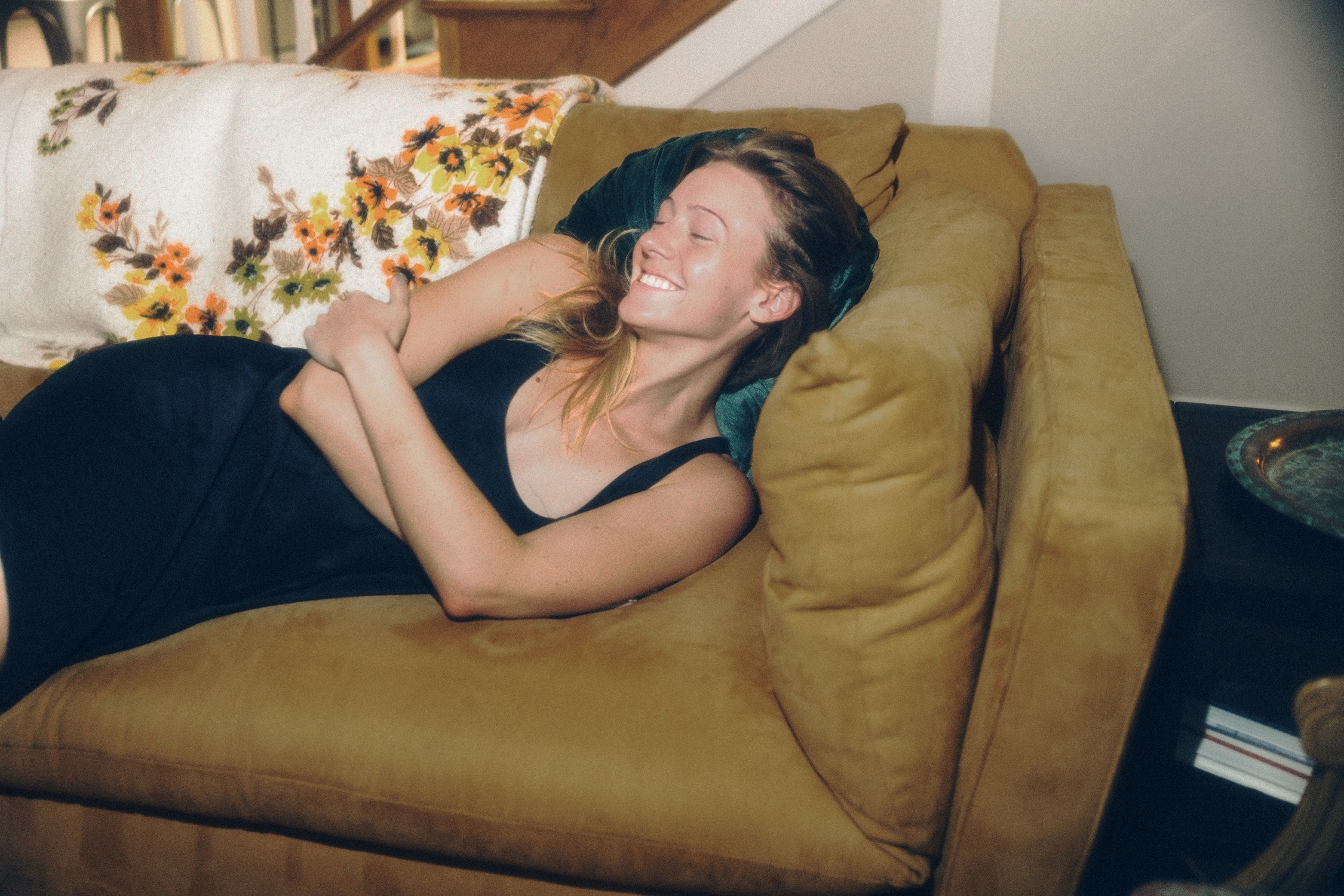
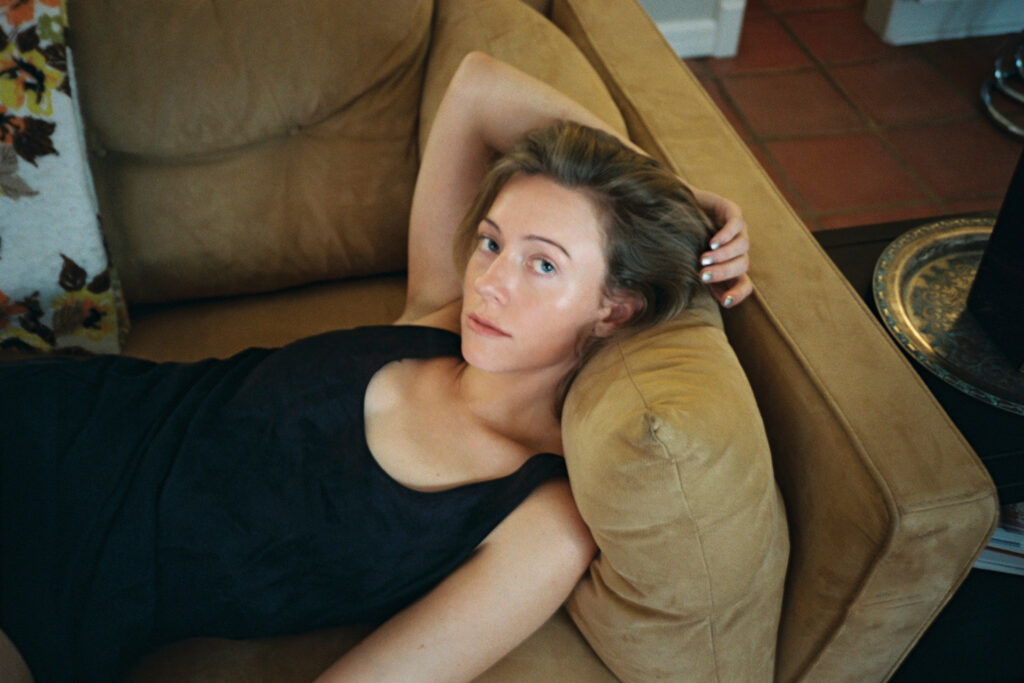
It becomes the soundtrack to someone’s first love, their worst heartbreak, a late-night drive, or a memory they didn’t know they wanted to keep. We often associate these moments with the artists singing them, but behind so many of the songs we hold close are the songwriters who helped bring them into existence. Mary Weitz is among many.
The Los Angeles-based songwriter and executive producer has spent years helping shape the voices and defining moments of some of music’s most exciting artists, working across an impressive catalogue that includes Remi Wolf, Zara Larsson, Fletcher, Alina Baraz and Rachel Chinouriri. Her creative partnership with Sienna Spiro, in particular, has been present from the very beginning, co-writing her career debut single and contributing to her debut EP and album. Among their work is You Stole The Show, a breakthrough record that has since amassed billions of video views and millions of TikTok creations, becoming one of those songs that seems to have taken on a life of its own.
Songwriting is about so much more than finding the right words or crafting a catchy chorus. It is about understanding someone else’s world well enough to help them put feelings into words they might not have found on their own. It is about knowing when to step forward, when to step back, and sometimes recognising that the most important thing you can bring into a room is simply another perspective. Having recently expanded into executive production and artist development, Mary is continuing to explore just how far that creative relationship can go.
In our conversation, we spoke about the beauty of collaboration, finding an artist’s voice without losing what makes them who they are, the importance of giving songwriters their due, and why, even after all these years, there is still nothing quite like being in a room when a song comes together.
Alana Ash (Cult Machine): How do you know when a song is finished, especially when you’re writing with an artist whose relationship with it might keep changing? Is there a point where continuing to work on something starts kind of taking away from what made it special in the first place?
Mary Weitz: I think overthinking in songwriting can happen. I think underthinking can happen. But I think you know when the feeling that the artist originally had an intention of creating has been met.
When we have this song that was supposed to invoke a feeling of missing somebody that’s no longer there and not being able to get back to them, and when we’ve accomplished that through the lyrics, through the melody, the production all around, great.
It’s like when you start trying too much to make sure every little thing is perfect, that all of a sudden we have lost the original, the rawness. That’s when you know you’ve gone too far. And it’s hard to tell when you’re so close.
So I think that is one of my jobs, to sort of be like, “Whoa, you know what? We’re overcomplicating. Let’s just go back to what your instinct was.”
Alana: Have you ever worked on a song where the meaning kind of changed completely because of maybe something another person in the room said? I’m curious about those moments when someone else’s perspective unlocks something that maybe some people couldn’t have reached alone.
Mary: Yeah, I think that’s how some of the best songs are made.
Sometimes if I’m just trying to understand what an artist wants to communicate more and I ask a specific question, and it’s one that they haven’t been asked or asked themselves.. All of a sudden, they’re like, wait, I didn’t even realize that’s how I actually felt or that was the more interesting road to take.
I think that is always fascinating. I think it’s so much less from outside perspectives on a situation and more so outside questions that give the artist a new perspective on the situation.
Alana: When you’re working closely with an artist over several years, how do you recognize that when they’re growing, they’re not the version of themselves that you first started making music with? Does the songwriting have to change with them as well?
Mary: Yeah, it will naturally change with them.
They have new life experiences and content to really delve into, and they’ve also probably written many songs in between and with different people. Sometimes you’ll work with somebody after they’ve worked with a new collaborator that has just completely changed the way you knew them before.
There’s so many ways, but yeah, I think the best artists, they do grow and they change and they want to.
Alana: How do you balance understanding an artist deeply enough to help them express themselves while making sure you’re not imposing your own tastes or ideas into their music?
Mary: I think it’s a close watching of the artist that you’re with.
As small as facial expressions or even the way they’re holding their body as you’re working together, you can always sort of tell if something makes sense to the artist, if it feels like it’s something that they would say or not.
When you’re working with somebody the first time, you don’t always know what they would say or if they would feel that way, so you do kind of have to throw things out there regardless and laugh and joke around and see what lands.
But it’s less about what you put out and more about how you allow things to either hit them and stay with them because you can tell that makes sense for them, or if it’s like, there’s just something in their eyes or their mouth where you’re like, “That’s not you. You don’t have to use that.”
And I’m not precious about anything. If I’ve said it in a room with an artist, then that’s theirs to use and take. We’re gonna all keep having the same experiences and saying the same things at a certain point.
Alana: Is it the same when a writing session is going particularly well? What does it feel like in a room–Is it something that you can recognize while it’s happening, or do you only realize afterwards that something really special came out of it?
Mary: Both. I think there are moments where you’re in the studio and you just have some sort of unlock, some sort of magic feeling because everybody in that room loves what you’ve done or what you’ve created or a line or something like that.
Sometimes those moments don’t resonate outside, where you’re playing it for somebody else and they don’t see it that way or whatever, and I don’t let that take away from how I felt in that moment.
And then sometimes there are things that I wasn’t really even considering to be my favorite part, or something that I thought was particularly special within a song, and then you play it outside and someone’s just like, “This part is crazy, this is amazing, and I love that.”
But I also don’t know if I’ve ever been convinced into taking on that feeling myself. I think it’s awesome to see it change for everyone, but I think everybody’s individual experience is just as valid with whatever the song is.
Alana: Has there ever been a particular moment that has happened in a studio before that you always come back to or think about?
Mary: I think little things that stick out for me are moments that sort of go beyond the collaborative relationship, just when somebody has remembered something about you personally that you never thought they would.
I’ve had an artist bring me a T-shirt that she saw at a thrift shop and was like, “This is something that only Mary would wear,” just randomly one day. Things like that. I think my favorite moments are always little moments of connection where I feel seen, or I realize I’ve made someone else feel seen.
Sometimes it’s a lot less about the music. I think those relationships lead to great music.
Alana: You are so important in the process of making beautiful music, and this is such a basic question, but I think I just have to ask: what’s a song that you’ve helped write that you sometimes step back and think, wow, we did that?
Mary: There’s a few that really come to mind, but I would probably say You Stole the Show by Sienna Spiro.
I just think that song, every time I listen, I still feel sort of like my breath is taken away. And I remember the first time Sienna sang that chorus, also feeling like, that’s so… It’s just so epic sounding. I think that is just sometimes so much of that session.
Thank God I have some of it on voice memos, because otherwise it feels like I blacked out.
Alana: She’s really killing it right now, and her voice is so gorgeous.
Off the top of your head, are there any unused lyrics that you’ve written that you absolutely love and still think about, even though you’ve never made it into a song?
Mary: I usually have more so like, little bits. I wouldn’t say they’re full lines..
Off the top of my head, I would say something about a six-disc changer. I was literally telling somebody this the other day, but like, there’s little ways that we used to listen to music in cars or on stereos.
We would have six CDs, and I love the way that sounds in the mouth. “Put it in the six-disc,” if that’s not just a line in something that is trying to invoke nostalgia or something..
Alana: With the comeback of physical media and people love collecting CDs, it’s perfect.
Mary: Yeah, exactly! I literally just bought a CD on a record store website the other day and I was like, wait, I don’t have a CD player. But now I do.
Alana: When you first started working with an artist, what are you listening for beyond the song itself?
Mary: This one is quite easy for me. I have these two things that I really need to work with somebody and to keep working with them, and it’s warmth and humor.
I think that if I meet someone and there’s no warmth, then I’m hoping they’re really funny because that will make up for it. And if there’s no humor, then I need for them to be really warm and well-meaning, you know?
If there’s both, that’s like, wow, that’s the crème de la crème. But if there’s neither, I feel almost paralyzed.
Alana: I suppose it’s just like basic human politeness.
Mary: Yeah! Well, you know, I don’t think it comes as easy to some people sometimes. I can’t even begin to imagine why that is. But you just want something to connect over, and those two things feel like they can provide that.
Alana: Is it similar to how you perhaps identify the next wave of artists? What makes you recognize that someone has something special before the rest of the world catches on?
Mary: A singular voice is huge. When you have a tone, a timbre, a way of singing that I haven’t heard, immediately I’m drawn to that. I think that’s something that usually isn’t exactly taught.
I also think there are just people that are inherently interesting and have interesting perspectives, or are able to string words together in a way that is poetic but communicative.
I’m fascinated by looking for these little intricacies, these little uniquities. If I see it and I think, well, it’s cool, and I want to know more about that, or I’m interested in what they’re gonna say next, that’s the kind of only thing I need to keep going.
Alana: Who’s an artist that you’ve worked with that’s just, every time you see them or hear them, completely blows you away?
Mary: So many of them. Sometimes you’re just hearing an artist sing in the room and it feels so unreal that they’re able to do that.
Off the top of my head, I feel that way about Rachel (Chinouriri). Her voice is so cool, and I don’t know anybody else that sounds even remotely like her. Just listening to her speak, listening to her talk about life, I’m really in awe of her.
Alina Baraz, is also a great example. Just the sweetest human being. She feels unreal and opens her mouth and sings something, and I’m like, I just said this line and it was kind of blah, but then you just sang it. I’m understanding it on a whole new level because of the way you’re singing it.
I think they’re all so good. I think the people that I am really drawn to, I’m just entranced with them, especially in the room.
Alana: You’ve worked with so many artists across very different sounds. How do you keep your own creative instincts sharp while constantly adapting to someone else’s musical identity?
Mary: I try not to think too much about it. I just have to go with the moment when I’m in the room with each person. If they want to do this, and I like that, let’s do that! Or if they want to do it that way? Well I’ve never done it that way, but okay do it that way and we’ll see what happens!
I trust the good intentions that I have and the taste that I have to make sure that everything sort of levels out, even though it’s all different, but that it will make sense to somebody.
Alana: Was it hard, when starting out, to start writing collaboratively with other people and for someone else?
Mary: Yes. I think the first time I really collaborated, especially in a professional sense, when I moved to LA, during my first sessions, I was just so self-conscious. I was so scared.
I’m like, everybody’s gonna know I don’t know what I’m doing. But like anything, it’s just the more that you do it, it becomes easier to do. And I don’t think I’ll ever reach a point where I’m like, “Oh, songwriting? Done!” I don’t know if it should be easy. It’s great when there are easy moments or easy songs, but I don’t think there’s anything wrong with it being challenging to get there.
Alana: I think the passion and the hardship that it takes together is what can make a really great and strong song.
Mary: Yes, absolutely!
Alana: What’s something that you think some people might misunderstand about co-writing? I think sometimes there’s an assumption that if a song is personal, it must have come entirely from the artist themselves?
Mary: That’s a perfect example of an assumption that couldn’t be further from the truth.
I think most of the time, you hear about songs that were not written by the artist at all, but are incredibly personal to them. I think another misconception is that the whole thing has kind of lost its magic if it’s a collaborative project too. A lot of people have an image of songs being created in the studio this one way where it’s like, this is what we want to write about, and here’s the verse, and here’s the chorus, and let’s make sure we hit these marks, and it’s all kind of planned out.
I think there are just so many different ways to write a song that any sort of assumption we have about how it’s done, they’re all wrong because it’s always different. There’s no process. I’ve never met two artists that do it the same, and I’ve never had two sessions that felt even remotely similar.
Alana: It’s always an adventure! You’ve helped so many artists find and develop their voices. I’ve gotta ask, have you ever thought about pursuing a singing career of your own?
Mary: A singing career? No. Especially when you have been next to the amount of insane voices that I have. It’s really funny. If I come up with a melody and then an artist that has an insane voice sings right after me, I’m just like, “Okay.. I’m put in my place immediately.”
I think songwriting is the best place for me to actually write the music and be a part of a creative process that really means something to me, and it’s fulfilling.
Alana: So you feel at home helping bring other people’s music to life?
Mary: Definitely. I don’t know if I’ve always felt at home. I think it took a really long time to find my confidence to go into these other worlds and to go in and to come out and to go in and to come out. But I’ve figured it out, and it does feel like I’m at home. I can’t imagine not doing it.
Alana: 20 minutes into the interview and I’m now just asking about this.. But how did you get into this entire world of songwriting? Did you grow up writing songs and doodling here and there?
Mary: I was always interested in music from a young age. I was always singing around the house.
My entire middle school years, I was in my bedroom feeling like I was feeling truly the most important and having the craziest and insane feelings of all time that no one else had ever felt, and writing weirdly intense, dark poetry and little songs and full songs. Eventually, probably by the time I was 11 or 12, I was really writing songs, but I was really private about it always. I really didn’t advertise it.
When I was in high school and thinking about going to school or whatever, I knew I wanted to be in New York. I knew I wanted to do something with music, but I wasn’t sure what the options were. I had no idea what songwriting looked like. I think that’s sort of how the music seed was planted. When I ended up going and finding out about a school at NYU that was for the modern music industry, that really got the ball rolling.
I met so many people at school that have changed my life. School was amazing, but the people I met were infinitely more life-changing. I met my manager that way. I’ve met collaborators that I’ve worked with to this day that way.
Then, people were like, “Hey, you can do songwriting as a profession,” and I was like, huh? It opened up an entire new world of possibilities, an entire new world that was so great.
Alana: Where did you usually take your inspiration from? Like you mentioned, you wrote poetry and other. Did you take inspiration from books, music itself, movies, films, or just life in general?
Mary: Yeah, I think a lot of life just in general, a lot of other artists. I think I’ve always really loved lots of music from many different genres.
I think about the earliest music that I felt really attached to, and it’s so varied. I loved Erykah Badu and I loved Evanescence. It’s like, I don’t know where those two worlds fully collide other than my love for them at a young age.
Alana: A clash of worlds.
Mary: I was definitely big on feeling things. I think I was unafraid to experience a lot of cliché or typical teenager-in-America experiences.
I think I had fun in high school. I partied a bit, I got into situations that I would never recommend if I had children. I don’t regret any of it, though. It all led to some of the worst moments of my life, and some of the worst moments of my life have all led to the best way to express it later in music.
Alana: Do you believe that everything happens for a reason? This is completely off topic, but…
Mary: I think, yeah, I think everything happens the way it was always going to happen, if that makes sense.
I don’t know about reasons, because maybe not everything is a reason, but I think there’s kind of sort of only one way it all happens, and it happens that way.
Alana: You’ve been vocal about wanting to advocate for songwriters, particularly around fair compensation and meaningful participation. So what do you think, or what do you feel like, the industry still fails to understand about the work songwriters contribute to a record?
Mary: It’s really tough. I don’t know how you quantify or how you are able to sort of measure what songwriters do. Every songwriter is different, and every way that they work with the artist is different.
So there is no kind of concrete way to approach it other than, if we all talk more about it, if people and artists and other collaborators are all given more knowledge and more information about how the business actually works, I think a lot of people would feel more empowered to be like, I hate that, or I disagree with that, and I might be in a position to do something about it.
I think information spread is my biggest thing.
If we tell people, “Hey, songwriters don’t get paid, they only get paid two years later on the back end from the music they make,” and everybody else who’s a part of that record actually does get paid, people will start being like, huh, that doesn’t really make sense.
I think that’s really important, and just being open to always talk about that kind of thing. That’s what I want to do.
Alana: Because you guys are a big deal on why and how the song exists as well!
Mary: Yeah, hopefully we’re a big help haha.
I think that, as artists themselves, they are songwriters in their own right. I think every artist, if they know, they are also people that want to fight against that, and I love that.
I think that we’re all creatives. We’re all just trying to make art, and we’re all just trying to live our life.
Alana: Eespecially in today’s time with AI-generated music. Oh my god!
Mary: I know. Scary times, scary times.
I think the audience will, I’m hopeful, be able to discern between what’s real and what’s not. And honestly, the more AI comes in, I think there’s a soul that will be missing.
Alana: And the song can become an artist’s identity, and sometimes even the song introduces them to the world. Well, the people who helped create it remain sometimes invisible to the audience. So how do you think we can better celebrate the people behind the music?
Mary: This is so funny because.. I mean, it’s lovely having an interview, but I think there actually is a lot of value in us not knowing how exactly a song was made without wanting that information. We used to have to go look at album liner notes, something to find out who wrote a song, and it felt like a real discovery process.
I think the information should always be available for anybody who wants it, but I’m not sure that we need to pull back the curtain so much that it feels like an artist is no longer the artist that they are. I don’t want people to feel further away. I don’t want to deceive anybody.
I think the creative process is usually collaborative no matter what, but I think it’s also important that the artist really is front and center and celebrated because it is their likeness, it’s their name, and it’s their world that those collaborators came there to create, and that has to stay centered.
I think there are other ways to compensate and take care of the people that are part of that, but I don’t know if it’s up to the audience knowing about everything.
Alana: Honestly, that’s beautifully put.
You’ve also been described as more than a traditional session songwriter, someone who helped shape entire bodies of work and develop artists creatively. I was wondering, at what point does your role stop being mainly just about writing a song and also become about helping build an artist’s world?
Mary: At any point that any artist is asking me a question outside of a song or the music, I’m so here for it. There are many things I don’t know, but anything that I feel like I could be helpful with, I’m going to try to help.
I think that the larger relationship that we build, writing and spending so much time together, you learn so much more about a person than just what they’re writing about in the song.
If I see anything that is concerning, especially with the younger artists, or I’m like, oh no, they’re about to do this thing that I know genuinely has hurt or been really bad for another artist that I worked for, I do feel responsibility to be a guide in any way that they want.
I think that helps a lot in terms of them staying on paths where they have the space and the patience around them to become the artist that they want to be.
I think what artist development takes more than anything is space and time. You can’t put artistry onto somebody. They have to sort of cultivate it within themselves, but what is around them is important. I’m making sure that I’m providing that environment where they can sort of grow and expand.
Alana: Yeah, that’s like they need time to bloom.
Going back to the process of songwriting itself, sometimes an artist knows exactly what they want but hasn’t found the words for it yet, and maybe other times they come into a room without knowing what they’re trying to make. How do you approach those two situations differently?
Mary: If they know what they want to make, I’m there. I’m all ears. I’m open to listening, and then I’m asking, okay, how do you want to start this? How do you want to do this? And I will follow your lead completely.
For me, what my role is in a session will always depend on them that day and what they want or need from me, or what I sense they want or need from me. If somebody’s coming in and they’re like, I don’t know what to say, then I think my usual go-to is, okay, well, let’s just find something. Let’s find some chords that you like, and then we can freestyle melodies. You can freestyle melodies. We don’t have to say anything.
I think the words really get people tripped up. It’s sometimes harder to know and articulate. So I think doing that, and I’m always a big fan of what I call the intuitive lyric, which is just like, something was in the mumbling, something pops out, and you hear it and you’re like, whoa, that’s cool. Let’s go. Let’s take that.
That can be really, really fun and really powerful.
Alana: And before I let you go, this is more of a general question, but is there anything that you’ve been wanting to explore creatively that you haven’t really had the chance yet, or are beginning to explore?
Mary: Well, I’ve just recently started executive producing, and what that means in this case is not only being a creative partner, but also kind of officially having the development of a project or an artist baked into that role, as well as being able to pull in other collaborators, ones that I know and I love and I trust, to work with me and an artist on a project.
It’s sort of just like a role where I get to be trusted more, and I think there’s something to be said. I’ve written so many stories with people, and I believe in the through line on a project of the lyrics and the artists themselves.
I think a lot of labels and artists will sometimes focus on a sonic kind of identity, and that’s important, but you’re also, like, our words. That’s what people are singing at the show, you know? And I think there’s a real beauty and art to making sure that that feels cohesive and that it really is representative of the artist.
I think that’s one of my biggest jobs in a role like executive producer that I’m so excited to do so much more with, because I think it even expands from there. But yeah, that’s what I want to do so, so, so much more.
Perhaps the beauty of songwriting lies in the fact that no two people will ever experience the same song in quite the same way. What begins as a conversation between a handful of creatives can eventually become something deeply personal to millions of people.
While the names behind the music may not always be the ones in the spotlight, their fingerprints are everywhere. For Mary, there is still plenty more to explore, from executive production to helping artists build worlds that feel entirely their own. After all, there will always be another story to tell, another feeling to put into words, and another song waiting to find its way into the world.