The cost of concert ticket prices has risen rapidly over the past decade, especially after the pandemic. In 2023, ticket prices increased by 23% after already rising nearly 19% following the pandemic.
The average concert ticket in the U.S for major artists now sits above $100 and can stretch into hundreds, even thousands. In many cases, a single night could cost as much as a short holiday.
Artists, venues, promoters and ticketing companies have faced significant backlash from fans shocked by the cost of seeing their favourite musicians live.
In 1991, Metallica’s lower-level ticket for their Black Album tour was $22.50. For their 2026 M72 World Tour, the prices ranged from $100 to over $600 for a single night (including nosebleeds). Two-night packages can exceed $1,000.
It’s Not Inflation (At least not all of it)
Adjusted for inflation, those Metallica tickets would be roughly $53 today. Inflation explains part of the increase, yet does not make clear of the jump to several hundred dollars.
Before streaming, artists made most of their income from recorded music or album sales. Touring was a means of album promotion with the expectation that it would increase album sales.
Streaming becoming the norm and dominant way people consume music changed the equation. Since streaming royalties are significantly lower than the revenue artists once made from physical album sales, the formula has flipped to make good music to gain tour sales.
Scalping is also part of the problem. Resellers would buy tickets at face value and flip them at much higher prices on secondary markets. This leads to ticket prices starting higher to capture revenue that was previously going to scalpers, reaching maximum profit. Artists want the money scalpers are getting since they’re the ones on stage every night.
If fans were willing to pay $400 on resale sites, why sell them for $100 originally?
Dynamic Pricing
Some artists use a system called dynamic pricing, which means the face value of a ticket can go up in real-time due to demand spikes, similar to airline fares and hotel rates.
Companies like Ticketmaster use algorithms that monitor how many people are trying to buy tickets at any moment. If thousands of fans flood the ticketing site, prices can rise instantly.
The idea follows basic economics: Supply is the number of tickets available, and demand is how many people want them. When supply is limited yet demand surges, prices go up. In the case of concerts, demand is influenced by the artist’s popularity, venue size and online buzz.
Dynamic pricing constantly adjusts ticket costs in response to demand. During peak buying periods, prices may increase. As does the opposite, when demand slows, prices can drop.
Ticketmaster argues that this system keeps more of the money within the official sale, benefiting the artists, promoters and venues instead of letting resellers capture large markups on the secondary market.
Who’s Fault Is It? Do Artists Have Control Over Prices?
The answer is more nuanced than simply blaming one side. Ticket prices are shaped by a network of players: The ticketing site, promoters, venues, labels, management teams and of course, the artists themselves. Each has a financial interest tied to the tour.
That said, artists often hold the strongest bargaining position in the group as they’re the reason the event exists. This gives them the leverage when negotiating pricing structures, including whether to use dynamic pricing or how many tickets are sold at standard face value and whether there’s a cap on how high prices can go.
But final decisions are made by looking at revenue targets that multiple stakeholders are trying to hit. Before a tour begins, artists and their teams set budgets and revenue targets based on production costs. The essentials of touring, especially for large-scale arenas, involve massive expenses. This includes the artists themselves and management to stage design, lighting, transport, crew salaries, band members and agents. Due to this packed environment, protecting profit margins can sometimes take priority.
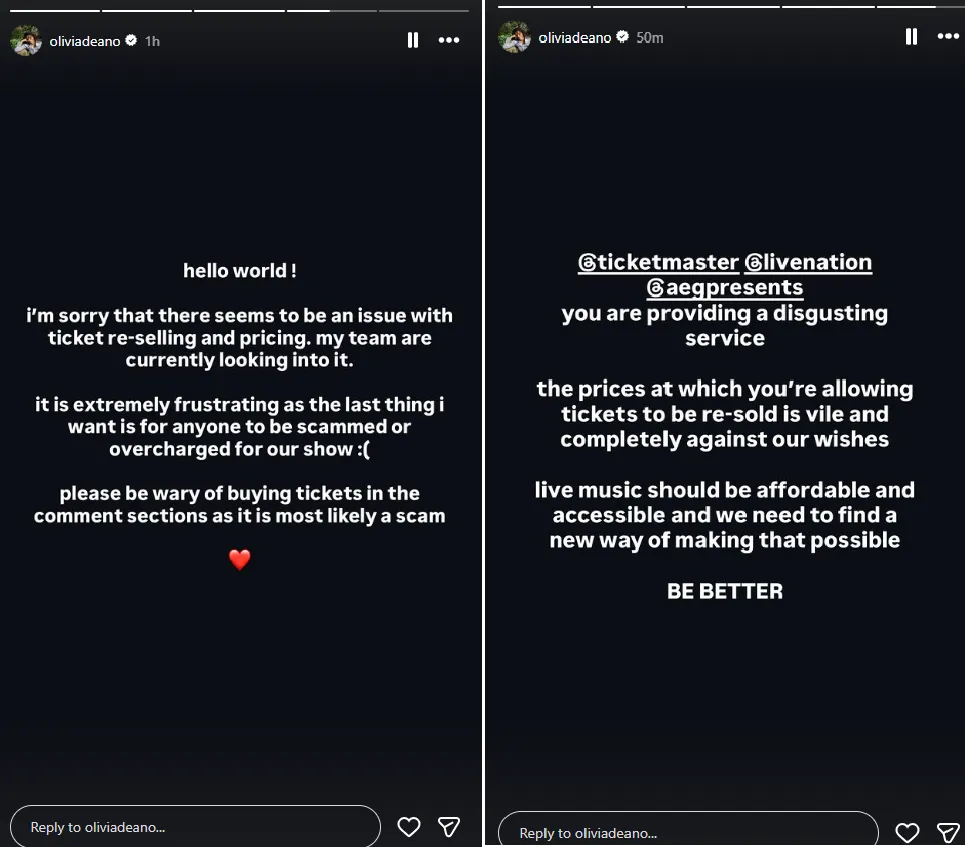
Artists typically approve pricing structures, while promoters and ticketing companies handle the actual sale. Some artists are highly attentive to what fans end up paying. Others focus more on production scale and hitting revenue targets. They can also opt into certain protections. When British singer Olivia Dean criticised inflated resale prices at her shows, Ticketmaster activated its Face Value Exchange feature for her tour, restricting resale to the original purchase price. That move made it clear that artists do influence distribution and resale policies.
Still, large tours often involve contracts and revenue guarantees that lock in financial expectations early. Once budgets are set, lowering prices becomes difficult. Even with some control, artists are balancing their relationship with fans against the real costs of running a tour. Major productions can employ dozens, sometimes hundreds, of crew members whose livelihoods depend on ticket revenue.
Lower prices might mean scaling down the show or missing financial targets, while higher prices risk backlash. Pricing ends up sitting at the crossroads of artistic ambition, operational costs and corporate incentives. Sometimes it’s about funding a bigger, more complex show and other times about maximising revenue. In many cases, it’s both happening at once.
Why Do People Still Buy?
Despite frustration and backlash, demand remains extremely high.
Fans are not just competing with others in their city–they’re competing with global fans willing to fly across countries or even continents to attend a show. Venue seating is limited, but demand is international.
When supply is fixed and demand increases, prices rise. That principle applies directly to live events. Popular artists, smaller venue capacities, and online presales that attract millions all push demand higher.
There is also the emotional factor. Live concerts are a scarce experience, and for many fans, that experience justifies the cost.

Sources:
- https://www.bbc.com/news/articles/c2kdxlv8x05o
- https://www.tmz.com/2026/01/27/harry-styles-tour-high-ticket-prices/
- https://loudwire.com/then-now-price-rock-metal-concert-tickets/
- https://www.aarp.org/entertainment/music/how-did-concerts-get-so-expensive/
- https://www.npr.org/2026/01/28/nx-s1-5686667/harry-styles-presale-tickets