To be young and creative in this modern life is to exist at a frantic, fascinating crossroad–pulling threads from internet lore, heritage, nostalgia, and hyper-modern aesthetics to construct something entirely unprecedented. Today’s generation of artists doesn’t need to wait for permission or traditional pathways as they build whole worlds out of their bedrooms, transforming curiosity into cultural shifts.
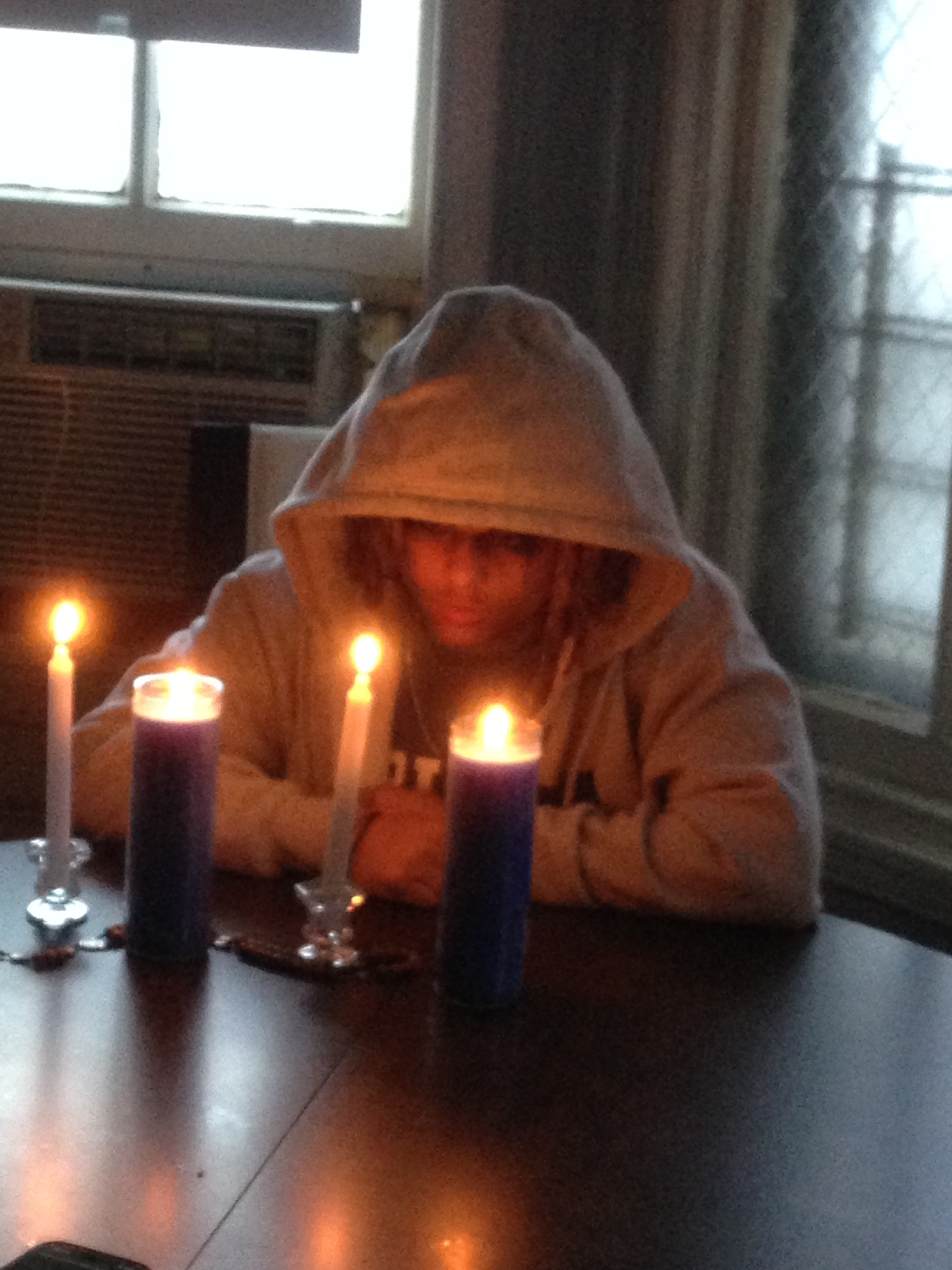
Standing right at the edge of that new wave is 17-year-old Jorden Cornish. At just 17, the New Jersey-based artist has already spent years finding his footing in music. What began as a bit of fun in fourth grade, during the golden age of YouTube diss tracks, gradually grew into something much bigger. By seventh grade, he had released a song which started circulating around his school before finding a little audience on TikTok. The attention was enough to make him realise that maybe this was something worth taking seriously. What started as a childhood pastime slowly became a craft he was willing to commit himself to.
Music was never entirely unfamiliar territory, either. Growing up with a father who worked security for major artists throughout the 2010s meant that he was surrounded by music from an early age. His childhood listening habits were just as eclectic, moving from Evanescence and Skrillex to Eminem, before eventually finding his way into the worlds of Lil Pump and Famous Dex. Today, his own sound continues to evolve alongside whatever he’s listening to and experiencing at any given moment. With 2hollis among his biggest influences, Jorden is particularly open about the people and corners of internet culture that have shaped not only his music, but also the way he sees himself.
Of course, being an artist at 17 also means navigating a rather unusual schedule. Between school, work, two-hour drives to music video shoots and everything else that comes with pursuing music, Jorden is already learning to make room for a life that looks a little different from that of his classmates. He’s even planning to graduate early to keep up with it all. Despite the busy schedule, there’s still a sense of youthful excitement in the way he talks about making music, with his best friend Cole often right there behind the scenes, offering a little extra support whenever he needs it.
Having already released an album in 2024, featuring an appearance from Che, Jorden is now preparing to enter a new chapter with his new EP, La Det Fare–Norwegian for “Let It Go”. Drawing from his half-Black, half-Norwegian heritage, the project sees him looking closer at a part of his identity he feels is rarely represented within the underground scene. Its visual world takes an equally unexpected turn, finding inspiration in 15th-century Flemish painting, particularly Robert Campin’s Mérode Altarpiece. Across three single artworks, Jorden recreates the painting’s triptych-like structure, paying close attention to its historical details and craftsmanship rather than leaning into the more familiar imagery associated with the medieval period.
But the project is rooted in something more personal than an aesthetic experiment. As Jorden shares, the initial idea began following the passing of his grandfather, prompting him to reconnect with his Norwegian heritage and explore a side of himself he hadn’t necessarily given much attention to before. It’s a meaningful intersection between personal history, cultural identity and the internet-bred language of contemporary underground music.
I sat down with Jorden to talk about growing up online, finding his voice in the underground, the people who have shaped his creative world, and what it means to let a little of the past into the future.
Jorden Cornish: I wanted to dig deeper into my Norwegian culture. I feel like it’s something nobody has ever really seen before in the underground. There aren’t a lot of Norwegians in the underground.
I was talking about it with my manager, Eli. We came up with all these concepts. The main idea is centred around this painting. It’s separated into three sections. Each single that I drop represents a certain section. When it all comes together, it creates La Det Fare.
La Det Fare is a saying that my grandpa used to say growing up. It’s basically just “let it go.” Letting things go. Letting go of things that hold bad energy. That’s basically where everything got seeded and rooted with this EP.
Alana Ash (Cult Machine): Are you interested in history in general, or was it because of your grandpa that you wanted to explore your background more?
Jorden: I wasn’t into it at first, but ever since he passed, I did want to get to know more about what he did as a child growing up. He’s not from America. He migrated here from Norway.
I just wanted to learn more about his culture, my family history, and everything about Norwegian heritage.
Alana: Do you speak a little Norwegian?
Jorden: I wish. I’ve been wanting to try and practise.
Alana: Get on Duolingo–Well, I don’t think it’s going to help, though.
Jorden: Norwegian is a hard-ass language. I hopped on Duolingo one time, and I didn’t know what they said. I was just like, bro, I’m going to try this another time. I couldn’t.
Alana: I’ve tried learning about 15 languages there, and I have gotten none.
Jorden: I don’t get nowhere with Duolingo.
Alana: Do you feel like you’re building your artistic world as you go, or did you already have this whole vision in your head from the beginning? You’re still quite young, so there’s very much room to grow, obviously.
Jorden: I would say it’s a mix of both. I’ve had the main concept, but as we’re going through things, things change. I’ll think, maybe it’s better if we do it this way, or maybe we should do it this way so it could lead up to or build into this thing.
I think it’s a little bit of both. That’s really all I could say. I don’t really know how to explain it. I just have to be in the process to explain it.
Alana: I guess it’s like you have an initial vision, but as you go through your process or your career, the course changes over time?
Jorden: You just go through certain things in life, and then you find out new information or just new things about yourself, and shit changes.
Alana: Has exploring this side of your heritage through this EP made you more curious about your history or even changed the way you think about that part of yourself?
Jorden: Yeah, I’ve grown to become more accepting of it and appreciative of it because I feel like being Norwegian and where I’m from is unique. I feel like you don’t run into a lot of Norwegians in general. It made me proud.
It made me want to rep it and represent it more.
Alana: The year of the Norwegians, they also had an amazing year at the World Cup..
Jorden: I love Haaland.
Alana: Hey, maybe we can get Haaland on a feature in five years’ time.
Jorden: That would be amazing.
Alana: Going back to the concept of the EP, you’ve developed such a distinct, beautiful aesthetic around it. Do you see it as a visual identity you want to keep building on, or are you someone who gets restless creatively and wants to explore something different with every release?
Jorden: I feel like right now I’m building a world that I want to stay in. I do get restless creatively, but I want to build a certain foundation of this mediaeval and Norwegian heritage stuff and be able to expand upon it so it is never-ending. You can also associate me and my music with a certain world.
I feel like what it is right now is very early on, but I know it can become something really, really good. I’m honestly really excited to see what the future holds for this world that I’m building.
Alana: Do you have any dream collaborators?
Jorden: 2Hollis. 2Hollis is definitely my dream collaboration. If I had to say a top three, my top three switches all the time when an interviewer asks this, but right now, off the top of my head, in my heart, I would say 2Hollis, Jane Remover, and Skrillex.
Alana: When you start making a song, do you usually have a visual or an entire world in mind already, or does that side of things come together once the music starts taking shape?
Jorden: It all just depends on the beat. However the beat makes me feel, I will write around it and capture that feeling as best as I possibly can with my words.
Alana: If you had to describe your music through something that isn’t music, maybe a painting, a place, a time period, an object or a fashion item, what would you choose?
Jorden: I’ll have to really think about this one.
I feel like a lot of it is very personal to me. I would say my music is like this: there’s a piece of clothing that you’ve wanted for years, and you work your ass off to get this piece. Then you finally get it. That feeling that you get, that’s how I want my music to make you feel. That’s how I would describe it.
It comes in, it delivers, and you just have it.
Alana: The feeling of unboxing it!
What’s one thing you really want to accomplish with your music that has nothing to do with streams or numbers?
Jorden: I’m a performer, and I want to get to the point in my career where I have a loyal, very loyal fanbase, so I can just tour and tour and tour and keep touring. I’ve really loved performing.
I grew up a performer. I just love it so much.
Even if I drop a song and it doesn’t do well, just knowing that I could go to a certain city or state and perform a show. I don’t know. I just really want to perform.
Alana: When you’re making music or writing songs, do you think about how they will sound live?
Jorden: Yeah, sometimes, but I also make live versions. There’s this song called “ONE MORE TIME” that I have. The live version that I’m gonna play sounds completely different. It’s more jumpy and designed to get the crowd hyped.
But I can hear a song that I make and go, damn, this will sound crazy live. I just know how to perform it.
Alana: How about dream venues or dream places to do a show?
Jorden: I feel like I wouldn’t really be an arena guy. I don’t really like arenas like that. I would like to be able to do someplace like the LA Shrine consistently because I feel like arenas aren’t intimate.
Alana: Would you ever do a concept album? As you mentioned, you want to expand more on this mediaeval visual world. Would you ever do an album around that theme as well?
Jorden: Yeah, for sure. Definitely. If it builds upon the world, the timing is right, and I feel like it’s necessary and needed in my heart, I would definitely do a concept album. I definitely would.
Alana: Any personal favourites from the EP?
Jorden: “Eternal Life” and “Static Hum.”
I really like “Static Hum” a lot. It’s just about heartbreak. It’s really just about a girl, and I don’t even want to spoil too much.
Slippe kreativiteten løs. That’s a Norwegian expression that I just looked up (so please don’t ask me to pronounce it), and thought would be fitting to end this with.. It translates to “unleash your creativity.”
Perhaps that’s exactly what Jorden is doing with this new EP by letting his imagination run a little wild, bringing together pieces of his history, the things he loves, and the worlds he wants to create. There’s an interesting juxtaposition in what Jorden is building with La Det Fare where he takes the visual language of 15th-century Flemish paintings and bringing it into the world of underground rap and hyperpop, two genres that feel almost entirely removed from that period. It’s an unexpected meeting of centuries, where medieval craftsmanship finds a new home in a generation raised on the internet. Rather than treating his heritage as something separate from his artistic identity, Jorden is finding ways to make the two speak to each other.
Between dream collaborations with 2hollis, Jane Remover and Skrillex, a future filled with touring, and a creative universe he’s eager to keep expanding, Jorden Cornish certainly has no shortage of things to look forward to. At 17, he’s already finding his own language for the things that make him who he is. If La Det Fare is any indication, we’re only seeing the first few pages of a much bigger story.