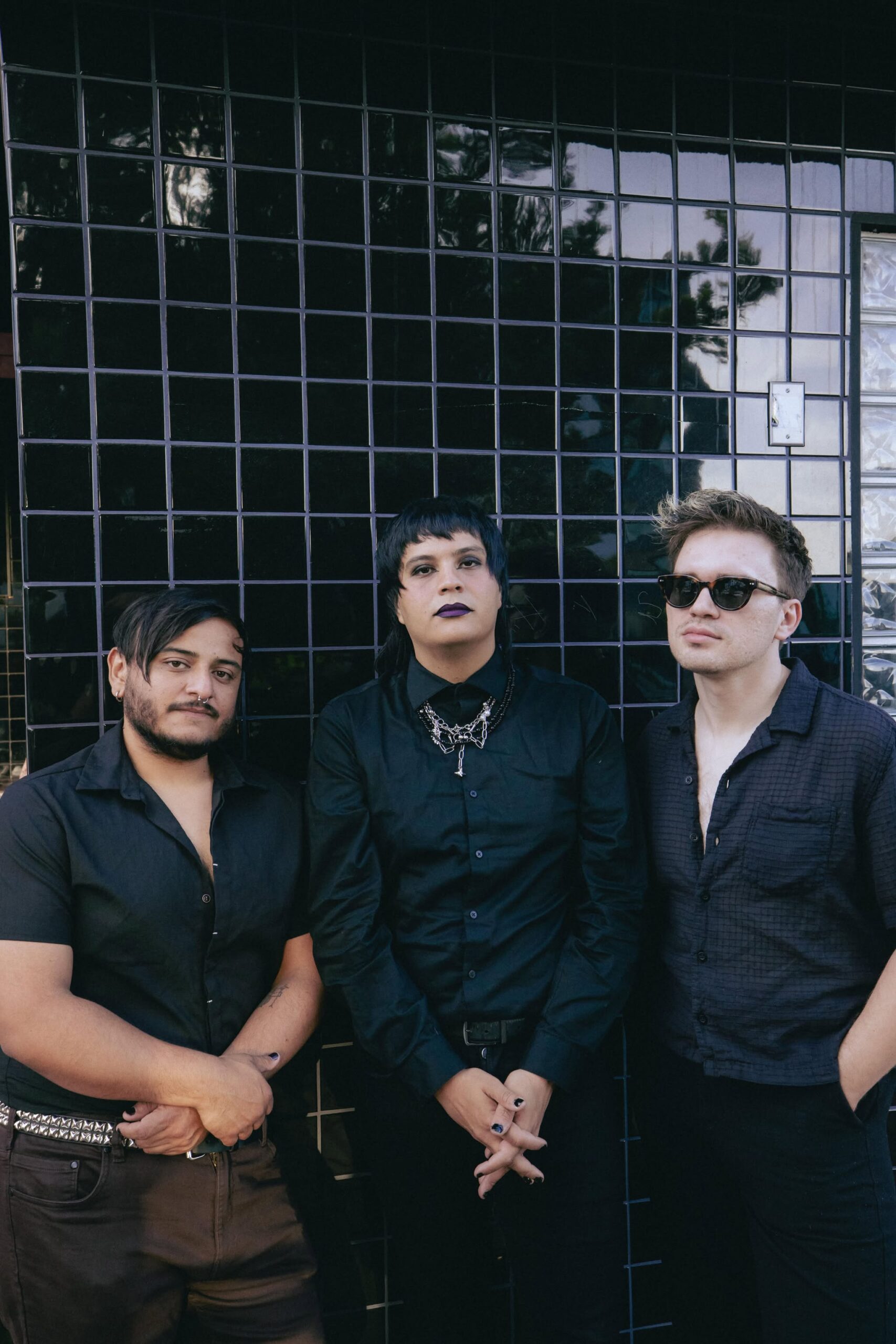
Deceits are part of a new wave of post-punk bands pulling equally from goth tradition, hardcore urgency, and lived cultural experience. Based in Los Angeles, the Mexican-American band has built a reputation for intense live shows, emotionally direct songwriting, and a firmly political stance rooted in punk ethics. This is one of my personal favourite interviews we’ve done for Cult Machine, as their audience grows across the U.S., Mexico, and beyond, Deceits remains clear about who they are, where they come from, and what they stand for. Truly something we need more of in the music industry, more than ever.
We spoke with the band about influences, identity, defining songs, politics, working-class reality, and what’s next.
Who influenced Deceits’ sound, inside post-punk and beyond?
At the centre of Deceits’ musical universe sits The Cure. It’s the reference point they’re most open about, and one that listeners often latch onto immediately. But the foundation of the band’s sound was built just as much through colder, more minimal post-punk.
Early on, bands like Human Tetris and Soviet Soviet helped shape their atmosphere, while faster and slightly stranger acts such as Low Life, Glorious Din, and Burning Skies of Elysium pushed them toward urgency and motion.
On a personal level, those influences expand further. Joy Division plays a significant role, as does Spanish-language rock. Bands like Caifanes, Duncan Dhu, and Los Prisioneros directly inform the rhythmic backbone of Deceits’ music. Those beats aren’t decorative; they’re functional, instinctive, and deeply internalised.
As the band puts it, “That’s where a lot of my beats come from. We use a lot of those rhythms; they work, they’re catchy, and they fit the sound.”
Underneath everything, though, Deceits are still a punk band at heart. Their songwriting DNA comes from hardcore, even if the final form is more restrained.
“We always say our musical background comes from punk and hardcore,” they explain, joking that they’re “like The Cure if they had grown up in the hardcore scene.”
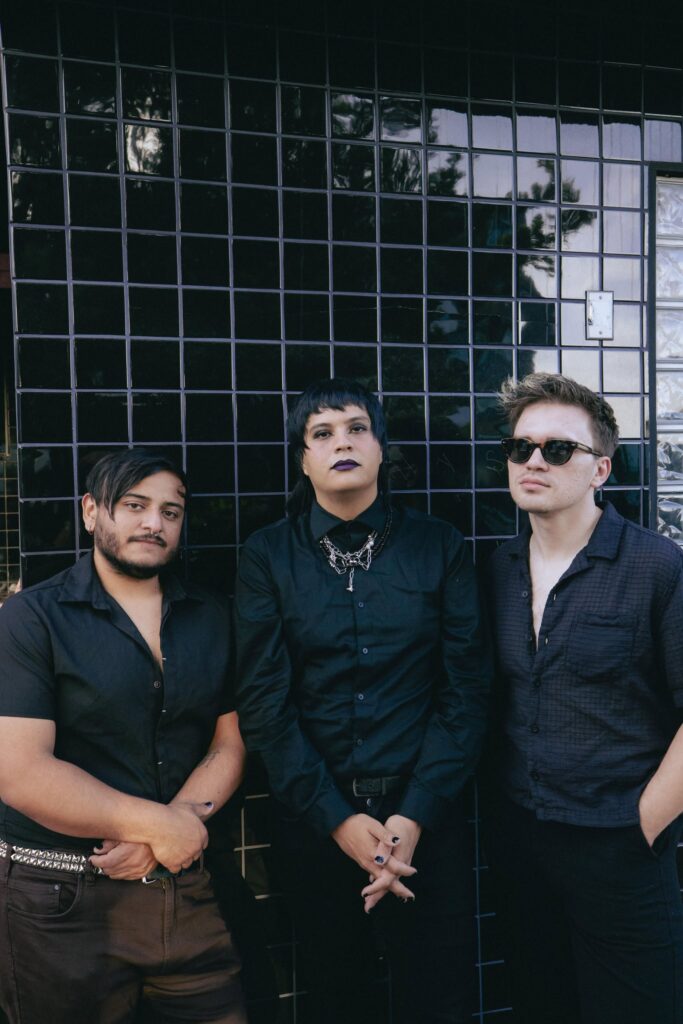
How do identity and culture shape your sound and lyrics?
Deceits didn’t always lead with identity. For the first year or so, they resisted putting their background front and center, partly because post-punk has long been framed as a Eurocentric genre. Early on, they were content to simply exist as “a band.”
That hesitation faded around the time they recorded “Soledad.” It marked a turning point where embracing who they were felt not only possible, but necessary.
“Our background is really important,” they say, “but it took us a while to fully embrace it.”
As first-generation Mexican-Americans, they grew up immersed in sound. Rock en español, Latin rhythms, and constant music at home shaped them long before they understood it consciously. That influence never disappeared. It simply waited.
Today, their music lives in a hybrid space: classic European post-punk filtered through Chicano rhythm, memory, and movement. The influence is rarely overt, but it’s always present.
Lyrically, the approach is emotional and internal. Deceits gravitate toward feeling rather than concept, drawing from whatever is occupying their head at the moment. That emotional directness carries into their live shows, where movement becomes unavoidable.
“I’m the kind of person who has to move,” they say. “I can’t stand still.”
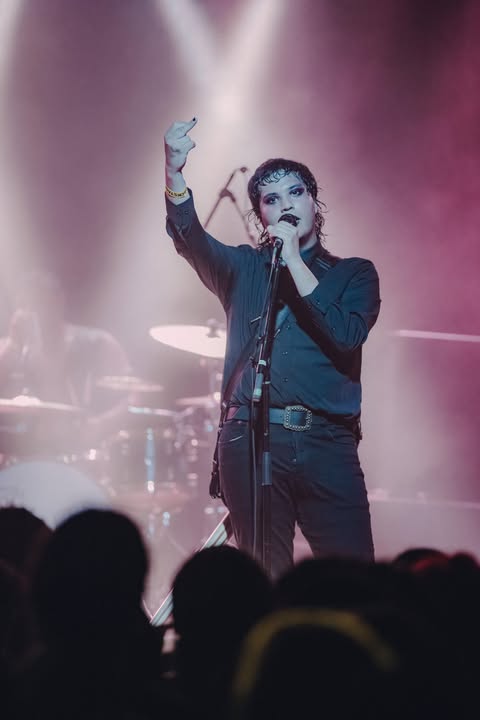
Live performance is where everything converges. The band takes the music seriously, but never at the expense of joy. Fun is a vital part of the exchange.
“If we’re enjoying ourselves on stage, if we’re having fun with our own music, we hope people feel that and enjoy it too.”
Which songs in your catalogue feel the most significant?
Several songs mark key moments in Deceits’ evolution.
The most obvious is “Drowning in an Empty Sea.” Written quickly and instinctively, the song reshaped the band’s trajectory almost overnight. It became a dividing line, one that still holds weight every time they play it live.
“There was Deceits before that song, and Deceits after that song,” they say.
More recently, “Mi Amor, Mi Vampira” has taken on a similar life. It’s intense, energetic, and exhausting, especially for the drummer, but it remains one of the band’s favourites to perform. The effort is part of the reward.
Another important track is “Every Promise,” the first song the band ever wrote. It forced them to abandon their hardcore instincts for constant change and learn the power of restraint. That lesson shaped how Deceits would write everything that followed.
Then there’s “Soledad.” More than a song, it functions as a mission statement. It pulls together dance, aggression, rhythm, and cultural openness into a single moment. The band has seen crowdsurfing, moshing, and dancing all coexist when it’s played live.
As they put it, “It’s literally what we represent: everyone is welcome.”
What was it like opening for goth and post-punk legends?
Playing events like Cruel World forced Deceits to confront serious impostor syndrome. Being backstage alongside artists they grew up revering didn’t feel immediately deserved.
“I’m just a kid from L.A.,” one member recalls thinking. “Do I really deserve to be here?”
That mindset shifted when they realised the music had already done the work. Conversations with artists like She Past Away reinforced that feeling. Instead of gatekeeping, they were met with generosity, advice, and quiet encouragement.
Those moments, both big and small, made space for a new belief: that Deceits belong in this lineage, not as imitators, but as contributors.
How do you see your place as Mexican-Americans in the goth scene?
The band is cautious about being labelled as leaders of anything. They’re proud of their identity, but uninterested in being boxed into representation alone.
“We’re a goth/post-punk band,” they say, “and we’re also Mexican. In that order, simultaneously.”
Their goal isn’t to claim space, but to show it already exists. By being visible and honest, they hope others see possibilities instead of barriers.
“We want to show people: don’t be afraid of who you are. You can do this too. If you see a couple of Mexican-Americans making the music they love in this scene, then you know you can do it as well. Don’t let barriers like racism, colourism, sexism, whatever – stop you from making your art.
Use who you are. Your art will represent you and your culture. Share your experiences with others.
The most important thing is to be honest with yourself. Use your background and your influences.”
Community remains central. Giving back, uplifting other bands, and acknowledging influence are part of their responsibility, not an afterthought.
They also made sure to shout out more talented Mexican bands alike, “We know a lot of talented Mexican bands who might not be super famous yet, but they’ve influenced us a lot. For example, Lázaros—we watched their videos constantly. I saw the drummer play and thought, “Damn, I want to play like that.” They helped us shape our style, too. Shout-out to Lázaros, Lázaros Cuerpos, Sunset, Calaveras, the Catalán bands—all of them are great.”
Why are politics inseparable from your music?
“We always say we’re a post-punk band with a strong emphasis on the word punk.”
Deceits identify strongly with punk’s political roots. To them, goth and post-punk have always been tied to resistance, expression, and opposition to authoritarianism.
“There’s no such thing as apolitical punks or apolitical goths,” they say. “That idea is disrespectful to where this culture came from.”
That belief doesn’t always translate into literal slogans in their music, but it’s embedded in their presence, lyrics, and live energy. If holding that line costs them opportunities, they’re at peace with that outcome.
“Why don’t we look at the human aspect instead of just economic or political gain? Why do we need borders and structures that suppress people? We’re all humans.
We’re four human beings first. If we lose opportunities because of our political stance, so be it. We’re always going to speak out about things we feel strongly about.”
How do you balance music with everyday life?
Outside the band, one member works as a high-school English teacher in South L.A. Touring means using personal vacation time and navigating the tension between passion and responsibility.
The reality is familiar to many working-class musicians. Passion doesn’t always pay the bills. For now, they balance both. They take responsibility seriously, even while pushing the band forward as hard as possible.
Given everything happening in the U.S. right now – politically and socially – what issues are most important to you? And how do you use your platform as musicians to address them?
“One of our main focuses right now is fighting against fascist government agencies like ICE. That’s priority number one.”
The band has been especially critical of recent pro-ICE messaging from official government channels, which they view as a form of normalisation. “Coming from official channels, that’s modern propaganda,” they say. “We’ve seen this pattern before in history. If you stay silent and let things ‘naturally’ unfold, they’ll unfold exactly how the oppressors want.”
That belief shapes how Deceits use their platform. They’re vocal, especially online, and unapologetic about it. “We use our platforms — especially social media — to express where we stand. We’re not afraid to say what we believe.” That includes sharing moments from protests, like a recent “No Kings” rally downtown, where one sign in particular made its way onto their Instagram. They posted it, they say, because it was funny and because they agreed with the message.
Their posts about ICE, in particular, have strongly resonated. “A lot of communities are under direct threat right now — immigrant families, of course, but also many others.” Seeing people targeted simply for who they are is something they describe as both heartbreaking and infuriating.
Deceits still believe in what the idea of America is supposed to represent: freedom of expression, freedom from tyranny, and the right to live without an imposed moral code. But they’re clear that those values are being selectively applied. “If the law says ‘for all people,’ it should really mean everyone — not just one type of person.” They point to Latinos, immigrants, LGBTQ+ and trans communities as bearing the brunt of this political moment.
For the band, using their voice is non-negotiable. “If staying true to our politics means we don’t get as big as we ‘could’ have — then so be it. We’d rather go down in history being on the right side.”
They also try to match words with action. At a recent show at the Glass House in Pomona, Deceits invited a local immigrant-rights organisation to table next to their merch. “If we’re playing in their community,” they say, “it makes sense to give some of that love back.”
On Industry Support for Immigrant and Minority Artists
Deceits sees the biggest issue as structural and cultural fear baked into the music industry. “First of all, there are a lot of barriers,” they explain. “Many artists are scared to speak out politically — especially if they’re already signed to a label or have a publisher.” What they want instead is simple: “An industry where artists can express themselves freely without being afraid of repercussions.”
They point to high-profile cases to show how widespread the problem is. “You see people like Bad Bunny getting criticised just for having opinions, even when he’s performing at something as big as the World Cup.” Much of that backlash, they argue, comes from historical ignorance. “People don’t even know Puerto Rico’s story, or what it means.”
From their perspective, labels often frame silence as professionalism. “Industry structures want to limit artists’ voices because they’re thinking about profit,” they say. “But our voice, our perspective — that is the point of what we do.” The double standard frustrates them most: artists are quickly labelled “un-American” or “unpatriotic” simply for caring. “The irony in that is insane.”
They also call out lingering prejudices within alternative scenes themselves. “Apparently, dressing in black, having long hair and piercings, wearing skinny jeans — all that — gets you treated like you’re less ‘serious’ or less professional. It’s ridiculous.” For Deceits, meaningful change means backing artists who speak out instead of sidelining them. “We need more artists who aren’t afraid to speak loudly about injustice. The industry should back them, not silence them.”
As for their own path, Deceits are comfortable remaining independent for now. “We’re still technically a DIY band. We’ve had some offers and conversations, but we’re not desperate for a label.” They’re not opposed in theory — just selective. “The day we sign, we’d be stupid not to do it — if it’s the right situation and they respect our ethics and values.”
Until then, they’re content building things on their own terms. “Our music is already out there. People in Mexico are already talking about us; people worldwide are listening.” For them, longevity matters more than scale. “If nothing else happens, at least the songs, the videos, and the message will remain. We just need to stay honest and not compromise who we are. The day this starts feeling like just a ‘job’ is the day it’s over.”
What’s next for Deceits?
New music sits at the top of the list. Songs are already tracked, shaped by a few heavy years and distilled into something more focused and intentional.
Live shows continue, including charity-focused events tied to immigrant support. Beyond that, 2026 looms large.
“It’s going to be heavy,” they say. “Brutal, honest, and full of purpose.”