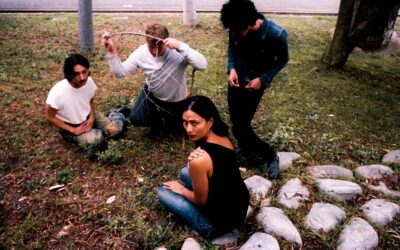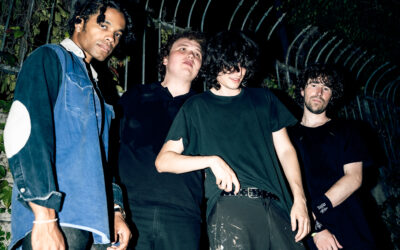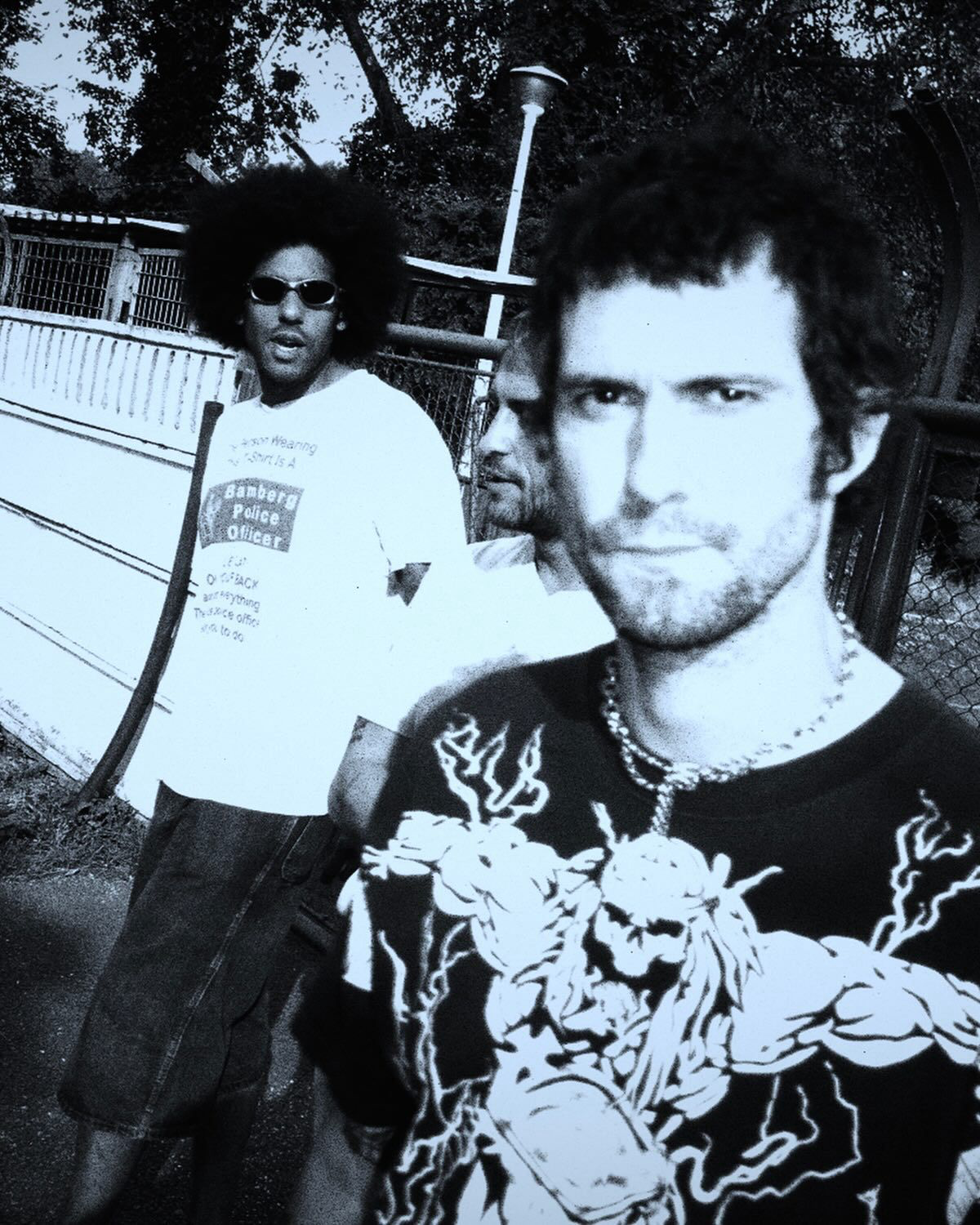
“It’s our year, it’s your year, it’s everybody’s year.”
It was midnight in Jakarta, 6 PM in Paris and 9 AM in Los Angeles.. Three timezones merged in one call as the Cult Machine team talked with Nick and Alex from Casablanca Drivers, alternative/indie turned electronic band hailing from France.
Somewhere between laughter and chaos the band shared through the screen which helped wash away the tiredness, I watched my boss speak French (which I did not know he could do) as I could only politely chime in with a ‘Bonjour.’ The Strokes also somehow got mentioned more than two times as they’re a universal topic for all Indie kids (God Bless Julian Casablancas).
We spoke with the band on sound evolution, French film and culture and what’s next, from new music to plans for the year ahead. Here’s our conversation.
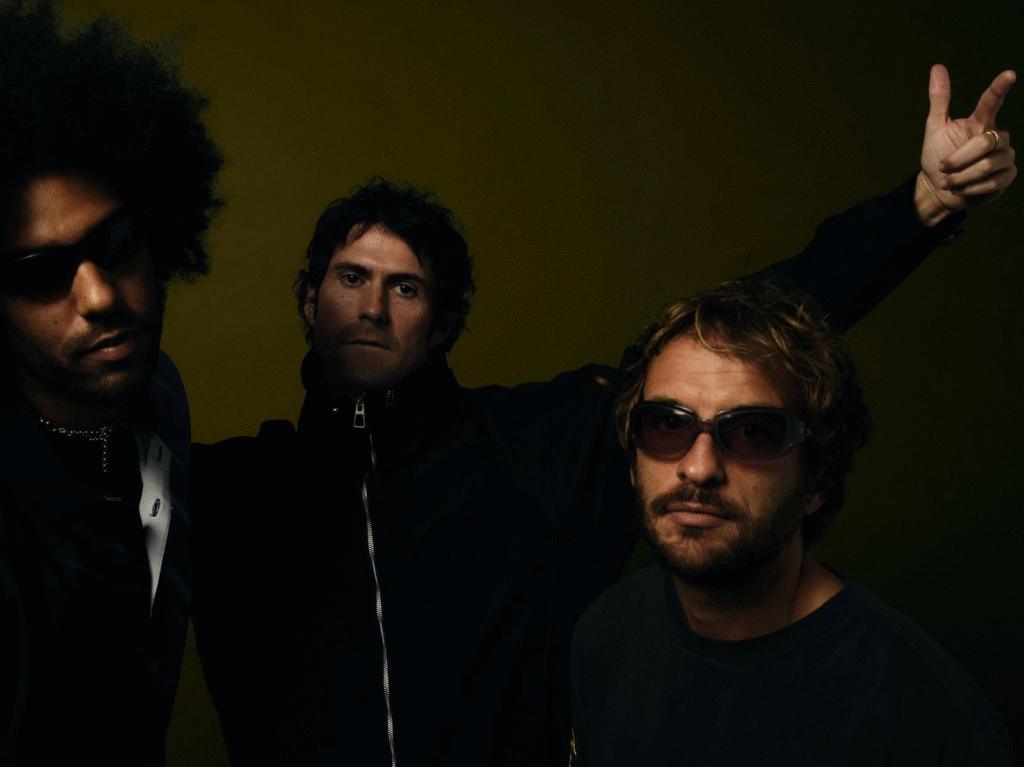
New Year, New Era
Alana (Cult Machine): So, New Year! Do you guys have any plans for new music? Can you tell us anything about the year ahead?
Alex: The year ahead was prepared last year, actually, because we’ve got new material ready to be released. So, this year’s a new album, new songs.
Nick: Yeah, new songs, new gigs. We signed a contract with a promoter to tour a lot, so we’re going to have several gigs. And, I think this year is going to be our year.
Alana: Hell yeah.
Alex: And yours too!
Alana: It’ll be all of our years!
Same Name, Different Band
Alana: Let’s go back to the beginning first. You guys started Casablanca Drivers as teenagers, but you said before that it’s not really the same band anymore– just the same name. So what do you think has changed the most over the years?
Alex: We’ve changed. Yeah. I mean, we’re not the same teenagers. So the music changes as we change together, and as we evolve as friends before being fellow musicians. We put the new us into the music, so the music changed naturally. We never sat and said, “Oh, what are we going to do now?” We just play music together in the studio, and then that’s the way it comes out.
Nick: Yeah, of course. And the band is kind of the same because Alexander and I, we’ve been here from the beginning. So it’s us with Dave, and Dave has been here for like 10 years now. So yeah, it’s great.
Alex: It feels like 30 years.
Nick: But we used to have drums on stage, and we used to be kind of like The Strokes. And now it’s more our music. It’s an evolution.
Alana: Yeah. I noticed– I read that you guys don’t use drums anymore in your live shows. Is that true?
Nick: Yeah, it’s true. It’s easier to go on tour without another guy with the staff, the main drum–
Alex: It’s even more appropriate for the songs we make today. Maybe it’s going to change. Maybe we’ll say, “Oh, we need a drummer for the next album.” But for the previous album and the one that’s going to be released this year, it’s more natural not to have drums– just drum machines.
Falling Into Electronics
Alana: What pulled you to change your direction into more electronic music?
Nick: Maybe because it’s the music we listen to nowadays, so we’re more aligned with this.
Alex: And also it’s easier to try and find your own kind of music with electronic music– because when you play as a traditional band, like The Strokes, the sounds have been used for decades across many genres and many good musicians. It’s not that you’re stuck– because you can do everything with acoustic instruments– but you’re not as free as you can be with electronic music, you know? Each time you go to the studio, we discover a new song on the keyboard, or a new way to use the keyboard. So we’re more free, and we can express ourselves more naturally.
Alana: I mean, even Julian Casablancas himself is doing it, you know– like with The Voidz also.
Alex: Yeah, sure. And that’s what happened with good artists and bands in the ’70s when they went into the ’80s– they discovered new ways. Even Quincy Jones, even the best jazz players discovered electronics.
Nick: Everybody does. It’s a step.
Alana: With your music evolving, do you ever listen back to your early work and feel disconnected from it?
Nick: It’s awful. We’re going to show you the faces we have when we listen to the first records.
Nick and Alex proceed to make a face of a mix of horror and disbelief, as if the existence of that record terrified them that they had ever made it in the first place.
Growing Up on an Island
Alana: So you guys started the band in Corsica? Which isn’t really known for a big indie or electronic scene. Do you think being there shaped your sound, or mindset, in a way?
Nick: I don’t know for the sound, but the mindset– pretty sure because it’s an island. We are all alone in the sea. You have to be open-minded to make some stuff. But for the sound, I don’t know– we used to listen to music from the UK, from the USA.
Alex: Being on this island, we didn’t have access to a lot of gigs, a lot of gear, a lot of different instruments. We didn’t have access to studios. So you just have your guitar– and that’s why we loved The Strokes. That’s why we ended up with The Strokes then. We love to play with harmonies and stuff. And being in Corsica, just having guitars, that shaped the way we’re making songs today, even though we’re using keyboards.
Nick: The island forced us to do with what you had, you know. It’s practice. That’s it.
Beyond Music: Cinema, Jazz and Culture
Alana: Other than music– like The Strokes– do your influences come from other things? Cinema, fashion, art, pop culture, or any other bands?
Nick: Yeah. Lots of French bands interest us, like Phoenix. Of course Daft Punk. We love cinema. We plan to have a big career in cinema one day.
Alana: One day, yeah. As actors, or–?
Nick: Yeah. Of course.
Alana: Or maybe make film scores?
Nick: Yeah. We made a film score like five years ago, but it was a short movie.
Alex: I think you’re influenced by the movies you watch and the books you read, right? I love reading too. And we read, we watch movies, and that puts you in a mindset. Even different kinds of music– if you’re listening to jazz… sometimes I listen to vinyl jazz in Paris, then I go for a walk by myself in the streets of Paris. I’m in the mindset, and I want to find melodies, and I find melodies that are going to become electronic songs. See what I mean? And I think I can say I’ve been influenced by jazz. Not in the sense that I’m taking references from jazz, not that way. Just the mood.
Nick: Same as you are in a movie, walking in the scene. Same thing. You can watch a movie that touches you a lot, and then you go into the studio and you still have the movie, the feelings you watched, you have them in you, and that brings you to make up a melody that you like.
And we love clips/music videos.
Alana: Do you guys have any favorite French films or jazz albums?
Alex: “Le Nuit De Chasseur” is really nice—
Nick: You should try Le Dîner de Cons. It’s a pretty cool movie. There is ‘Nouvelle Vague ‘. Do you know the Nouvelle Vague? The cinema in the ’60s in France. Jean-Luc Godard. I mean, I’m not influenced by French movies. I’m more like a gringo– I love Hollywood movies. But not blockbusters. I saw One Battle After Another movie last year and I was blown away. So yeah… (laughs).
Writing Tabloid
Alana: Talking about movies, your album that you released last year, Tabloid, it’s a seven-track record building around a story, right? Journalists documenting the world as it’s coming to an end. How did you guys create that concept?
Nick: I mean, I think it started with the sound of the song,
Alex: And the article, of course.
Nick: And the article– of course– I’m so sorry. (laughs). Come on Alex, talk about the article.
Alex: Yeah. I mean, we love to play when we write lyrics. We love to play with what we have around us. It could be a subject, it could be people. But that day, we wrote the first song of the previous album, and we had a British tabloid that I brought back from England on the desk. And it was open on an article about a teenage boy named Alan, and the title was: “Alan refuses to poo until the world accepts climate change.” And we were like, “Oh– that’s what’s on the press today.” But that gave us the idea: let’s not be singers, but journalists writing for tabloids about crazy fucked-up subjects. Because what you read in a tabloid today, what you read in a tabloid 10 years ago, could be what’s happening today in life, you know?
Nick: Yeah. And let’s not be serious. We don’t want to be serious in our music steps. We want to mix the fun and the serious.
“Plastic” and What Comes Next
Alana: Other than Tabloid, you released “Plastic,” your most recent single. Mind telling me what it’s about?
Nick: It can be lots of things, actually.
Alex: “Plastic” is a story of a guy on the edge. And he’s got a little voice in his head telling him, “Come on, man. You should quit. Just quit. Change your life. It’s going to be easier.” When your life doesn’t make you happy, it means you have to change, obviously. And this guy changes–
Nick: He goes deep in the party,
Alex: He goes mad, but in a good way. So that’s basically the story behind the song.
Alana: Will the song be on the next album?
Nick: Yeah.
Alana: Okay. Will the rest of the album also have a similar sound to “Plastic”?
Nick: Yeah. It’s more electronic than Tabloid. “Plastic” is kind of more punchy, but there are other songs in the same way.
Playing Live, Losing Control
Alana: You said before that when you’re making songs, you’re thinking about how they will sound live, and having fun with the crowd matters more than playing perfectly. So how does that mindset shape your performances?
Nick: I’m losing myself in the show. So sometimes if I don’t sing well, it doesn’t matter if the crowd is connected with the song.
Alex: It changed our way of playing live. For instance, five or six years ago, we had two guitars playing different tricky parts together. We swapped from guitar to keyboard. And we don’t want to do perfect instrumental parts in the songs, we just want to have fun and not have to think about what you’re going to play next. Just loops. And we have fun, we’re doing it with the heart. Lives are never the same, they’re always different, and we like it. We like different shows all the time. Even though we play them with machines– it’s not like… rock and rol. Everything is timed by the machine, we can’t play longer songs or make them shorter, because it’s all on the computer. But even though we have this way of playing, we do have a lot of fun with these songs. And that’s what we like.
Alana: What do you guys want people to feel when they leave a Casablanca Drivers show?
Alex: Diarrhea. That would be nice.
Can you imagine? Like, “Wow, 150 people have diarrhea after a show.” That would be the headlines, definitely.
Nick: It would be a superpower.
Alex: And the album would be called “Diapers.”
Alana: I think you guys should sell diapers as merch.
Alex: Yeah. Maybe the next album would be called “Diapers.”
Nick: The Brown Note.
Alex: No, but seriously. I want them to leave smiling.
Nick: Like ready to fuck around. Ready to go and party. Like, “You see the Casablanca Drivers show? It’s pretty awesome, you should see it!”
Alex: But most of the time when we do a good show, you can tell the audience is surprised, because it’s a kind of music they’re not used to listening to. And the way we play it live, it’s not common either. So the crowd is pleased and they’re surprised, in a sense. And that’s when we do good shows.
Crowds Around the World
Alana: Is there a difference between playing for French crowds and other international crowds?
Nick: French crowd, they’re looking at each other and they’re shy. They don’t want to lose themselves. The Mexican crowd is the opposite. They’re happy, they’re having fun. They’re focused on the sound, on the song and they’re curious. The English crowd is pretty much the same. So yeah, the French crowd is… tough.
Alana: What’s the best show you guys have ever played?
Alex: We played the Olympia in Paris last year.
Nick: We opened for a cool band from Paris at the Olympia. The Olympia is kind of the big venue in Paris– like The Beatles played at the Olympia. But I’m pretty sure we’re going to play even cooler gigs. So it’s just the start.
Alana: Yeah, I mean– come on. This year is your year, right?
Nick: And yours too!
What’s Next, Sonically?
Alana: Are there any genres or sounds that you’re curious about exploring next?
Alex: We always said we wanted to make a folk album. Maybe one day we’re going to go to a cabin in the woods and record.
Nick: But we have to add more intense stuff to tell people, because folk music– it’s deep. I love Elliott Smith, but it’s not the moment for us. Maybe in the next 10 years.
Alana: Maybe when you guys are older.
Alex: Yeah, we’ve got to get married, then divorced, get married again, then divorce– (laughs). Then lose the kid.
Nick: But we’re not closed off to any genre, actually. If the music is good, any genre is fine.
Alana: I mean, who knows with the amount of experimenting you might do, maybe you’ll find a new genre.
Nick: Yeah. Why not? We’re going to start making some featurings this year.. to open our mind with our music. So we’re going to start soon.
Rod chimed in: Are you going to collaborate with Rey Pila?
Alex: I don’t know. That would be fun.
Nick: That would be great. We have other artists in mind, we’re in discussion. Maybe we’re going to make something with some boys from The Voidz. I don’t know.
Defining Moments
Alana: Was there a specific turning point that really defined who Casablanca Drivers are today?
Alex: I think the most important one is when we decided to play more electronic songs. We played a couple of shows to get ready, and then we had an opportunity to open for a famous French band called Polo & Pan. We played some gigs in big venues in the south of France and in the north of France too, that was a turning point. It gave us confidence, and it proved our music was ready.
Nick: And it’s the result of those ten years working– walking around Paris, walking around France, we played California, we played Mexico, we played the UK. It’s a combination, and we are more mature in a way.
Friendship Is Magic
Alana: And with the amount of time you’ve spent together, have you learned to communicate better with each other over time, or is the chaos part of the process?
Nick: No, it’s not chaos. We’re seeing a psychologist, to have keys to speak easily. Because we’re three guys in the band.. lots of ideas, lots of testosterone in a way. Sometimes it’s cool to have another person as a mediator. It’s a point we want to work on this year.
Alana: Personal preferences clash sometimes?
Alex: Yes, sure. We had clashes, like a lot of bands. But as I said first– because we are friends, when there were tensions, we always tried to remember the first rule: we are friends, right? We’re not colleagues. Otherwise the band would have split. But we stay as a band and we become stronger year after year because of that rule. So we had clashes, because we met as teenagers, we evolved in our ways, but still keeping that spine, you know.
Alana: And you grew up together basically– how has the band affected your friendship?
Alex: It made it stronger. It’s a unique friendship. It makes friendship unique.
Nick: It’s a big part of our life. We have to keep it going, you have to put water on the flower, you know. Being friends and having a band makes the friendship three times more intense, and the band three times more intense. It makes everything more intense.
And we speak every day together. For good stuff or for nothing. He’s like my wife.
By the end of our conversation, it was clear that the heart of Casablanca Drivers isn’t just the music but also the friendship behind it. The interview moved easily between thoughtful reflections on creative evolution and the band’s love for French cinema, giving me a small glimpse into their cultural world as well as their music. It made for a genuinely fun conversation, full of jokes and unexpected tangents. And if the French trio ever ends up selling diapers as merch at their shows, I’d like to take a little credit for helping plant that idea.
With a new album on the way, more touring ahead, and no interest in playing things safe, I’d say this is definitely Casablanca Drivers’ well-earned year.
Interview conducted in January 2026 via Zoom.