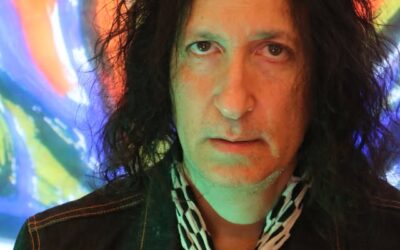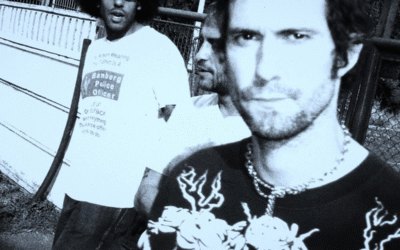
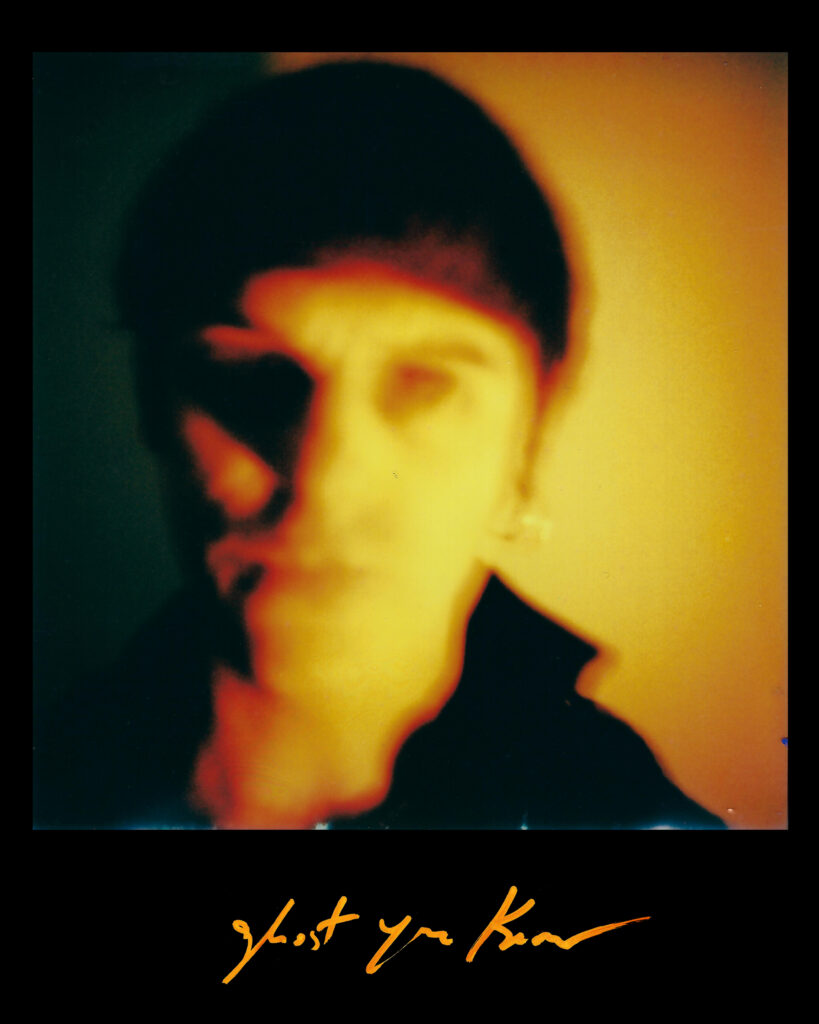
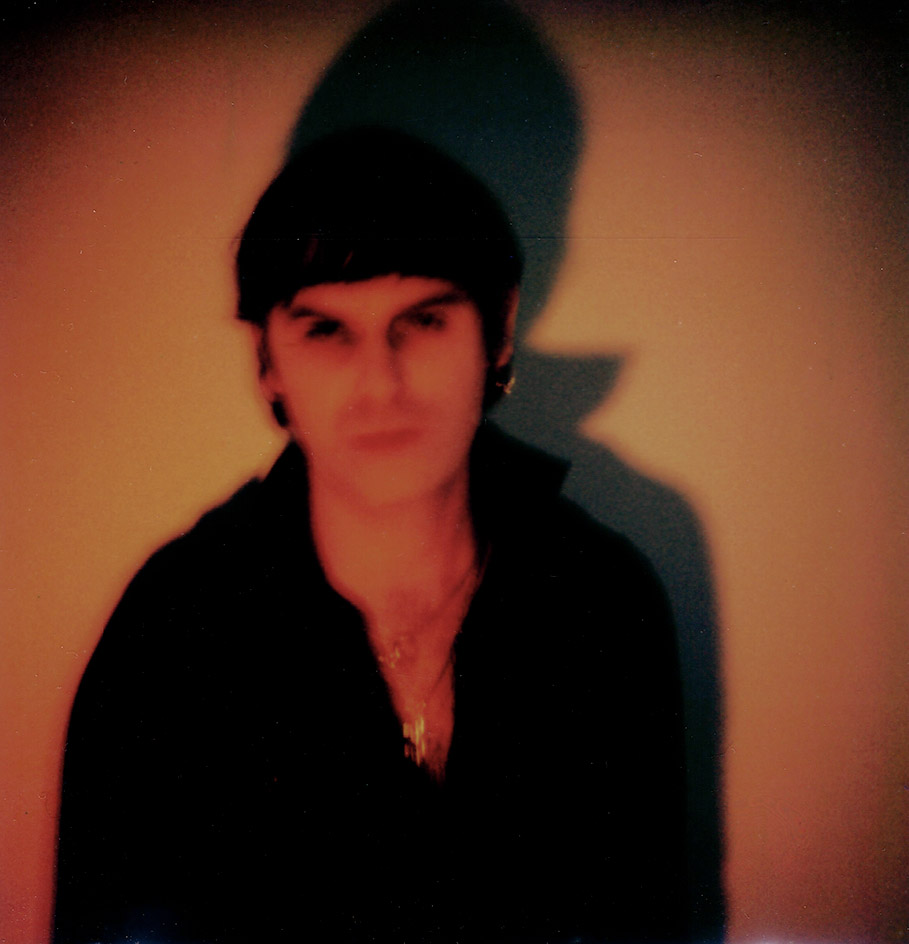
Brooklyn-raised musician Death Dance Music has spent the past five years developing his own distinctive sound. His upcoming EP Ghost You Know (out March 23) blends electronic, post-punk, lo-fi and experimental textures built from handmade percussion and tape loops, what he describes as nihilistic dance music. Born and raised in the same neighborhood as Alan Vega, DDM channels a similar raw electricity. Italian, theatrical and outspoken. A poet, performer and musician, he’s developed a reputation with his raw live performances. For the interview we met in a rural town you’ve probably never heard of where he was recording sounds from a church organ onto his sampler. We spoke about the new EP, his performance practice and how building his platform, Uncensored New York, has influenced his perspective on the city he grew up in.
Background, Influences & Formation
Samantha: Where did the name Death Dance Music come from?
DDM: Death, Dance and Music are three very universal ideas combined.
Samantha: How did the project come together?
DDM: I started writing the songs around 2021 and about a year later I began performing live with Eric ørdaz who plays synth and cello and Greg Roberts who plays guitar. Greg and I have been playing together since we were teenagers in New York.
S: What drew you to music?
DDM: I was never really good at anything else. I’ve been making art and music most of my life. I gravitated towards drawing and painting. As a kid I’d draw darker stuff skeletons while other kids were drawing rainbows. I’ve always been drawn to that side of things, but with humor too. My first band was when I was about ten. I played guitar and sang and this kid from around the corner played drums. We recorded covers of the Beatles, Nirvana on a cassette recorder. That was my first real recording experience.
S: What were your earliest influences?
DDM: Freddie Mercury was my favorite. Later I got into more experimental and darker stuff post-punk, Leonard Cohen, Throbbing Gristle. But Freddie was the beginning.
S: What was it like growing up in New York?
DDM: It was very different from now. This was the 90s into early 2000s. People weren’t glued to their phones. You had places like Kim’s Video, St. Mark’s Place… real gathering spots. Vintage shops, record stores, most of that is gone now. I was born and raised in New York City, lived there my whole life. I went to public school, then got kicked out and sent to reformatory with all the bad kids in Staten Island. It’s an experience being around other bad kids. Nothing good is going to come out of that.
Process, Sound & Musical Practice
Samantha: What are some of your favorite sounds off of the EP?
DDM: I like a lot of the weirder elements the world string sounds the violins and the ring mod sounds on the chorus stand out to me.
Samantha: Do you use a sampler?
DDM: Yea, I use a SP-404 live and in the studio. I sample everything from field recordings, objects, tape loops. Sometimes a whole song comes from a loop. “Judas” is a good example of that.
Samantha: What’s the strangest sound you created on the EP?
DDM: I built a spring reverb using hardware from Home Depot springs attached to a plastic container, played with metal turkey basters, then run through a ring mod pedal. That’s on Judas and Shadows.
Samantha: What excites you most about music right now?
DDM: Experimental hip-hop, darker dance music from Europe, world music, anything that doesn’t sound traditional. The weirder, the better.
Samantha: Top five favorite music discoveries this last year?
DDM Danger Mouse, Juana Molina, Charanjit Singh, Demdike Stare, Party Dozen
Philosophy, Industry & Positioning
Samantha: What themes come up in your music?
DDM: The newer material is pretty nihilistic. There’s a sense of hopelessness. I’m not trying to deliver a message or speak for a community. That kind of thing feels forced to me. I’m just expressing my own perspective.
Samantha: Do those ideas connect to Uncensored New York?
DDM: There’s overlap. I co-founded the platform but I don’t see myself as a spokesperson. I just make what I make. If people connect, great.
Samantha: Is there a difference between politics and poetics in songwriting?
DDM: I think both can exist together. Leonard Cohen wrote political songs, but they were still poetic and universal. I connect to writing that feels open, not confined to a specific agenda.
Samantha: How has the music industry changed since you started?
DDM: It kind of ended in the early 2000s. Bands like The Strokes and Interpol were among the last to come up through a functioning system. Now it’s completely different. Censorship is big. Nobody is censoring me or my art. They can try but they’d have to kill me. As long as I’m putting out music, that’s what matters to me however I can get it out. I’m not making music to appease other people or fit into the industry. The people I know who are in it are miserable. They are in debt, being shaped into versions of themselves they never wanted to be. If that’s the environment you want, that’s your choice, but it’s not for me. It doesn’t align with who I am as a musician or as an artist.
Samantha: Would you ever use Tiktok?
DDM: No, I’m not a content creator that’s not who I am. I’ll do interviews, but I’m not interested in making that kind of content. I’m not focused on followers or metrics, just making music.
Samantha: What’s most important to you about being a musician?
DDM: I love playing music. It’s meditative and it helps me mentally. I love experimenting in the studio, making tape loops, and finding strange sounds. Finding a weird drum sound, putting a pedal through an old telephone. I’m a very analogue person. My process is hands-on. That is what makes me happy.
Samantha: How do you see your role in the NYC music scene?
DDM: I curate a live series called Club Della Morte where I bring together musicians that I find interesting. I’m focused on putting together shows that are free for entry. A lot of venues are expensive, so accessibility is important to me. I lean toward experimental and darker dance music. I’m not interested in repeating the same CBGB-era nostalgia. I’d rather push into something new.
Interview by @uncensorednewyork / featuring @deathdancemusic conducted in March 2026