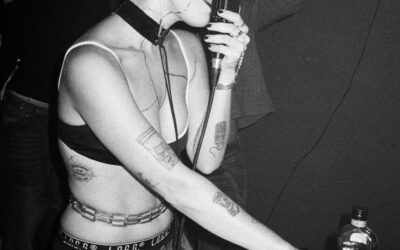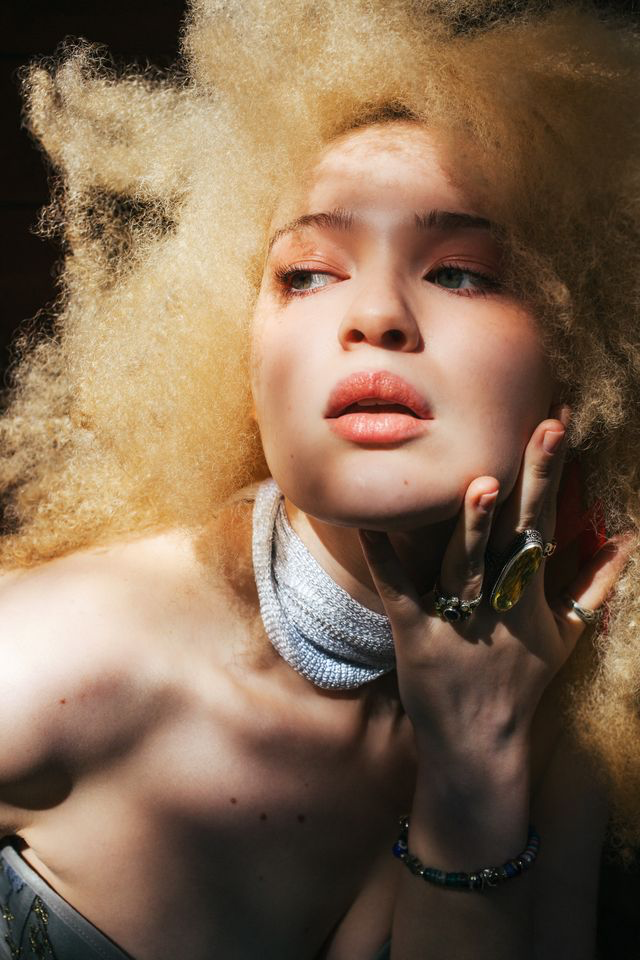
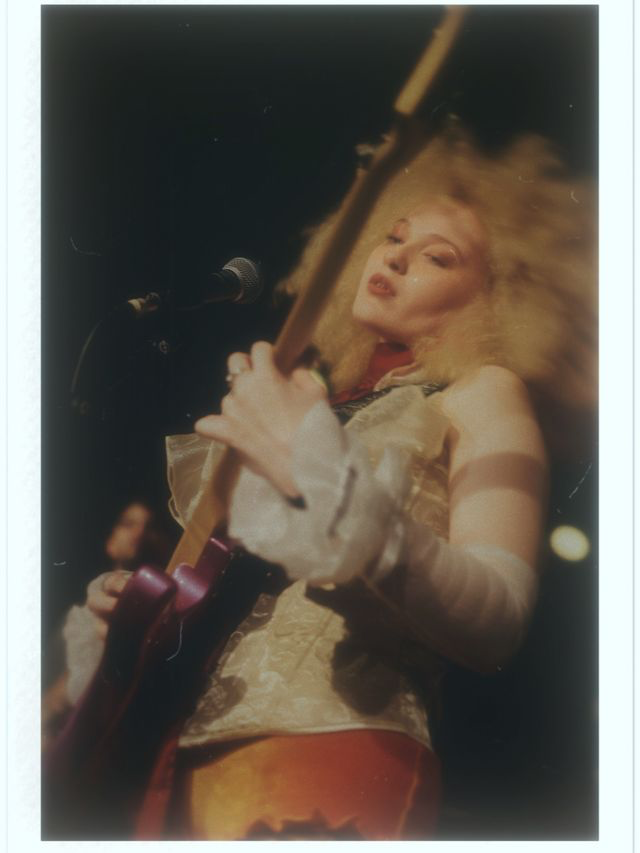
In a music landscape increasingly driven by trends, algorithms, and speed, Bella Moulden stands firmly in her own lane. Originally from Buffalo, New York, now based in North Carolina, the multi-instrumentalist and self-taught artist first gained widespread attention when her song “Self Care” went viral during the pandemic. Since then, she’s built a world entirely her own from her unmistakable 70s-inspired, witchy rockstar aesthetic, capturing the hearts of many (including Juliette Lewis and Sharon Osbourne!) and even taking her music overseas with a debut run of shows in Europe.
Going into the interview, I was incredibly excited–completely drawn into her music and persona–right up until my Wi-Fi decided to give out five minutes before the call. Don’t you just love the universe’s timing?
Thankfully, I was able to get it back soon enough, and what followed was a conversation that felt just as unfiltered and real as her music. We spoke about her beginnings as a self-taught musician, her songwriting process (including pulling ideas from dreams), and her thoughts on everything from analog media to the growing presence of AI in music.
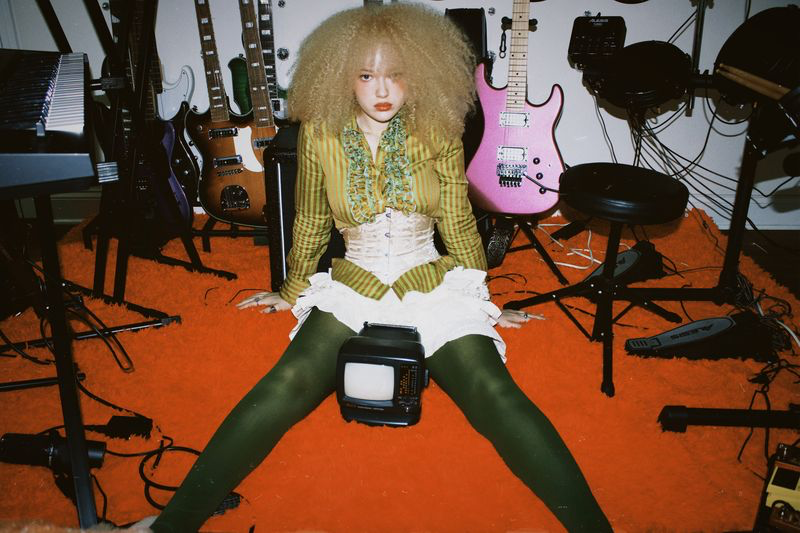
Bella’s musical journey began early, almost by accident. At around nine years old, she was cast in a play with a singing role, something neither she nor her family initially thought much of. “I was just like, okay, sure,” she recalls. But that moment revealed something unexpected. “My parents were like, oh, wow, there’s something there,” she says, which led to singing and classical piano lessons.
That formal training didn’t last long. After moving around frequently, Bella grew frustrated and decided to take matters into her own hands. “I was like, I’m just gonna teach myself,” she explains. From there, she began teaching herself everything and even stole her teacher’s books to learn singing, sight reading, and piano on her own terms.
By her teenage years, that DIY approach expanded across multiple instruments, including bass, ukulele, percussion, and electric guitar. It wasn’t until the COVID pandemic, though, that things shifted into something more serious. Feeling low at the time, as did the entire world, she wrote and released “Self Care” as a way to lift herself up. The track unexpectedly went viral on TikTok, marking a turning point. “From there, I was like, oh… maybe I could do something with this.”
Alana (Cult Machine):
You’ve been associated with your double neck guitar when you first started going viral, but what’s your favorite instrument or guitar that you’re playing right now?
Bella Moulden:
My favourite instrument would have to be bass, really. Every time I play it, it speaks to my soul in a way I cannot describe. Between all the instruments I play, that’s the one that I feel the most, and that’s the one I pick up first when I create a song.
I think my favourite bass would be my Epiphone cherry red one that I have, I think that’s the Jack Casady. My favorite guitar right now, I got from Eastwood, and I don’t remember what it’s called, but it’s white, and it looks like a spaceship.
Alana:
Love that. I’m a bassist myself–bassists unite!
How would you describe your sound to someone who has never heard or listened to you before?
Bella:
Chaotic. Confusing. Not linear.
No–I guess I would say I’d be alternative.. alternative rock, alternative pop, but more on the rock side. Pop rock, alternative pop, rock, soul, funk.
It just depends on my mood. There’s like a bunch of sub-genres mixed in, just depending on how I feel.
Alana:
I think it’s good to be versatile and you can just create anything you want.
Is there a song of yours that you feel captures you best right now?
Bella:
Oh my god, what song have I been listening to over and over? “But It’s Better If You Do” by Panic! At The Disco. I’m not saying as a new fan–I used to listen to that album religiously when I was a kid.
Or I would say “Seven Minutes in Heaven” by Fall Out Boy. I’ve been on this nostalgic pop punk thing for some reason. I think I’m reverting back to when I was in elementary school and I don’t know if it’s because of the economic state of the world, but I have been pulling out that iPod and jamming out to some Fall Out Boy.
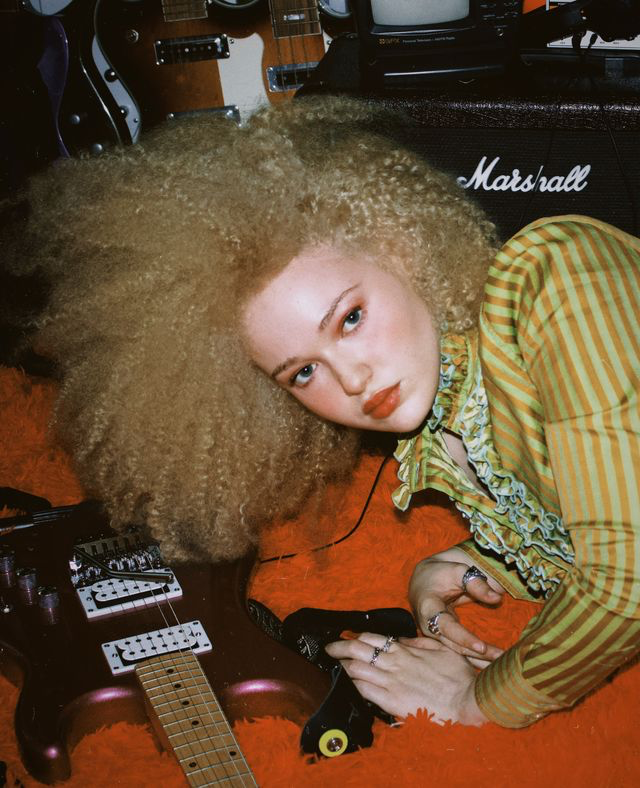
Influences and the Pull of the 70s
Alana:
You’re known for your 70s style–who are the artists that shaped how you think about music, but not just how you produce and create music?
Bella:
Quite a few. I’d say David Bowie, Prince, Janis Joplin, and Stevie Nicks.
Alana:
What drew you to the era of 70s music?
Bella:
I wish I knew. My brain is really weird. If I see something that I like, I immediately hyper focus on it.
That’s why my music is so all over the place, but it’s the same in a sense.. but it’s also different? That’s why my fashion is the way it is because I wanted to do something different. I saw a music video of David Bowie performing “Rebel Rebel” and I was like, okay yeah, that’s gonna be something I want to look into fashion-wise.
Alana:
If you could go back in the past in the 70s what would you want to experience? Or like any concerts you would want to go to?
Bella:
Well, I don’t want to be in the war–
Alana:
No, you have to avoid that..
It’s a broad question, you can do so much. So many people to meet and talk with.
Bella:
I don’t think we’d be able to get a credit card or our own bank account.
Alana:
Yeah, there’s some things that we don’t want to go back to.
Bella:
Well, I would definitely go to a concert. The one thing that was really just something that you’d probably have to just experience is the music.
Alana:
Any specific artists or bands?
Bella:
Who died and who didn’t die in the 70s..
Alana:
Led Zeppelin? Hearing their prime and “Stairway to Heaven” would be crazy.
Bella:
Oh my god and the double neck guitar… I used to love Led Zeppelin so much.
Alana:
What do you think that era got right that music today sometimes just misses?
Bella:
Everything.
I don’t know if it’s the artists or the industry that is making music seem so empty–and I’m not speaking on behalf of the indie community–I’m speaking in regards to the mainstream.
The mainstream music that most people consume, I think it’s been lacking in all ways that made music great. I think there’s more of a focus on trends and virality than the actual music.
Like the importance of actually being in the studio or in your home studio and putting a song together–not just alright, let’s get like 5,000 ghostwriters, we’re gonna make a song that repeats the same five sentences the whole time, and then they’re gonna have a music video of her lip-syncing and shaking her ass.
There’s nothing wrong with a little ass shaking! But if that’s the entirety of your performance and what you have to offer as an artist, then there’s something wrong. And that’s what I’ve been seeing lately in the mainstream.
Alana:
Lack of authenticity?
Bella:
Yes, exactly! It’s hard to find authentic artists in mainstream music right now.
Indie however–oh my god,
There’s a slew of amazingly talented, authentic artists that don’t get the credit they deserve. But it’s the mainstream that takes over all the media and attention.
And it feels disheartening because that’s what the younger generation consumes. That’s what they see as music, but they don’t see the hardworking artists and musicians who have an authentic way of making music and performing. They don’t get to see that because of what’s pushed in the media.
You can’t help but agree with her. There’s no shortage of artists making bold, original, and deeply personal music right now but so much of it gets overshadowed by what’s easiest to market and push at scale.
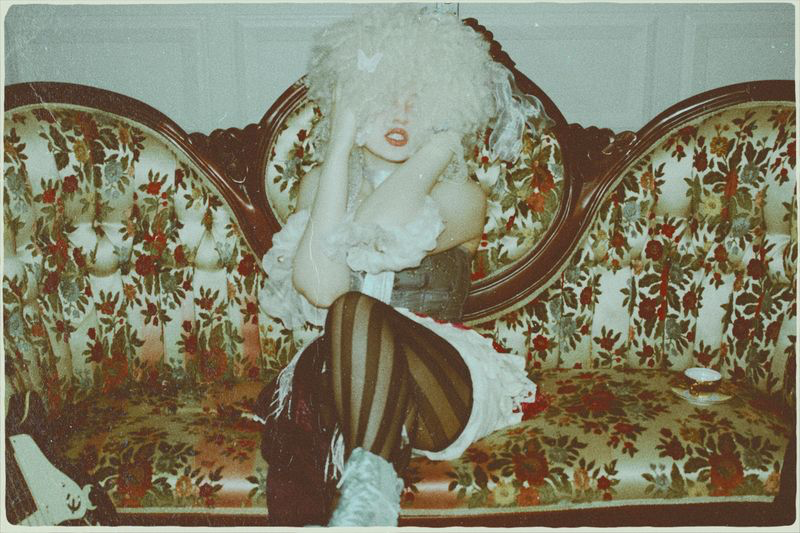
Dreaming Songs Into Existence
Alana:
For you personally, do you have a specific songwriting process?
Bella:
I am all over the place. It depends. Sometimes I will go to my keyboard and make a melody and then I’ll start from there and layer keyboard, bass, drums, guitar, etc.
Or sometimes I’ll start with bass and then I’ll do piano, keys, lyrics. So I think it really depends on what the song is and how it came about.
“The Tower” was a rare situation where it started off as a poem from a dream I had.
Alana:
Oh wow. Like Paul McCartney writing Let It Be–
Bella:
Yeah! I think that’s what made the track so fun to do, because I had a different process for it.
Alana:
Did you wake up and fully remember the poem?
Bella:
Yes. So in the dream, it was really weird–it was a bunch of tarot cards, and it was showing me the tarot cards, and they had paper at the bottom that said each of the lines.
Alana:
Damn. Free material from the universe.
Physical Media and You Should Be Embarrassed By Using AI In Arts
Alana:
Speaking of “The Tower”, you recently released it on vinyl and CD. Why is physical media so important to you right now?
Bella:
I’m so glad you asked me that. With streaming services, AI and these big corporations taking over and discrediting and exploiting artists.. It is so scary.
When people use streaming services, you don’t own that product. The distributor owns part of it, the platform owns part of it.
Streaming is scary because it feels like you’re exploiting the artist and the companies take most of the gains, but also it feels disconnected.
When I buy physical media, it feels like I’m taking a part of the artist I like and I’m listening to it. It means so much more than going on some app.
To me it’s like a piece of my heart. So every time someone buys a vinyl or CD, that’s a piece of my soul that you can own. With streaming, you don’t get that.
Also, you’re not really supporting the artist. Artists barely make anything off streams.
Alana:
How do you feel about people calling this year the year of analog and the return of physical formats?
Bella:
I’m so here for it. I have a flip phone and a camera now. I leave the house with my CD player wherever I go. I’m living my best life off social media every time I get a chance to.
Doomscrolling is disgusting and I fall for it all the time. It’s not healthy. It’s hurting our minds.
Alana:
Fuck yeah. Ditch streaming and embrace Walkmans or CD players.
Do you think people listen differently when they’re holding something versus just clicking play?
Bella:
Yeah, absolutely. I think there’s something psychological about that.
We’re trained from social media to just go listen, scroll, listen, scroll. So when people go on Spotify or Apple, it’s just like… next, next. Everything feels fast and superficial.
But putting in a CD, hitting play, actually listening.. I feel like there’s something more real about it. You feel more with the music. People pay more attention.
And also they’re just cooler. CDs, Walkmans, vinyl, they’re so much cooler. Even iPods.
If you download your favorite artist’s music, Bandcamp, iTunes, it hits differently when you can say “Yeah, I own a piece of that person’s work because I like their work.” Not just “Yeah I just streamed it.” That’s so lame to me.
I’m so excited for what’s coming with the rise of analog media. I think our generation is doing a really good job bringing it back, bringing back our childhood.
The world is going to shit, and the least we can do is be a little more aware of what we’re doing with technology. We’re searching for authenticity. We’re going back to our roots seeking the physical, the substantial. And I think that’s really good. I’m excited to see what’s to come.
Alana :
I saw that vinyl sales have risen a lot and kids are playing in bands again now.
We both immediately screamed, “GARAGE BANDS ARE BACK!!” Seeing more and more local college gigs popping up again, battle of the bands, and younger bands getting on stage… The indie scene is packed with young creatives.
Alana:
Do you have a favorite vinyl or CD you own?
Bella:
Paranoid by Black Sabbath. It’s my favourite album.
Alana:
Going back to the topic of AI in music, as someone who creates everything herself, how do you see the use of AI in music right now, especially as it’s becoming harder to avoid?
Bella:
I don’t see any use. I don’t think it should be in music and I don’t think it should be in the arts whatsoever. It could schedule a meeting, but it should not be telling you what chords to play in a song. It shouldn’t make the song or the tracks for you.
If you need AI to create something for you musically, artistically, then maybe you just should find something else to do. You know what I’m saying?
You’ve got these people coming into the scene like “yeah I’m a producer,” and then they send some AI stuff–be serious. You’re a prompter. That’s not you. You didn’t create that.
AI basically takes things from other people and makes it into its own thing. It’s literally stealing from people.
There is no benefit to having AI in the arts. What makes art so amazing is the people doing it. We’re human beings in this messed-up world, and one of the few things we can do is create art and express ourselves–through sound, visuals, everything.
For people to just put it through a prompt and make a song, that’s not art. That’s AI slop. That’s absolutely shit.
I want people to start actively calling out people who use AI in art.
Bella:
Like Timbaland, he used to have some really good bops. I’m not discrediting him. He made great music. But come on.
Alana:
It’s like a downgrade in production, why did we go backwards?
Bella:
Exactly. If you’re capable of doing all that, why are you doing this? I don’t understand why these amazing artists are like “yeah I’ll try it, it seems like the new thing!” Where’s the integrity?
I’m seeing actresses too on AI panels.. like I used to love you! What are you doing? Stop it.
It’s scary. It is so scary. And I think the best thing we can do is bully the shit out of people who use it. That should be the headline “Bella Moulden Thinks We Need to Bully People for Using AI”
Alana:
It’s sad seeing so many people fall for AI music too. There are AI artists with millions of listeners, that’s crazy.
Bella:
There’s this guy I heard about, I don’t know if it’s true, but someone from North Carolina made a billion dollars from AI music and left before it was detected as fraud.
How do you make a billion dollars from AI music when real artists are working their asses off?
I even got a message from Spotify saying some of my streams were “fraud” like a hundred streams when people were just listening. But AI can rack up massive streams and payouts? It makes no sense.
Alana:
It’s sick. Take all that time prompting and actually learn to create something. If you have something in your head, take the time to bring it out properly.
Bella:
I’m not gonna lie when AI first came out, I was excited too. A lot of people were. No one really thought about the impact on artists, communities, and the environment.
But then we realized this is kind of messed up. We need to stop.
But now it’s everywhere. It’s in everything. I understand like using Grammarly, I use that because I’m still in college, I use that for like my papers. But to be like in ChatGPT like “hey, can you write an apology letter for my Instagram?”
Alana:
That literally takes away the whole meaning of an apology, of being sincere.
Bella:
I thought we were so back, but now that I’m thinking about it, we’re kinda fucked.
Alana:
It’s like that meme where it’s like going up and down.
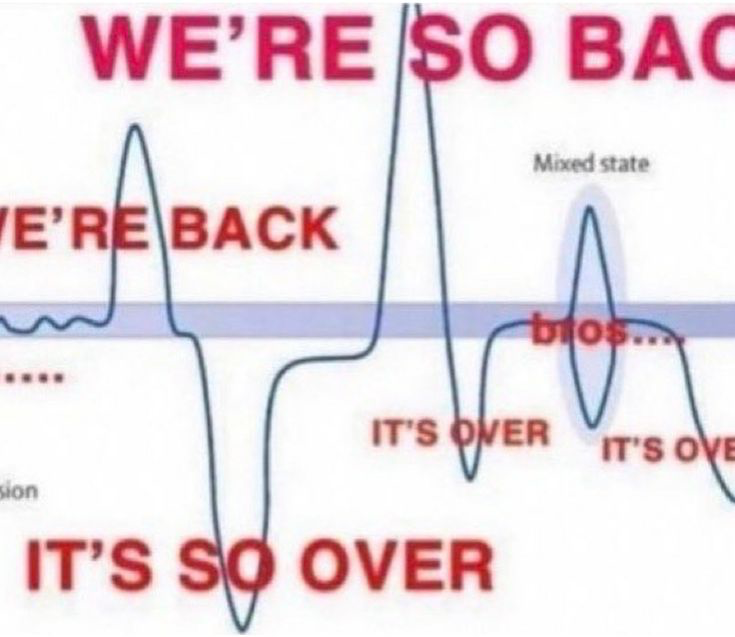
(This is the meme I was referring to)
But do you think it’s harder now to maintain authenticity as an artist?
Bella:
No, I think it’s actually kind of easier–because when everyone is following a bandwagon of this AI slop, it is so easy to remain consistent and be myself..
Music and Inspiration
Alana:
Can you take us through “Sweet Sweet Lullabies”?
Bella:
It’s kind of just talking about how people need to start waking up and realizing that this isn’t going to get better unless we make it better. And the first step is realizing that there’s something wrong.
There’s a lot of people who aren’t aware, sometimes tied to privilege, and that’s the problem. We need those people to understand.
The imagery with the sheep, it’s about how people follow the herd. Humans are taught to be cogs in a machine, not for ourselves but for people in power.
But we can be authentic, creative, artistic. It just takes waking up and realizing something’s wrong.
Even if it’s not backed by big labels, the people who need to hear it are hearing it. And that’s what matters.
Alana:
What’s something small or ordinary that constantly inspires you?
Bella:
I do have a dog named Freya. She’s small and very ordinary, but she is a pretty princess. She’s a Yorkshire terrier–I call her a Yorkshire terror. She’s an absolute demon, but she’s small and ordinary that I love.
Alana:
What do you do when you’re trying to find creative inspiration?
Bella:
Go to sleep. I’m so serious. Let your dreams inspire you.
Life right now is just so boring and miserable that I’ve always found solace in sleep. I have the coolest lucid dreams, and most of my songs come from weird dreams.
Not always fully written like “The Tower,” but themes from dreams show up in my music.
Alana:
That’s so cool. Do you still remember some of your old dreams?
Bella:
I keep a dream journal. If I’m feeling writer’s block, I go back and see if there’s something I missed or something interesting I can use.
Alana:
Are there any projects or directions you’re hoping to explore this year?
Bella:
There’s a few things. I think we’re going back to Europe after my debut there went well in September.
We’re also going to California, which is really cool. And we’re going to refresh some older songs like and remaster them professionally, and create more music. I’m always writing. Even in my sleep.
Alana:
That’s crazy, your brain doesn’t turn off.
Bella:
Never.
Alana:
If someone recently discovered you, where should they start? What song should they listen to first?
Bella:
I was gonna say “Saved,” but then I’m also thinking about “The Tower.”
“The Tower” is my favorite, it has a lot of layers. But “Saved” has that grittiness. It was the first song I ever wrote and produced when I was 17. That’s my baby.
I think I’ll go with “Saved.” It shows my voice the most too.
Alana:
That’s one of my favorite songs from you.
Bella:
It’s literally my child. I’ll always love “Saved” a bit more because it’s my baby. It has that grit I started with and still want to keep.
I think “Saved” would be the first one. I think people like when artists really sing and experiment.
The general audience doesn’t always care about production—but if you listen deep, it’s like the grittiest, recorded live on a MacBook.
By the end of our conversation, what stuck with me most was how naturally Bella treats creativity. The fact that some of her songs start in dreams says everything about how her brain works. It’s instinctive–a little chaotic, but completely her own.
The same goes for how strongly she pushes back against AI in music. She doesn’t dance around it or try to soften the take. She cares about the craft, about people actually making things, about the effort and feeling behind a song. Hearing that, especially now, is so important.
That mindset carries into her love for physical media too. The way she talks about CDs and vinyl, you remember why people got attached to music in the first place. It’s not just background noise or something to skip through. It’s something you choose, hold onto, and sit with. Talking to her felt like a reminder of all of that, why music matters, why it should feel human, and why sometimes the cooler option really is just putting on a CD and letting it play.